We know HDPE
Including HDPE as an option can lower the cost of a stormwater infrastructure project.
Simply including HDPE as an option lowers project costs.
Several studies have shown that including HDPE in project specifications delivers substantial savings.
Simply allowing HDPE as an alternative to traditional materials in project specifications guarantees project owners the best value for money.
From design through installation, underground infrastructure projects require extensive planning. When total installed cost is among the factors considered, HDPE always proves to be a cost-effective solution.
The comparative study Comparison of Stormwater Pipe Installation Lengths and Costs in Texas (available in English only), conducted by BCC Research, shows how costs vary according to the type of pipe installed.
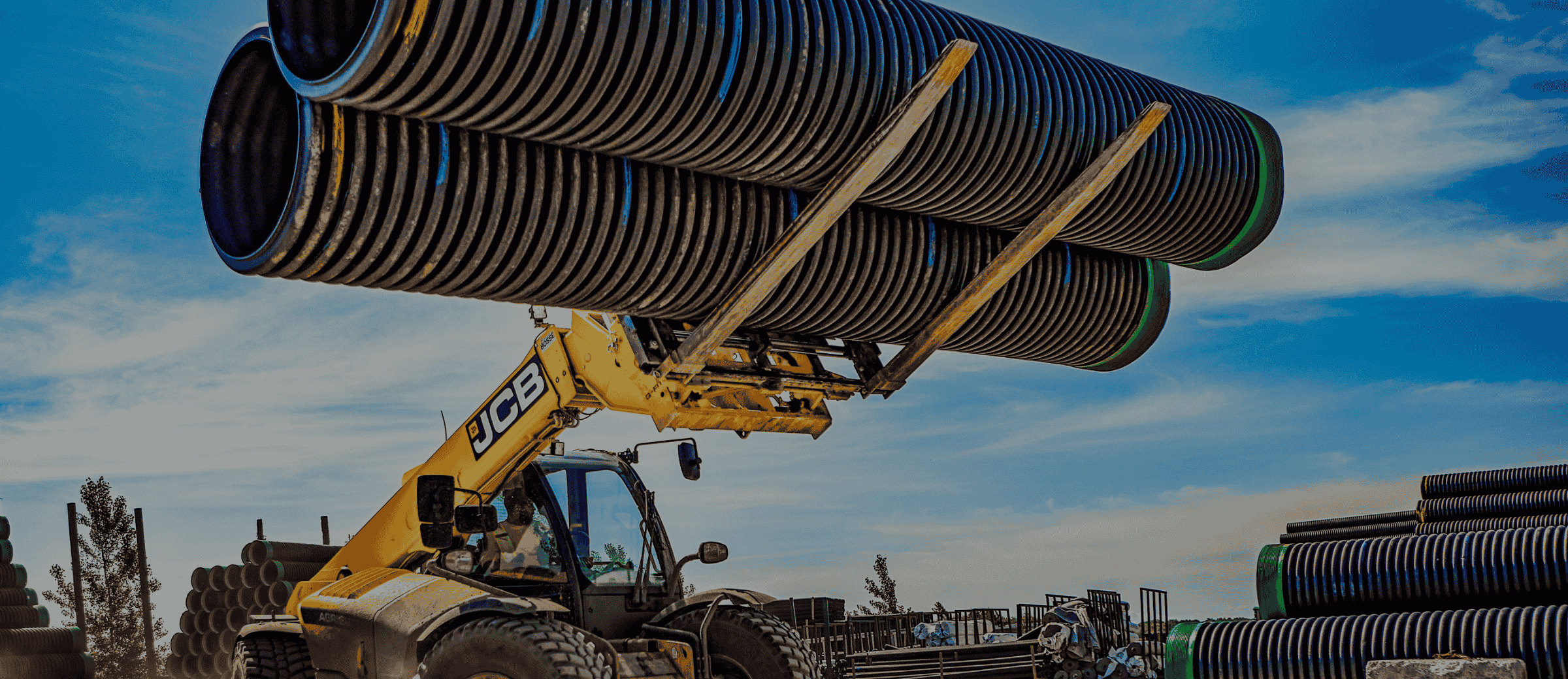
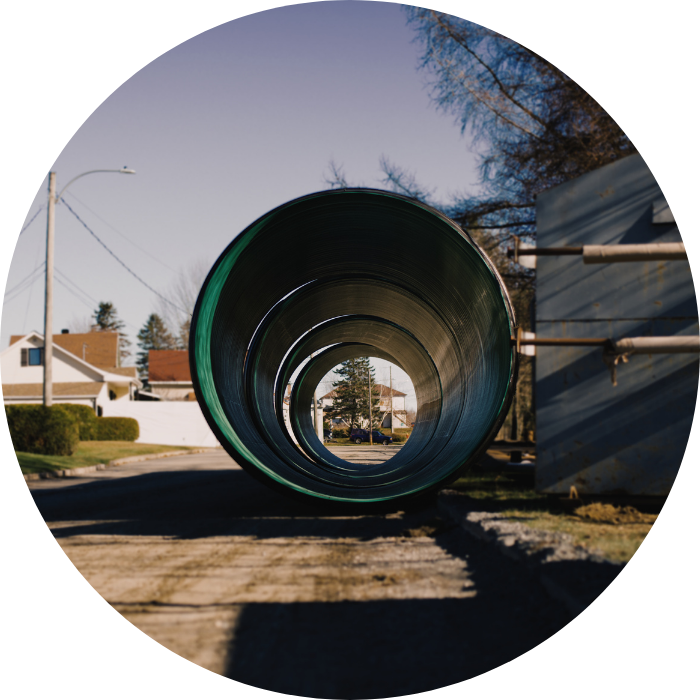
Used for more than 60 years, HDPE has established itself in North American infrastructure thanks to its long service life, flexibility, and watertightness.
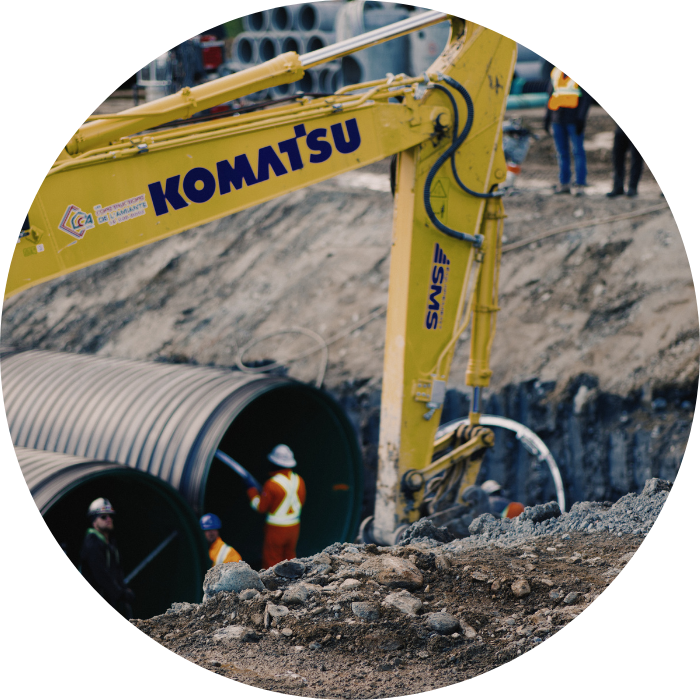
BNQ-certified and approved for installation beneath roadways, it meets the standards required of traditional materials such as concrete.
A cost-effective, high-performance, durable solution.
A LIFE CYCLCE ASSESSMENT (LCA) CONFIRMS OUR GREEN LEAD.
A comparative analysis clearly demonstrates the environmental advantages of our recycled HDPE pipes in terms of greenhouses gas (GHG) emissions, energy consumption, and overall environmental impact.
The analysis shows that a recycled HDPE pipe generates at least 39% fewer greenhouse gas emissions than an equivalent concrete pipe.
For every 1,000 feet of HDPE pipe installed instead of concrete pipe, CO₂ emissions are reduced by 11.3 metric tons – the equivalent of driving around the Earth 1.12 times.
Durable pipes made with more than 75% recycled content
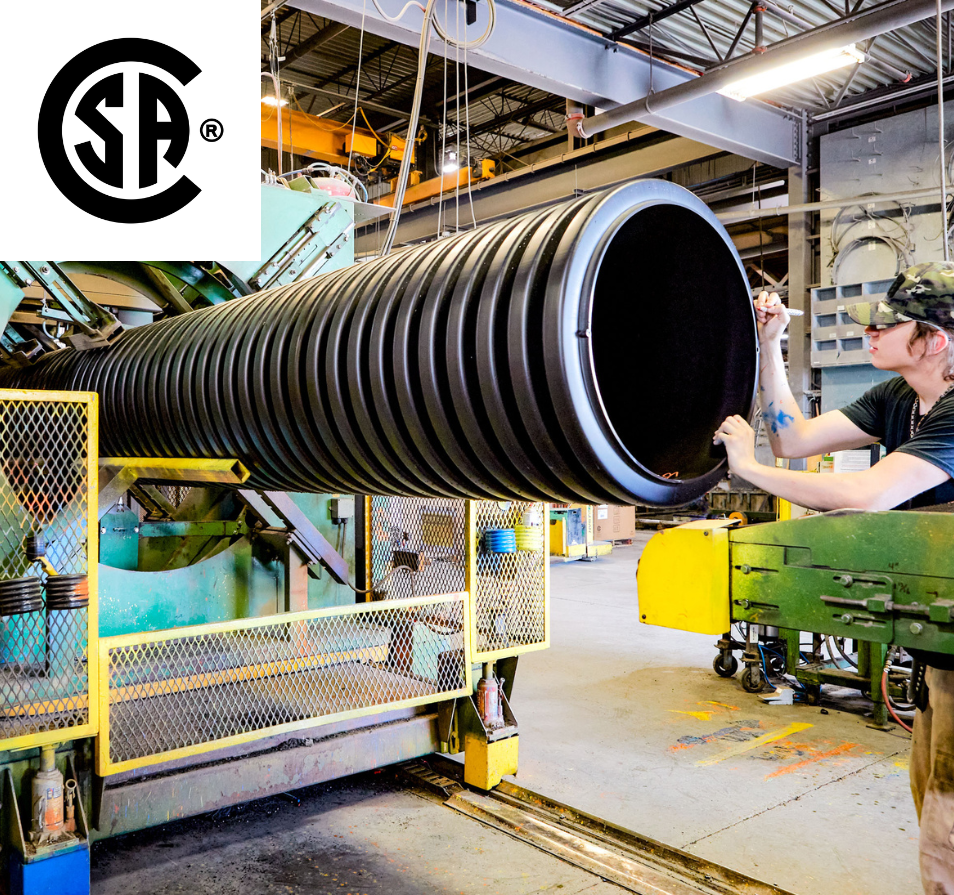
Soleno is the first manufacturer in Canada to obtain CSA-audited certification under CSA B182.8-R. This certification formally recognizes our ability to formulate the resin blends used to manufacture our pipes from recycled material. It allows us to guarantee that our CSA-certified products contain more than 75% and up to 100% recycled content while meeting all applicable finished-product performance standards.
Our Saint-Jean-sur-Richelieu and McAdam plants manufacture pipes certified to CSA B182.8-R, ensuring quality and durability. As an industrial EcoLeader, reducing our environmental impact is central to our approach.
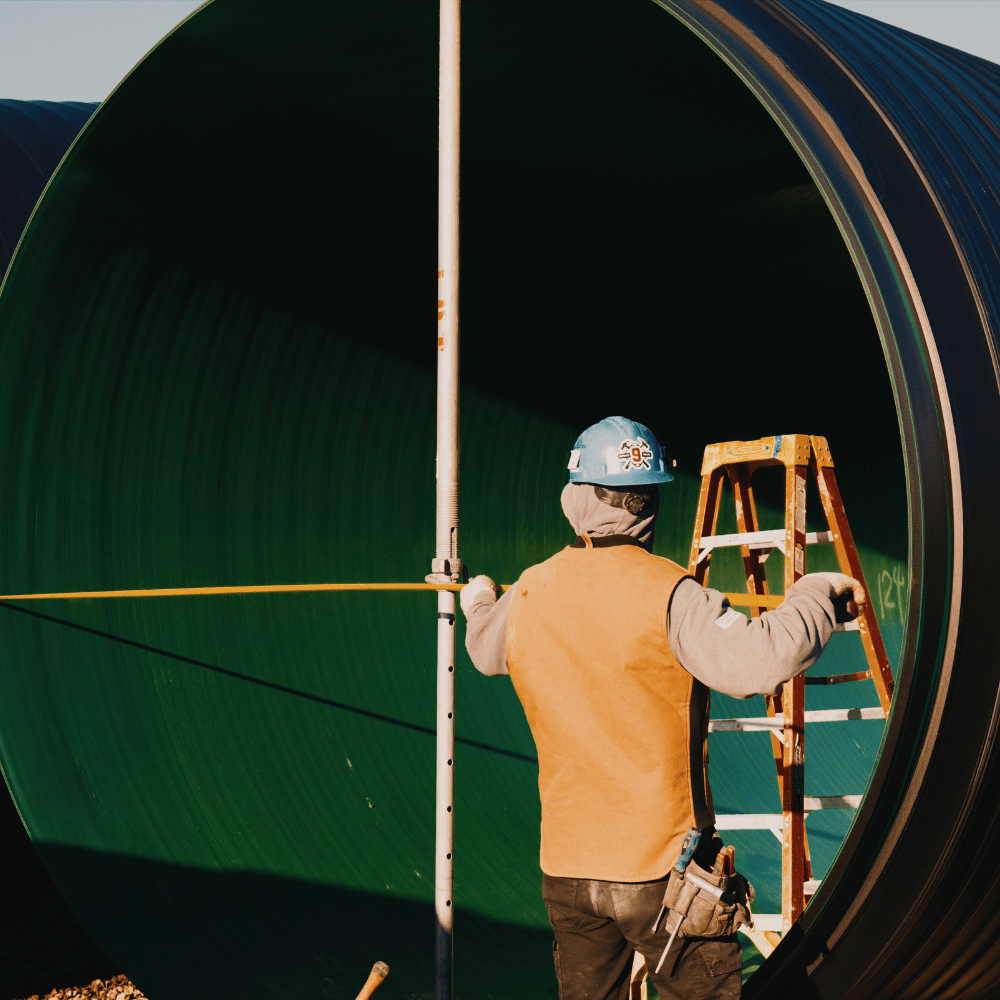
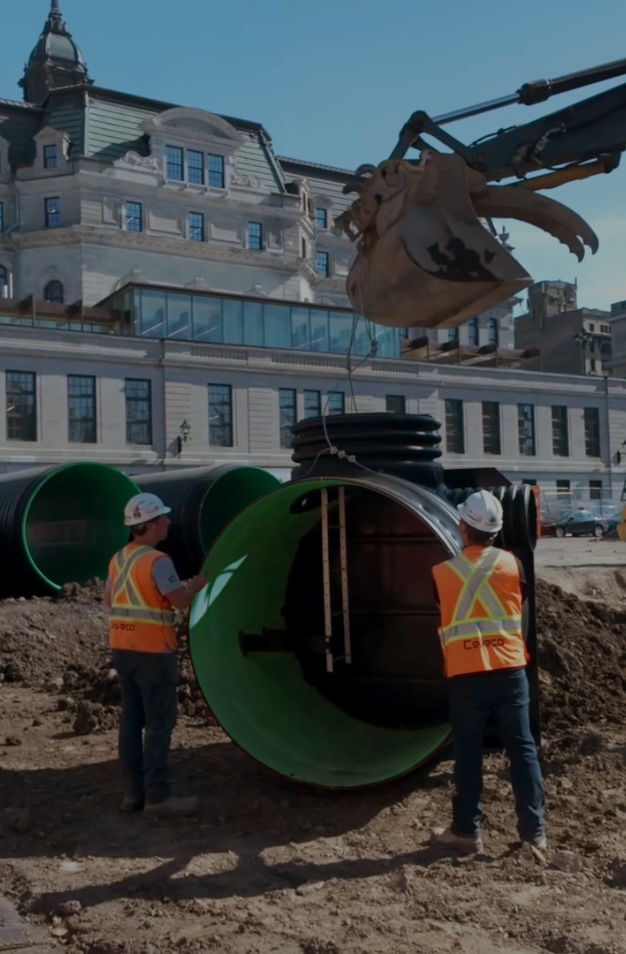
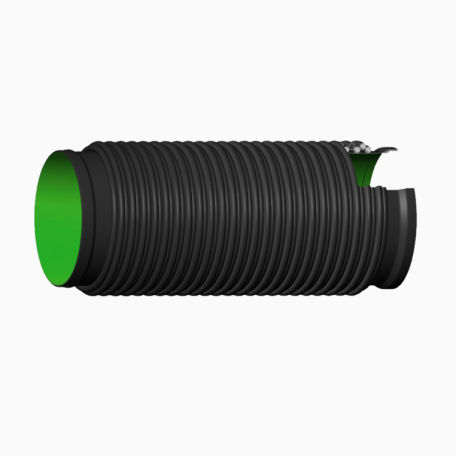
With over 100 different profiles, HDPE allows for the creation of custom structures tailored to the specific needs of the project.
HDPE is watertight and resistant to corrosion
With 40-60% fewer joints than concrete pipes, HDPE reduces the risk of leaks
21x lighter than concrete, HDPE adapts to extreme conditions without cracking
HDPE has a proven durability of over 100 years, even under high pressure
With the rise in heavy rainfall and the growing challenges of stormwater management, effective solutions are crucial to prevent flooding.
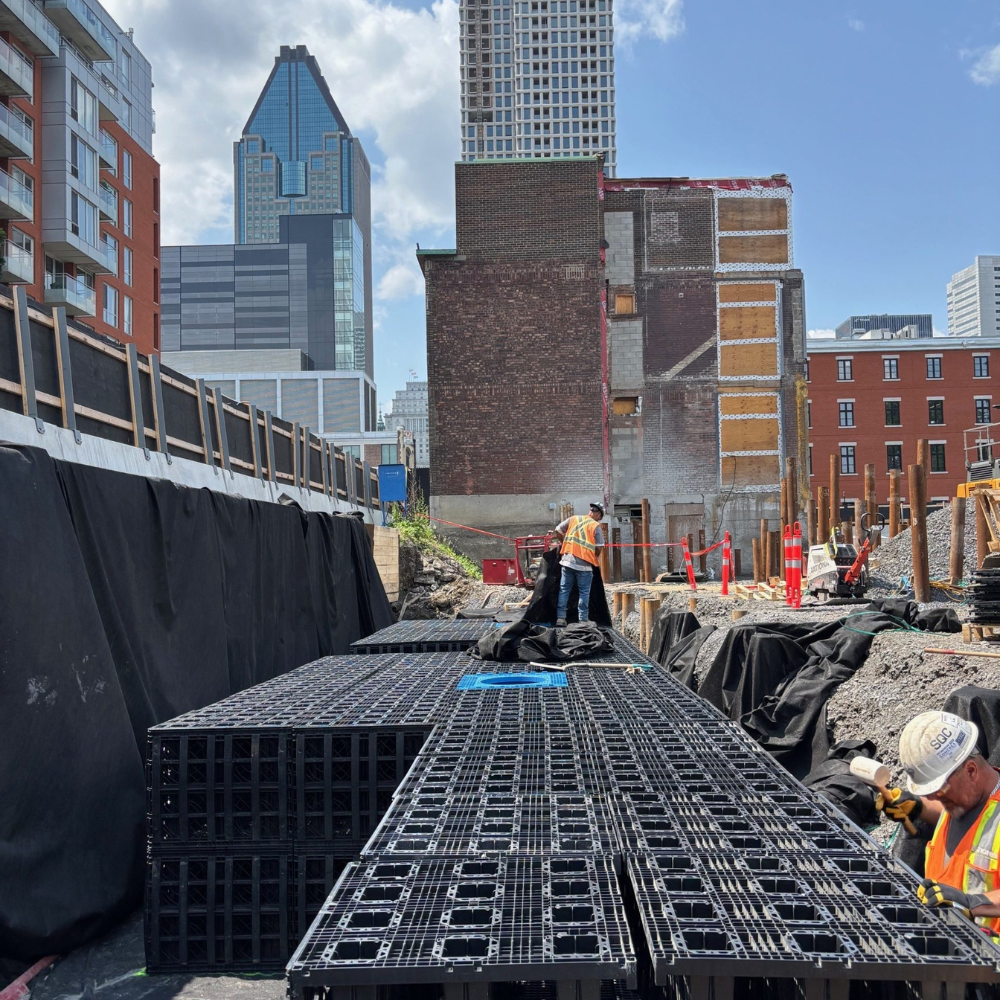
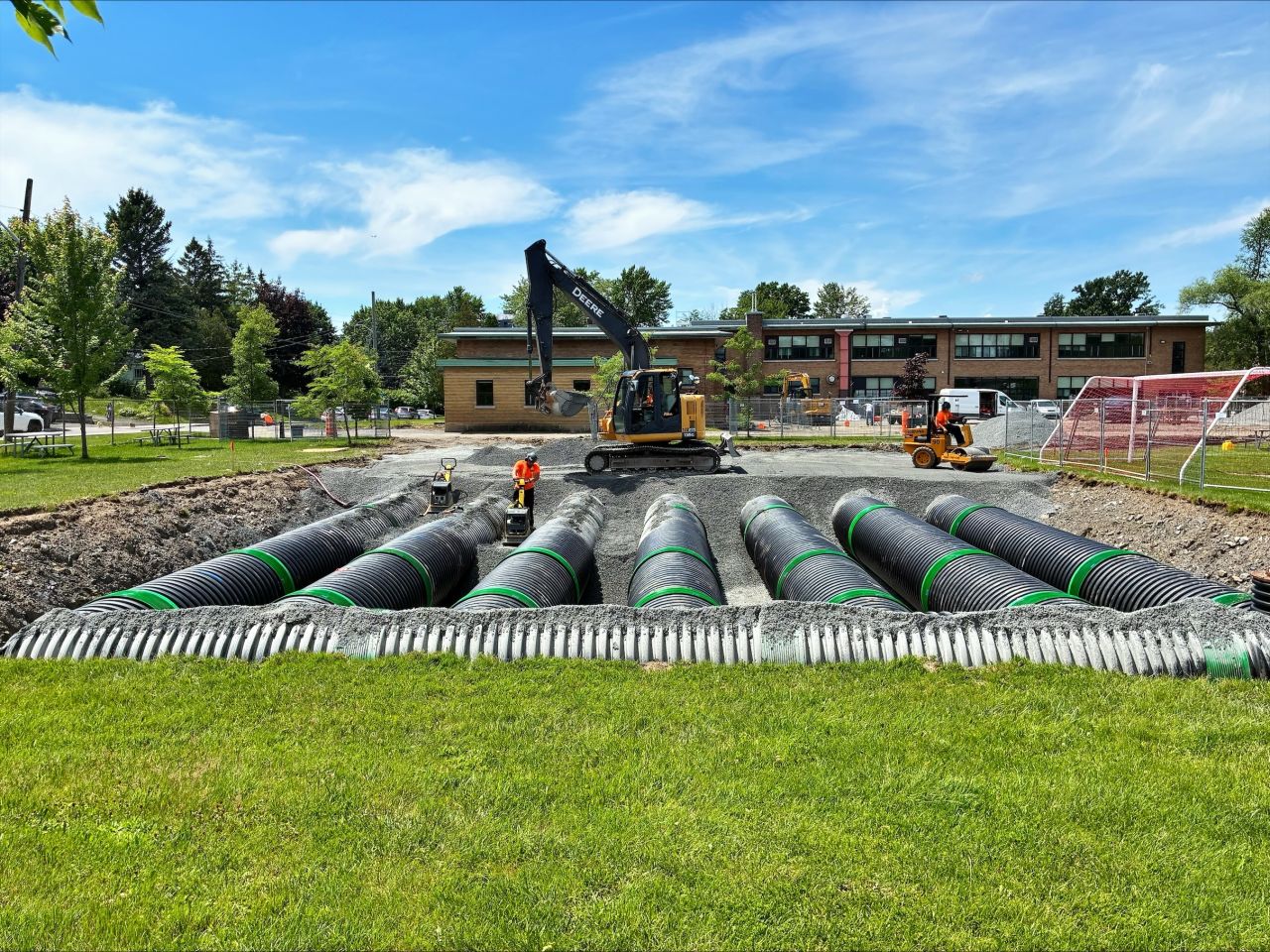
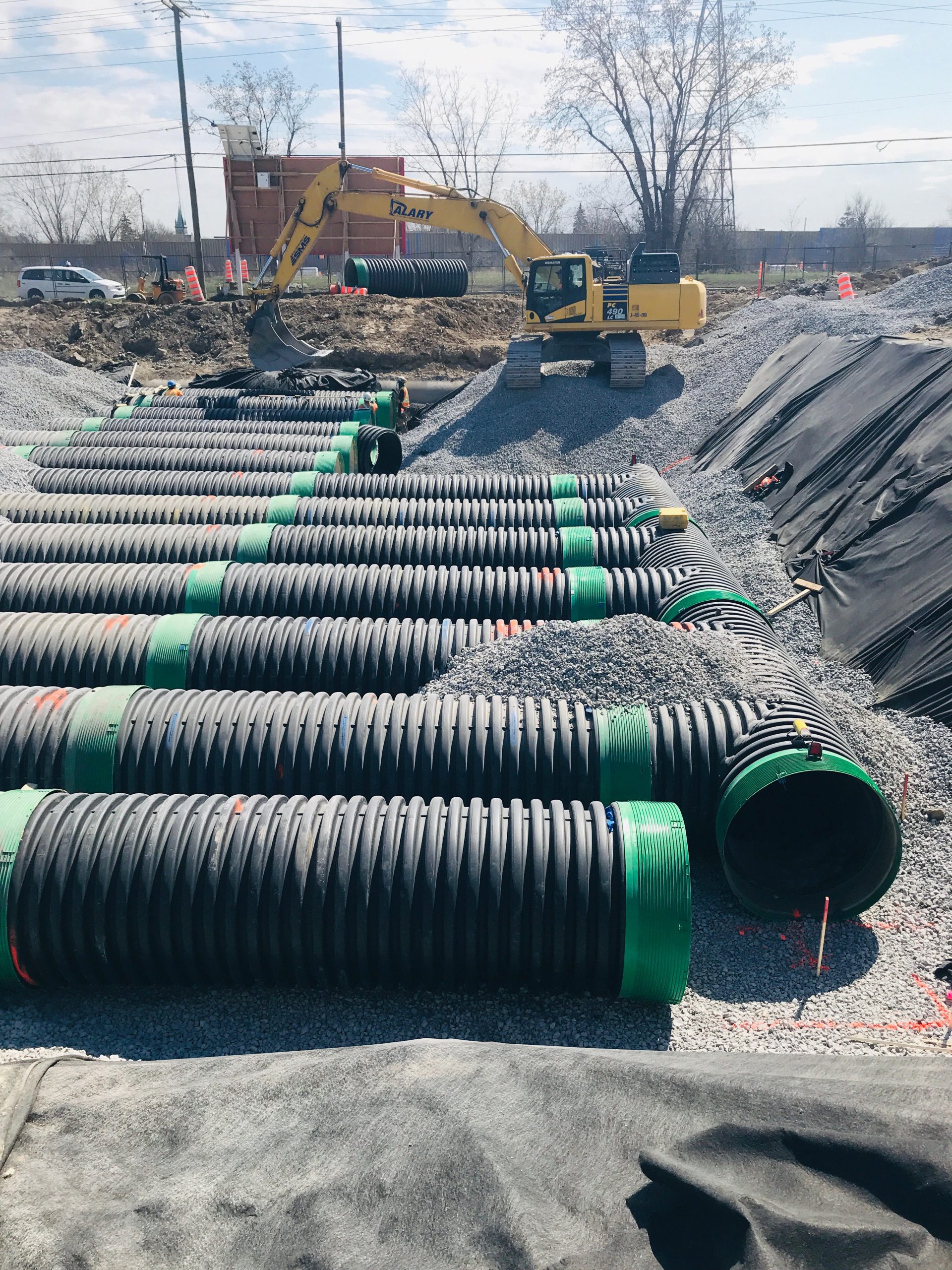
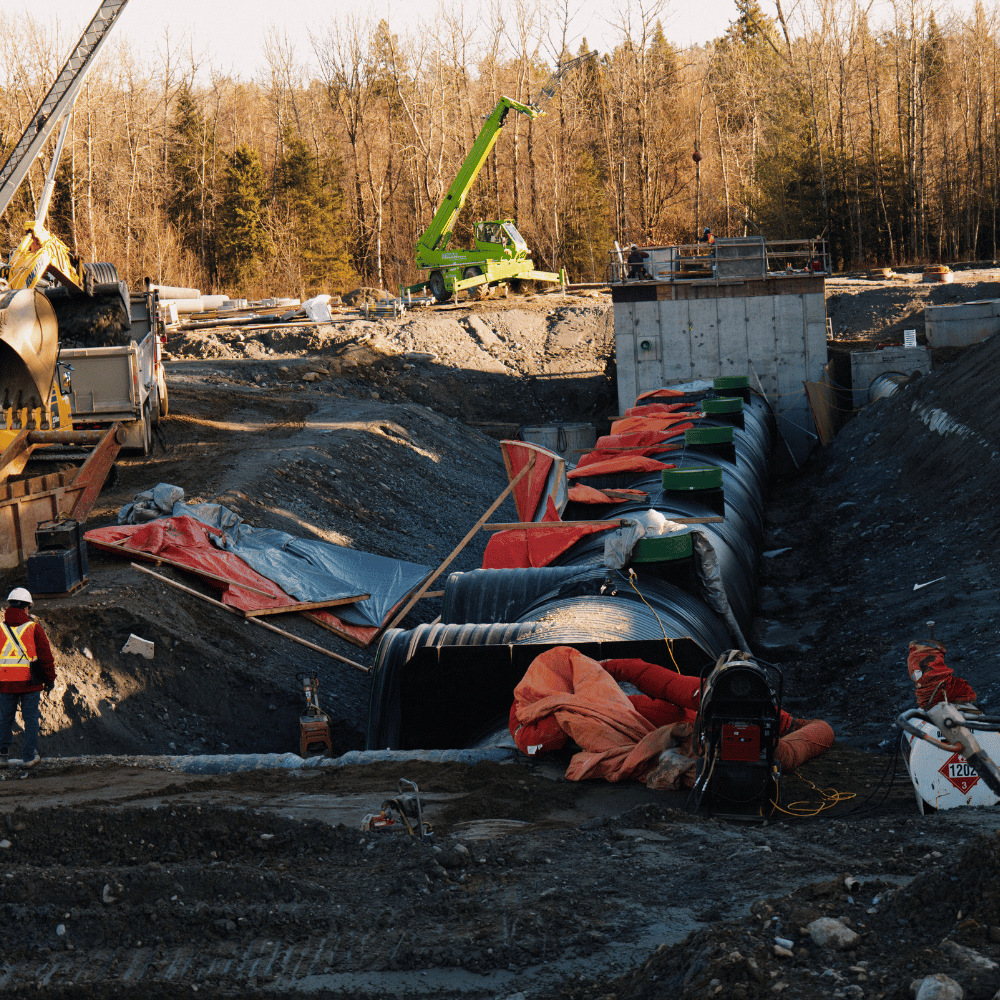
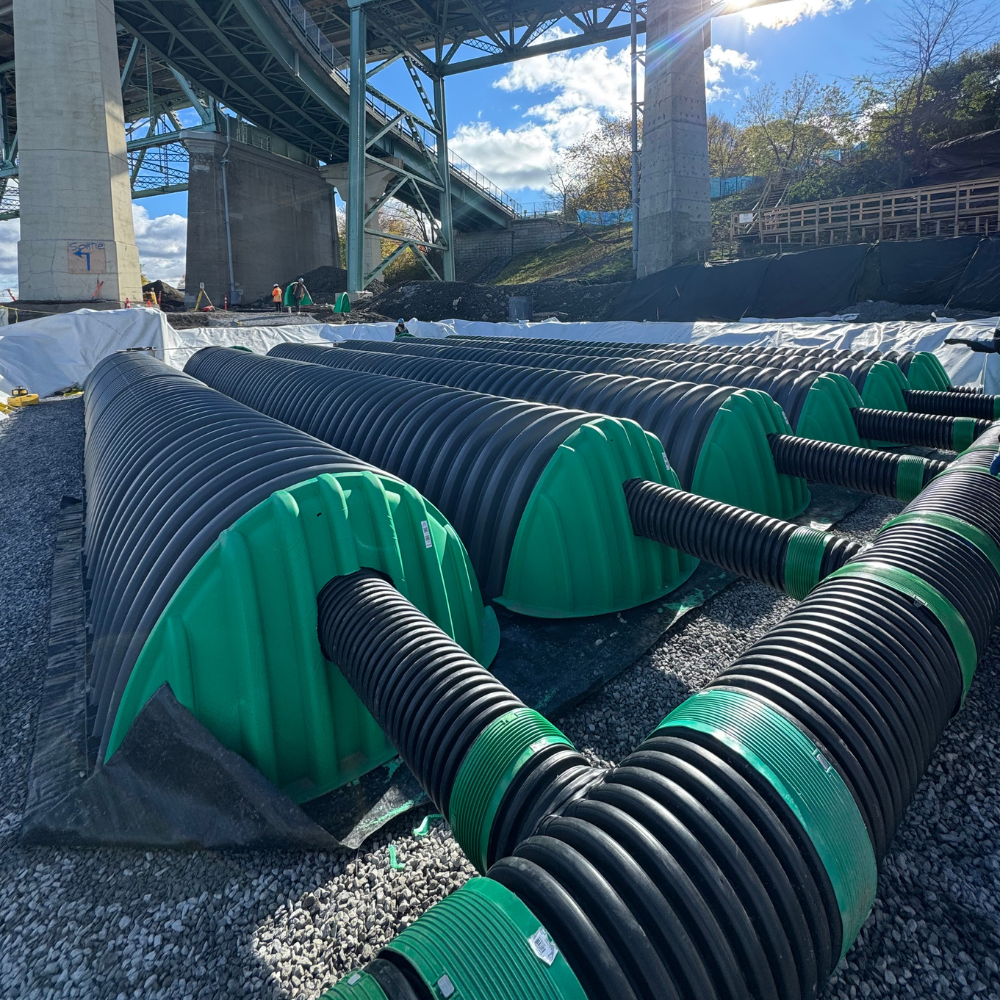
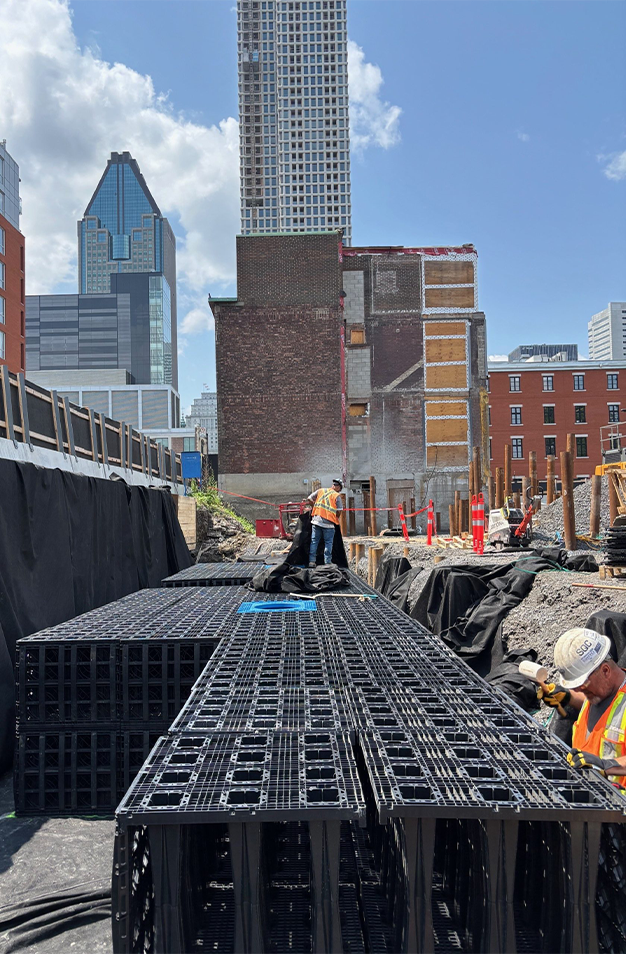
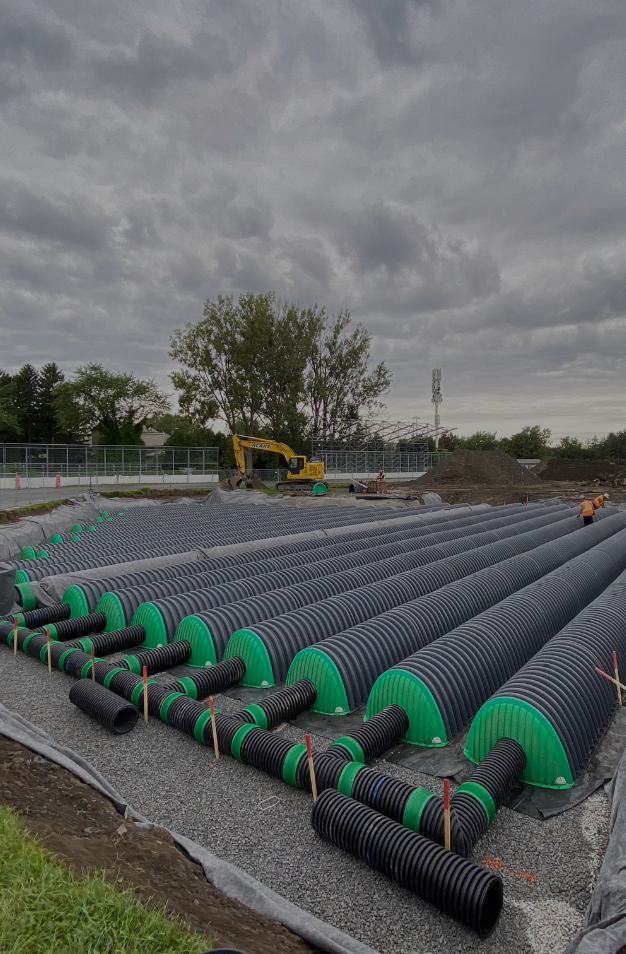
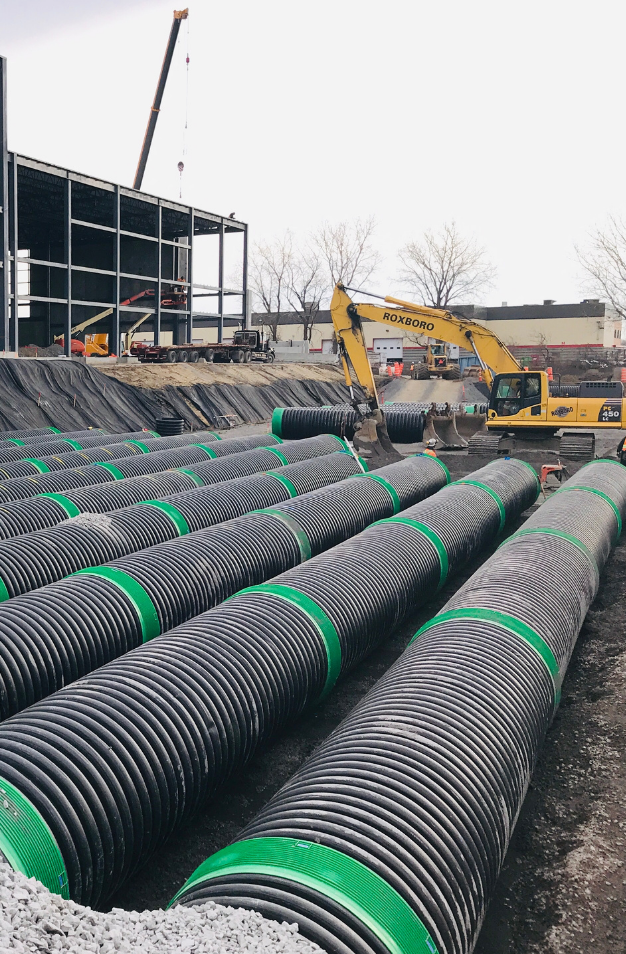
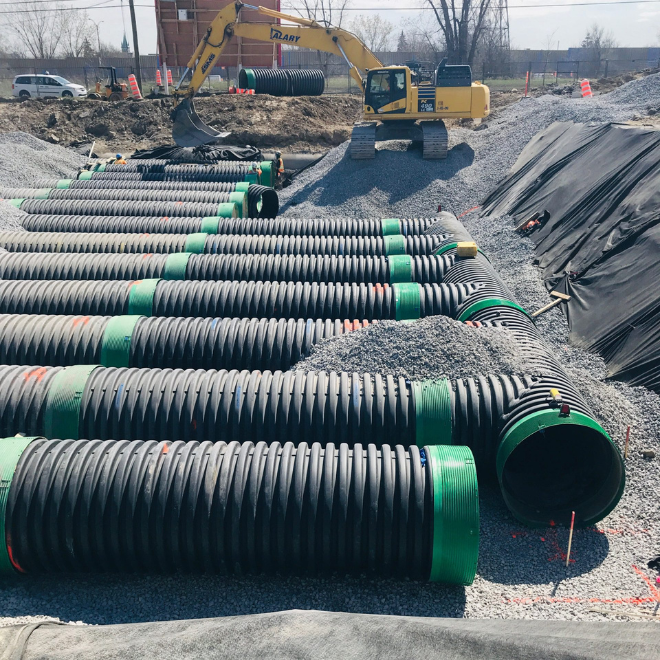
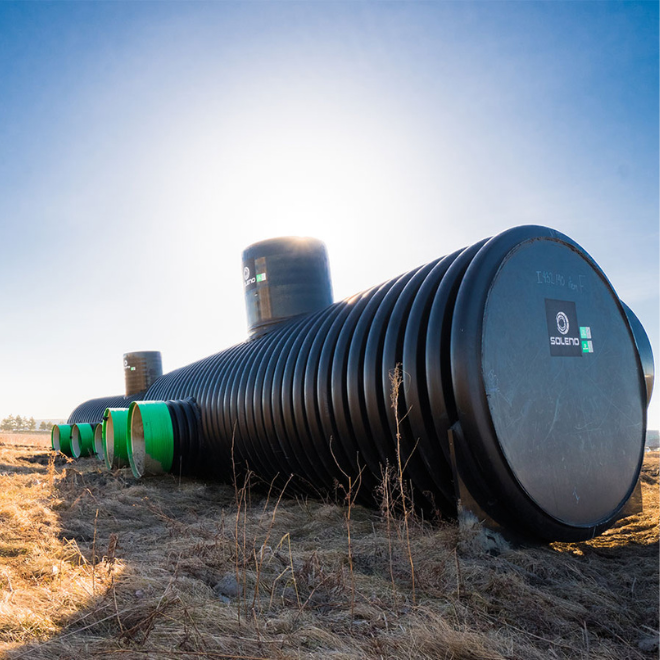
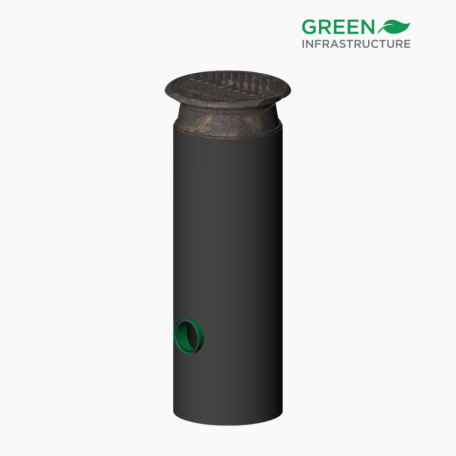
Our HDPE infiltration and retention basins offer an effective underground solution for stormwater storage with or without groundwater recharge. Thanks to their modular design, these basins adapt to the specific constraints of each site, optimizing hydrological efficiency and meeting the needs of complex projects.
Due to increased water volumes and rainfall events, efficiently managing stormwater, runoff, or snowmelt is crucial to prevent backups, flooding, and erosion.
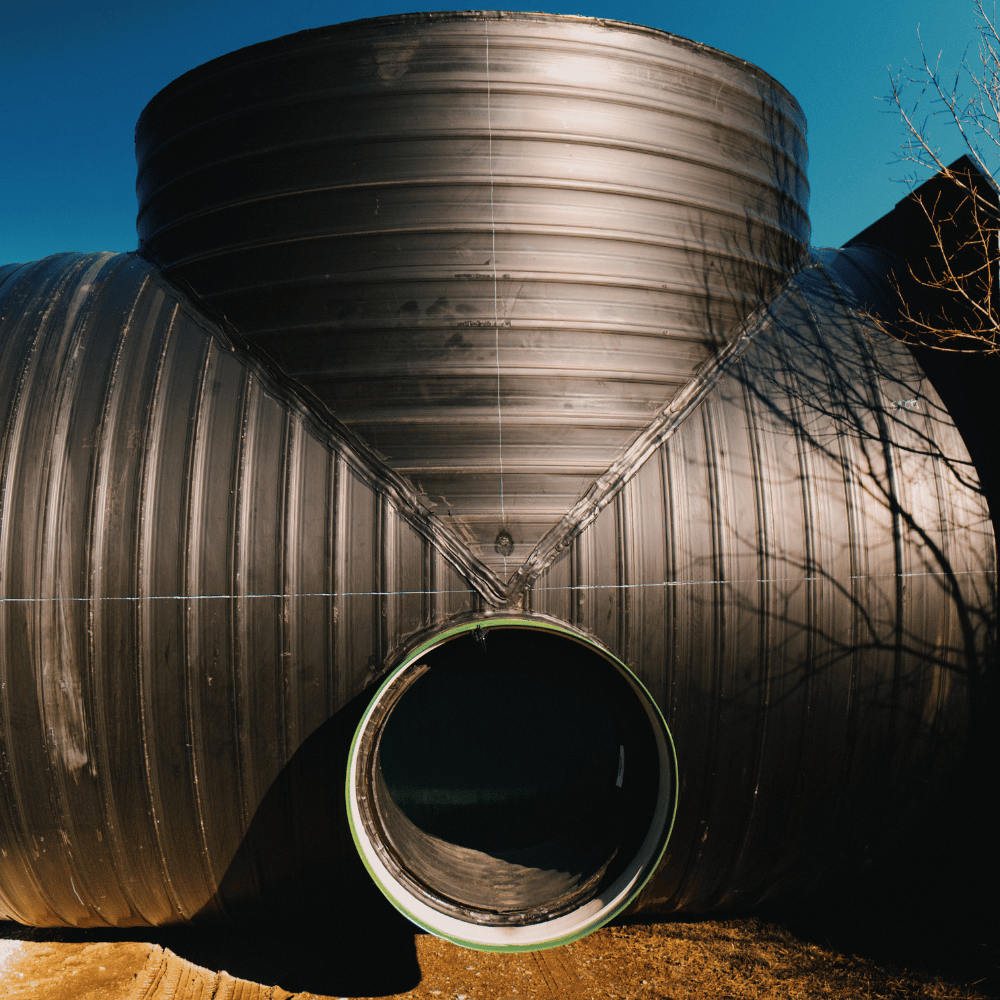
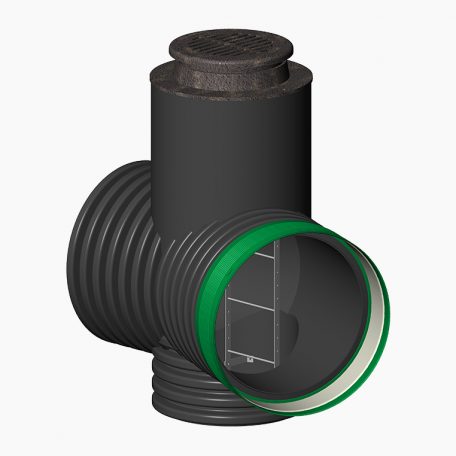
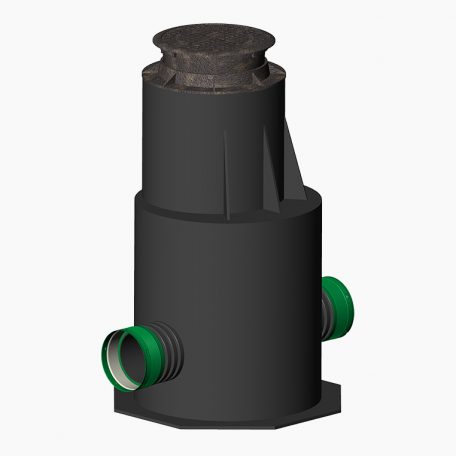
Our HDPE structures allow for connections with the same diameter as the pipe.
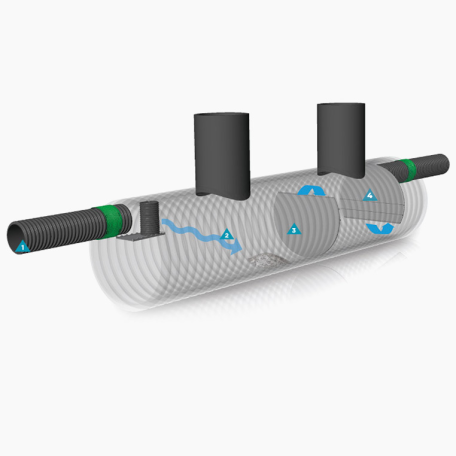
With the increase in pollutants carried by stormwater, it’s critical to treat these waters before discharge into the environment to protect ecosystems and meet regulatory standards.
Our stormwater treatment systems are designed to capture sediments, hydrocarbons, and other contaminants efficiently. Versatile and durable, they integrate easily into your infrastructure, offering a turnkey solution tailored to each site’s needs.
Given the growing challenges of managing stormwater and groundwater, reliable and durable systems are essential for ensuring the flow and protection of infrastructures.
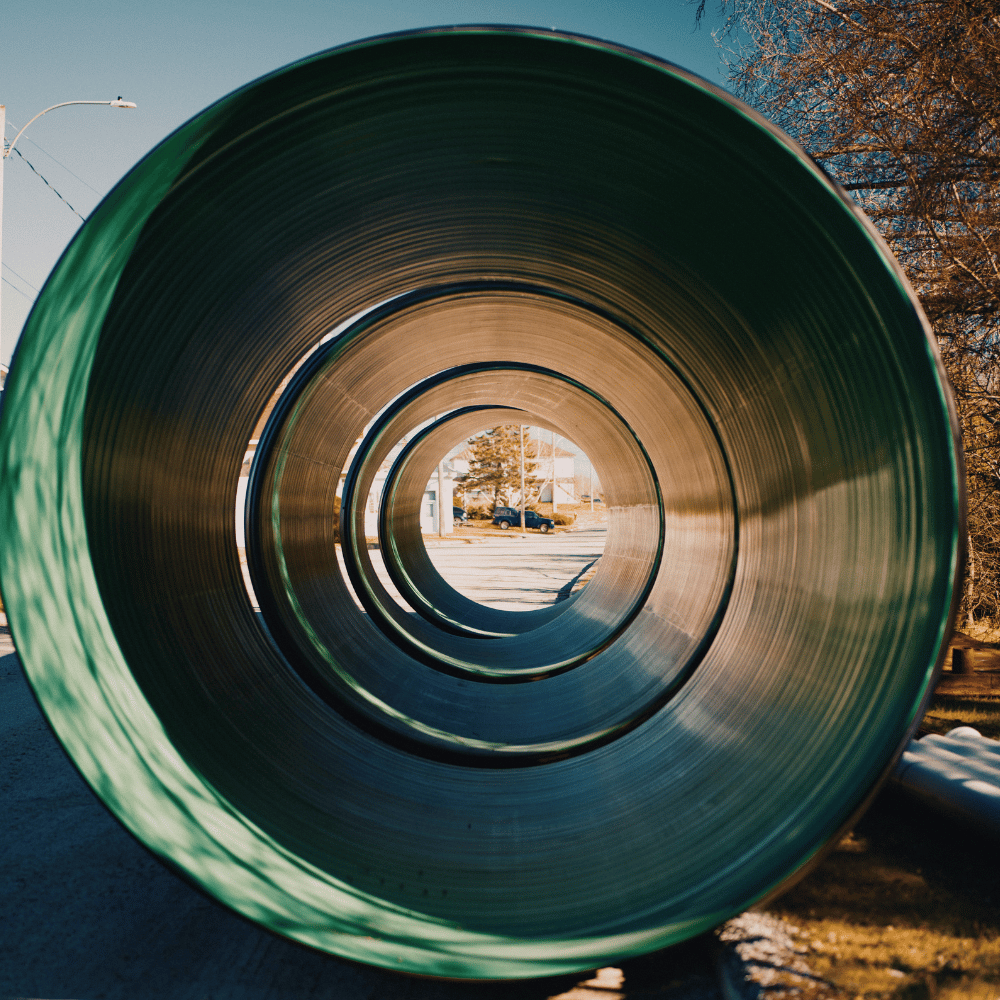
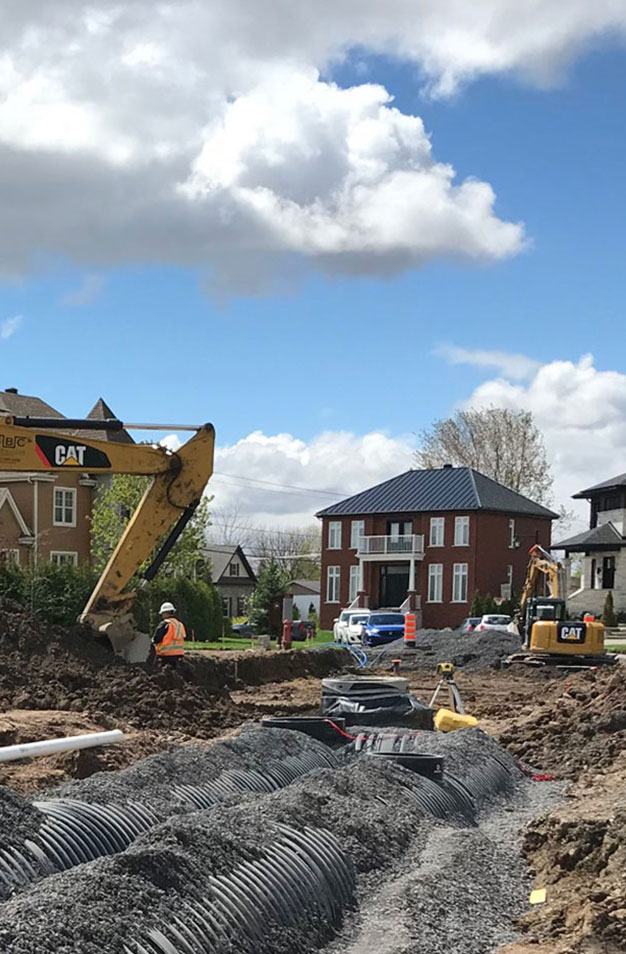
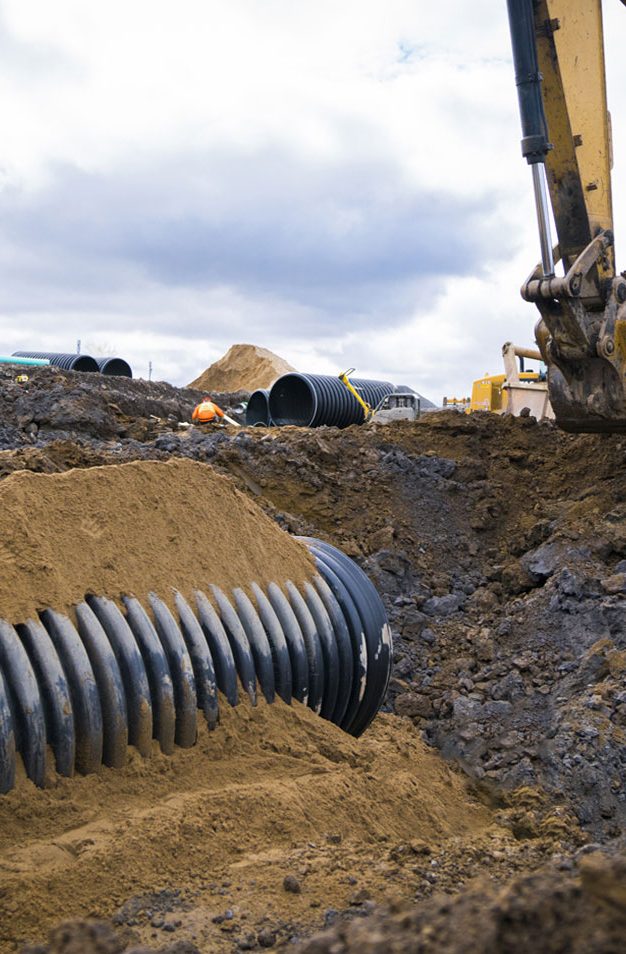
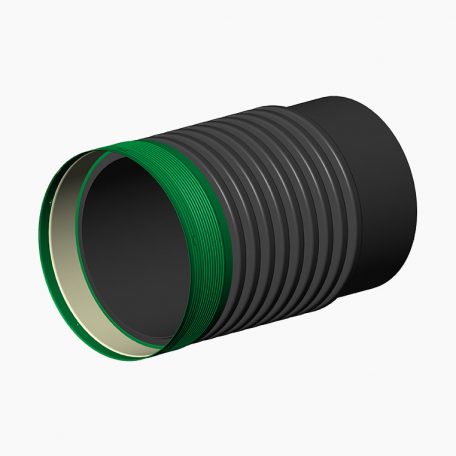
Our HDPE pipes and drains are designed to provide superior performance, easy installation, and exceptional resistance, even in the most demanding conditions. Available in a wide range of sizes and configurations, they fit all your projects, from agricultural to urban and industrial drainage.
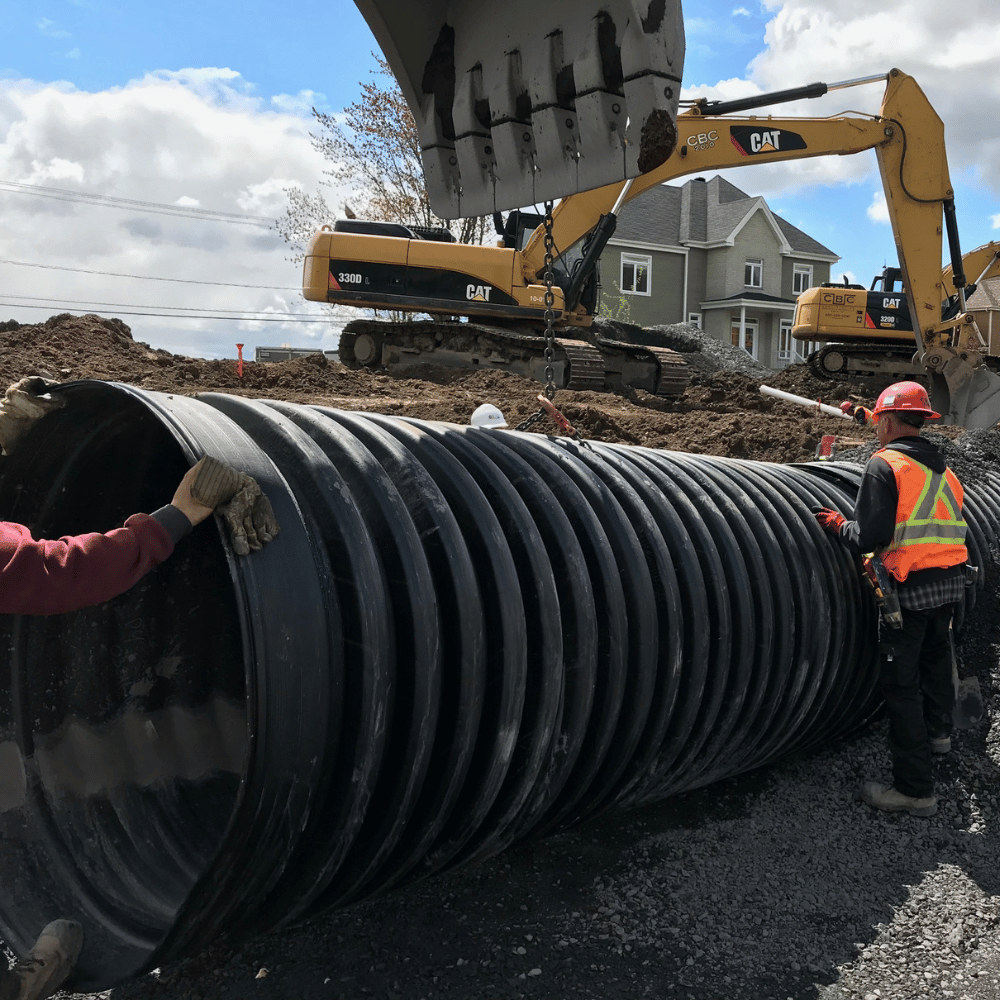
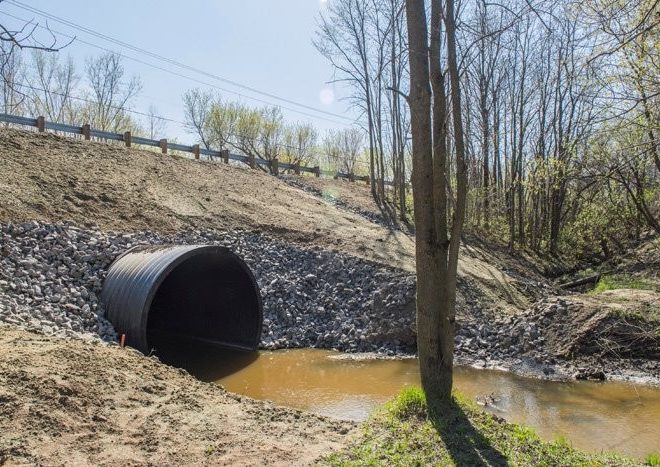
Culverts play a key role in maintaining water flow beneath roads, railways, and other infrastructures, ensuring stability and durability.
Our HDPE culvert systems are designed to offer exceptional resistance to loads and environmental conditions while ensuring quick and efficient installation. Available in a wide range of diameters, they provide a sustainable and cost-effective solution for drainage infrastructure needs.
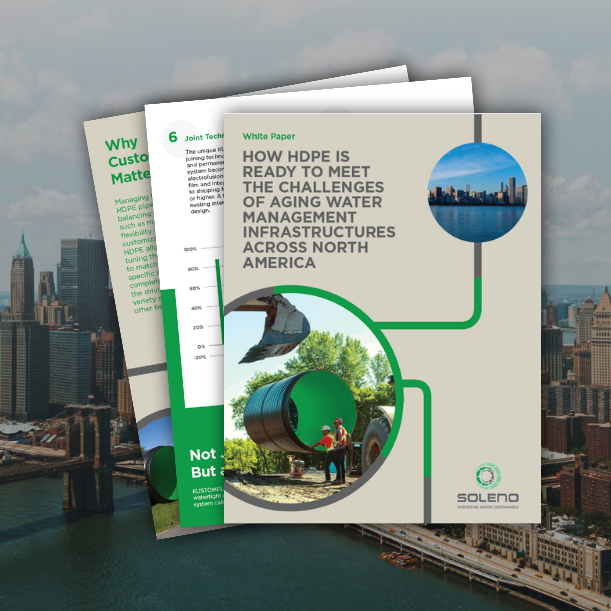
HOW HDPE IS READY TO MEET THE CHALLENGES OF AGING WATER MANAGEMENT INFRASTRUCTURES ACROSS NORTH AMERICA
While High-Density Polyethylene (HDPE) structured wall pipes are not new to the infrastructure industry of today, the material is not widely adopted for large diameter applications, despite certain distinct advantages over other materials. But as infrastructure systems around the world age, the need for sustainable and cost-effective solutions is becoming increasingly critical.
DOWNLOADYes. Adapters and connections allow new HDPE pipe to be integrated with existing concrete pipes or manholes that remain in place. Rehabilitation can therefore focus on the section that needs replacing without requiring the entire system to be renewed. The engineer should specify the dimensions, allowable movement, and required level of watertightness at each transition.
Yes, provided the selected pipe and installation are designed for the project loads. Certain Solflo Max configurations are intended for use beneath roadways, while the KUSTOMFLO profile can be adapted to project requirements. Design calculations must account for traffic loads, depth of cover, soil conditions, and the interaction between the pipe and its backfill.
It can, depending on prices and project conditions. In a 600 mm pipe scenario published in 2025 by the Minnesota Department of Transportation and the University of Minnesota, the discounted life-cycle cost was estimated to be 34% lower for virgin HDPE and 39% lower for recycled HDPE than for reinforced concrete. These results are based on cost and maintenance assumptions; they do not predict bid prices for a project in Québec. Read the study.
HDPE offers another option when a system needs to be renewed for decades of service. It resists corrosion and de-icing salts, and is available in configurations suited to site constraints. The decision should account for the condition of the existing system, structural loads, hydraulic capacity, and existing connections. Comparing HDPE and concrete options early in design helps identify which one best meets these requirements.
Watertightness must be specified and verified across the entire system. Depending on the product, Soleno offers options such as bells with integrated gaskets and electrofusion connections. A soil-tight connection does not necessarily meet a watertightness requirement. The required joint performance should therefore be specified, with the same attention given to manholes, branch connections, transitions between materials, and installation quality. See Solflo Max connection options.
Yes, for the configurations evaluated through life-cycle assessment. A comparative study presented by Soleno estimates 39% fewer greenhouse gas emissions for a 24-inch HDPE pipe containing 90% recycled material than for a concrete pipe, based on 1,000 feet of installed pipe over 100 years.
This result applies to that specific scenario. Recycled content, product selection, transportation, and project conditions must be verified before applying it to another design. Review the comparative analysis.