STORMWATER SETTLING AND SEPARATION
OUR SOLUTIONS FOR STORMWATER RUNOFF TREATMENT
Solutions designed to capture sediment, debris and floatables before they reach stormwater networks, retention systems or receiving environments.

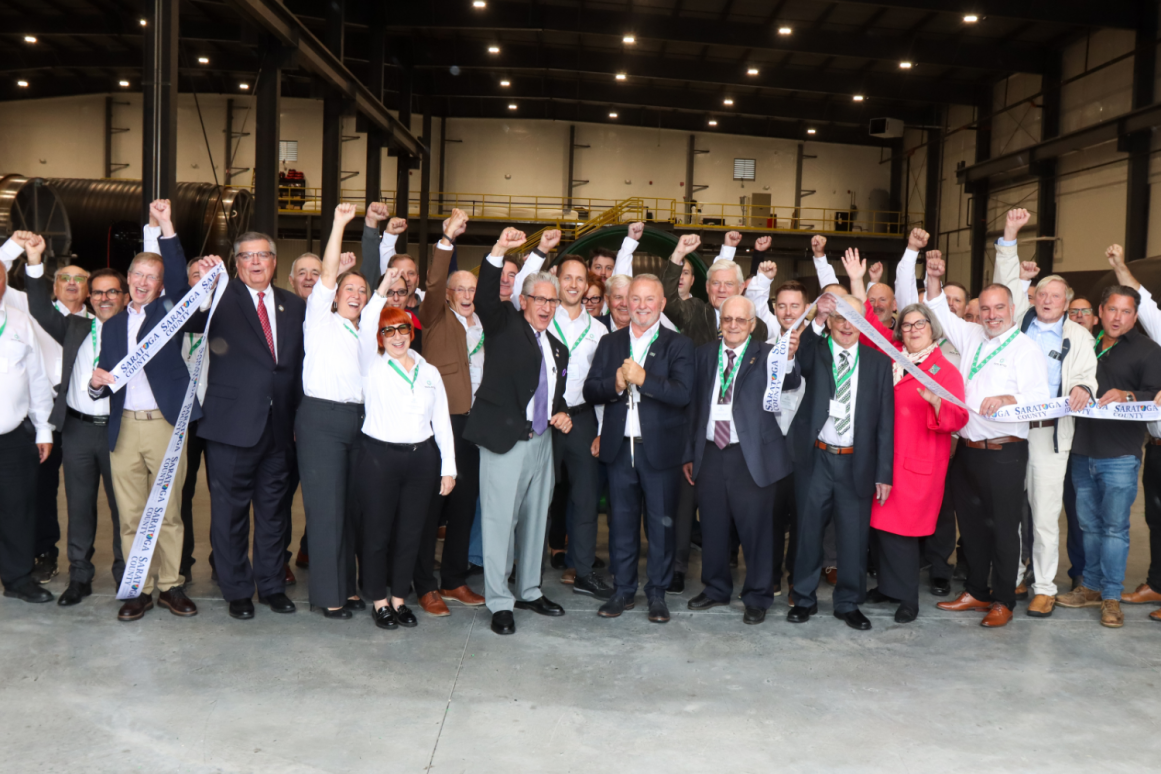
To learn more about the news, read the press release. Saint-Jean-sur-Richelieu, September 26th, […]
More news
Solutions designed to capture sediment, debris and floatables before they reach stormwater networks, retention systems or receiving environments.
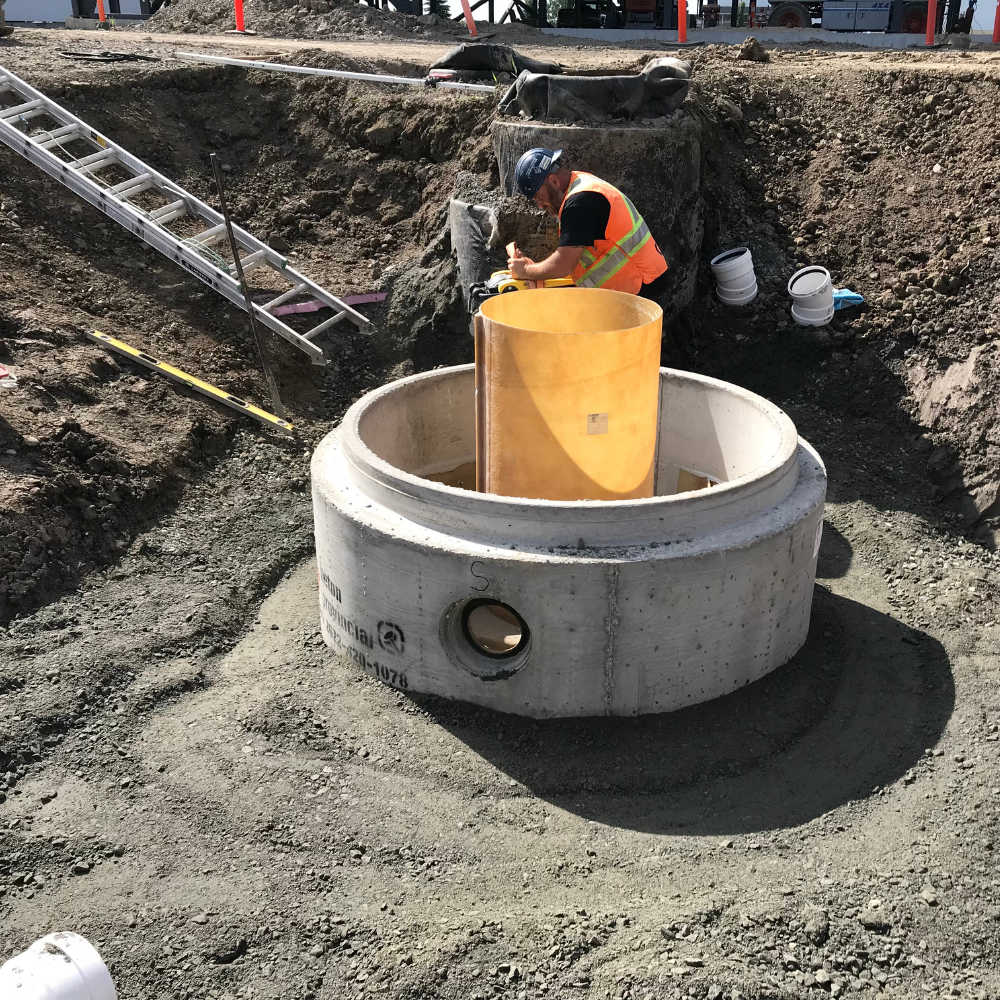
Stormwater management: sediment separation and infrastructure protection
Stormwater runoff carries significant amounts of sediment, sand, debris and floatables. Without proper treatment, these materials can accumulate in stormwater networks, reduce the performance of downstream systems and increase maintenance requirements.
Sedimentation and separation solutions help capture these materials before they reach pipes, retention basins, infiltration systems or receiving environments.
They help:
Sedimentation and separation solutions are designed to slow down, direct or stabilize stormwater flow so that materials carried by runoff can be captured within the structure.
Heavier particles, such as sand and sediment, settle in a collection area. Debris, floatables and certain lighter materials can also be captured through the hydraulic configuration of the system.
The treated water then continues toward the stormwater network, a retention basin, an infiltration system, a filtration unit or a receiving environment.
This step plays an important role in the stormwater treatment chain by reducing the material load upstream of more sensitive infrastructure and supporting long-term performance.
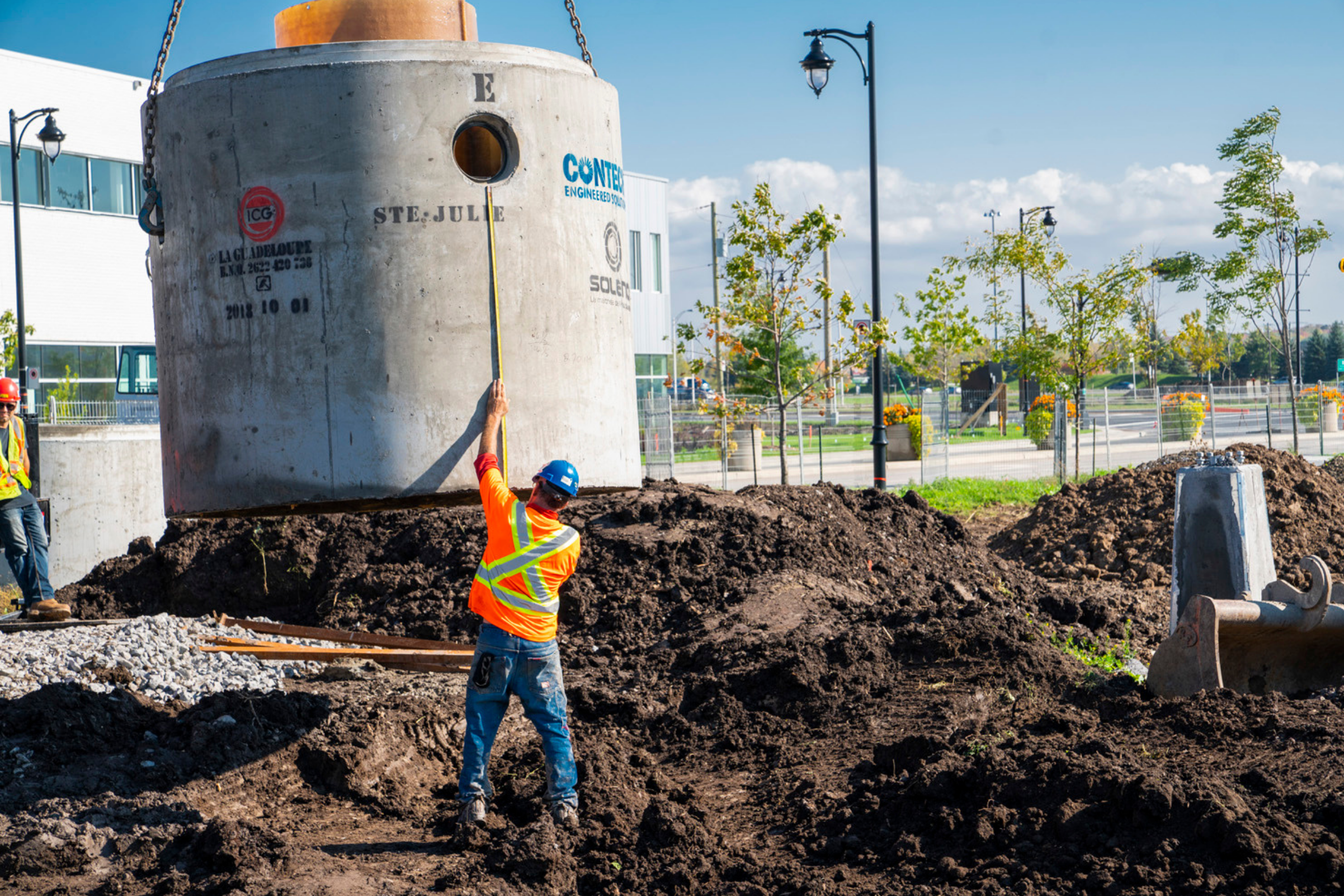
The right solution depends on several factors, including the flow to be treated, available space, installation depth, treatment objectives, maintenance requirements and the type of infrastructure already in place.
Stormwater treatment system
A solution designed to capture sediment, debris and floatables in stormwater drainage networks.
The sedimentation and separation unit can be installed upstream of a stormwater network, retention basin, infiltration system or filtration solution to protect downstream infrastructure and facilitate maintenance.
It is especially suited for municipal, commercial, institutional and industrial projects requiring robust primary treatment of stormwater runoff.
Discover Settling and Separation Tank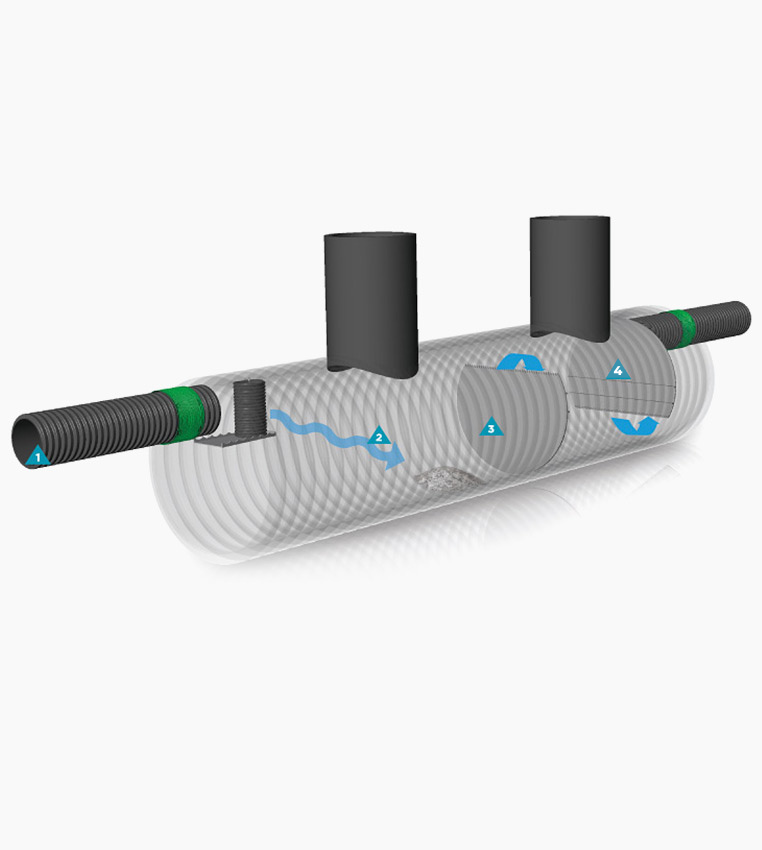
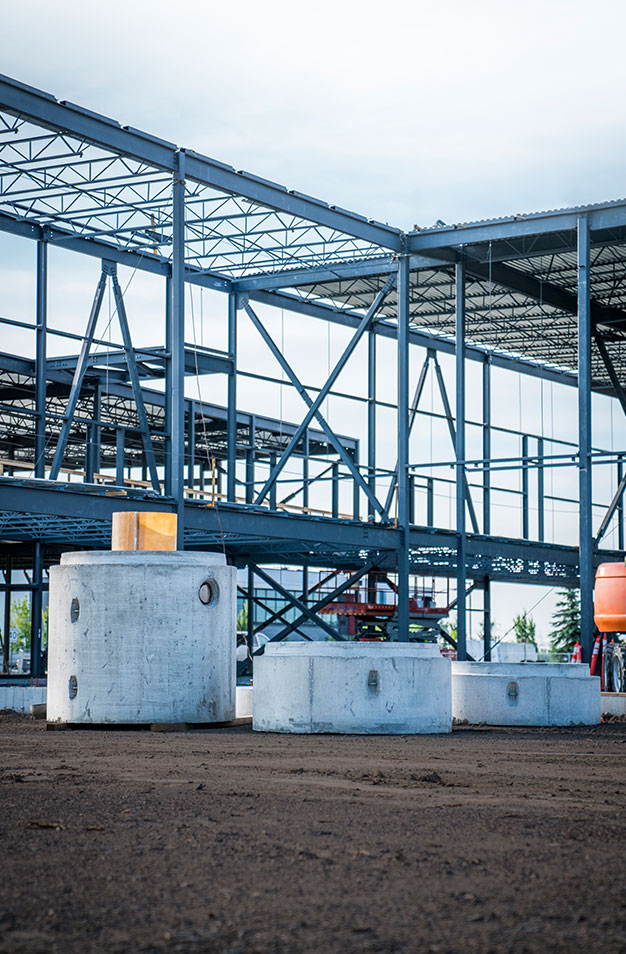
The most efficient and compact hydrodynamic separator for storm sewers
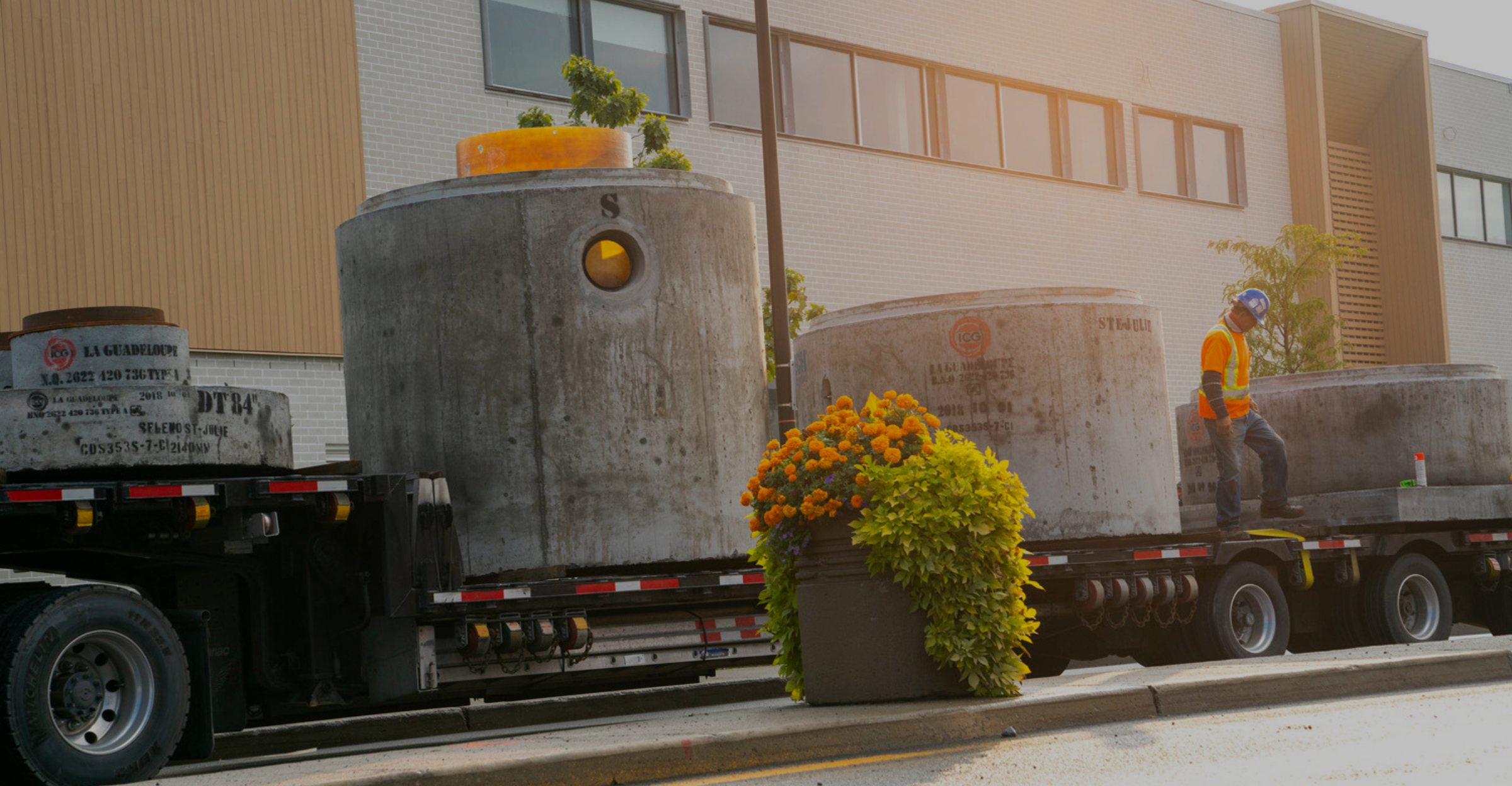
The CDS is a hydrodynamic separation solution designed to capture sediment, debris and floatables carried by stormwater runoff.
Depending on project requirements, the CDS can be offered in HDPE or concrete to adapt to installation constraints, municipal standards, design preferences and site conditions.
The HDPE option is especially relevant when lightweight handling, corrosion resistance and ease of installation are important criteria. The concrete option may be preferred when the project requires conventional infrastructure or when applicable standards favor this type of structure.
Discover CDS
The choice of a settling and separation solution depends on the hydraulic context, the available space, the project requirements, design preferences, and installation constraints.
Some solutions are preferred for their quick installation and corrosion resistance, while others may be selected to meet municipal standards or align with existing design practices.
Soleno experts can help you choose a solution adapted to the flow rates, site constraints, treatment objectives and project requirements.
Talk to an expertA useful solution in complete treatment chains
Settling and separation solutions are used in projects where stormwater runoff carries sediment, debris, floatables or particle-bound contaminants.
They can be integrated upstream of a stormwater network, retention basin, infiltration system, filtration unit or discharge point to protect downstream infrastructure and improve the overall treatment performance.
Settling and separation can be used on their own when treatment objectives are mainly focused on sediment, debris and floatables.
They can also be combined with other treatment solutions, such as pretreatment or filtration, when the project requires more advanced performance or additional protection for downstream systems.
Settling and Separation Solutions
A settling and separation solution must be designed according to the project’s hydraulic conditions, but also with installation, inspection and long-term maintenance in mind.
Sizing, structure location, installation depth, maintenance access and cleaning frequency are all important factors to consider during the design phase.
The materials captured through settling or separation must be inspected and removed periodically to maintain system performance.
Depending on the selected solution, the structure can be designed to allow:
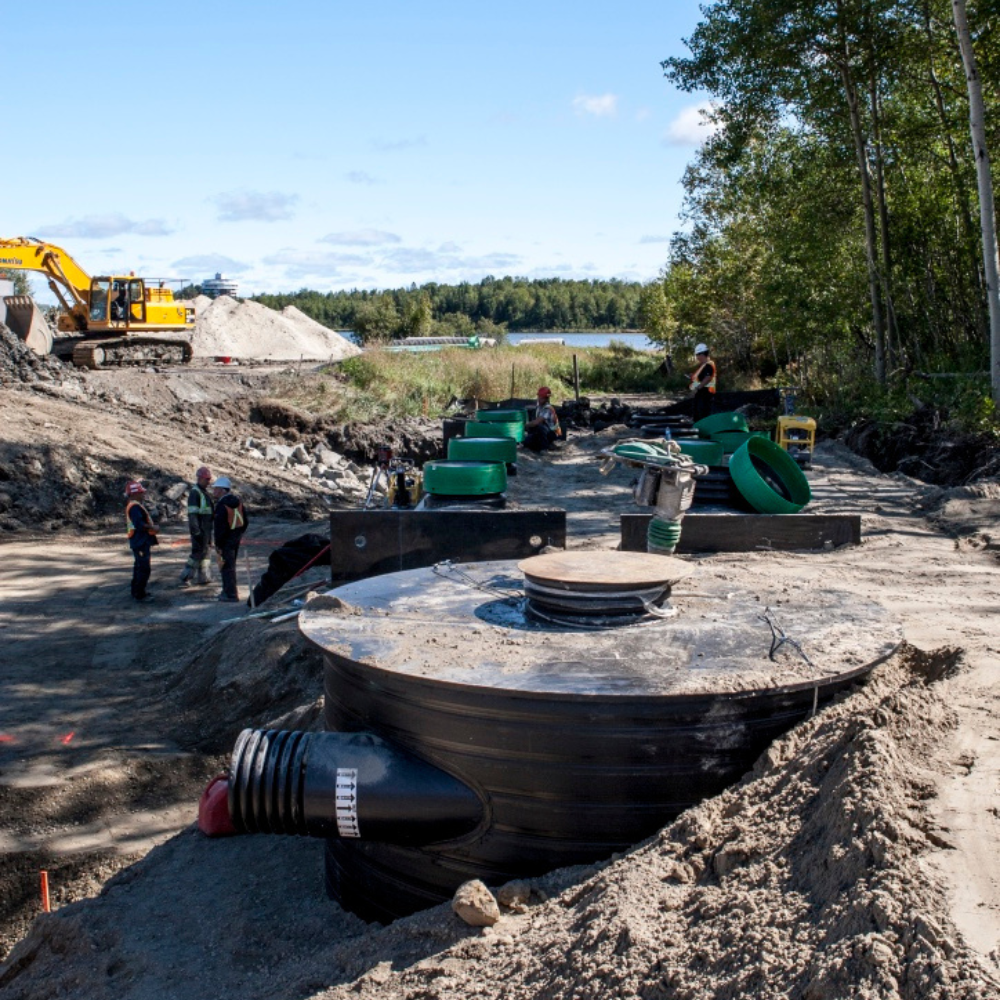
Protecting downstream infrastructure
Settling and separation are part of a complete stormwater treatment approach. Depending on project objectives, they can be used alone or combined with other solutions to protect downstream infrastructure and improve overall system performance.
Within a treatment chain, they help reduce sediment, debris and floatable loads before stormwater is directed toward a filtration, retention, infiltration or discharge system.
Complementary Solutions

The choice of a settling and separation solution depends on treatment objectives, flow rates, site constraints, available space and maintenance requirements.
Soleno experts can help you select a solution adapted to the project, whether it involves a settling and separation unit or a CDS offered in HDPE or concrete.
A settling and separation solution is a structure designed to capture sediment, sand, debris and floatables carried by stormwater runoff. It helps reduce the material load in the stormwater network and protects downstream infrastructure.
Settling allows heavier particles, such as sand and sediment, to settle in a collection area. This helps limit material accumulation in pipes, retention basins, infiltration systems or filtration units.
Settling mainly refers to the settling of heavier particles, while separation can also capture debris, floatables and certain lighter materials through the hydraulic configuration of the structure.
A settling and separation solution is recommended when stormwater runoff carries sediment, debris or floatables that could affect the performance of drainage networks and downstream systems. It is commonly used in parking lots, municipal streets, industrial sites, residential developments and roadway infrastructure.
No. Settling and separation generally provide primary treatment. They reduce sediment and debris loads, but a filtration solution may be required when the project calls for a more advanced level of treatment.
Installing a settling solution upstream helps reduce the amount of sediment and debris entering the basin or infiltration system. This helps limit clogging, facilitate maintenance and preserve long-term performance.
A CDS is a hydrodynamic separator designed to capture sediment, debris and floatables in stormwater runoff. It can be integrated into stormwater networks to support water treatment before discharge or before the water is directed to a downstream system.
An HDPE CDS is lightweight, corrosion-resistant and generally easier to handle on site. A concrete CDS may be preferred when municipal standards, design habits or project requirements favor conventional concrete structures. The choice depends on project constraints and design preferences.
The choice depends on flow rates, available space, installation depth, treatment requirements, site constraints, maintenance access and applicable project standards
Yes. Sediment, debris and floatables captured in the structure must be inspected and removed periodically to maintain system performance.

