Agricultural Water Management Solutions
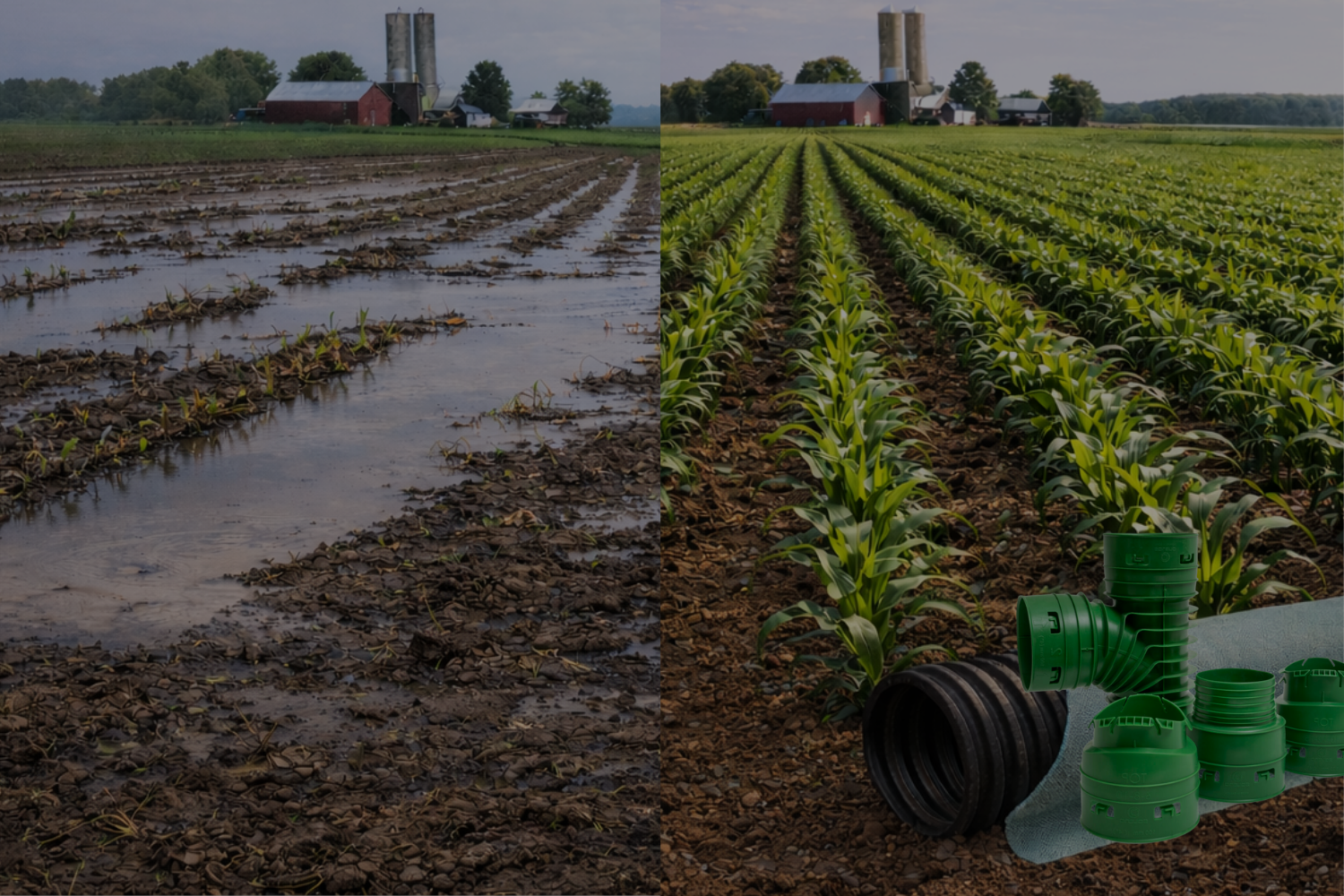
HELPING MODERN FARMERS INCREASE CROP YIELDS BY UP TO 30% THROUGH SMARTER WATER MANAGEMENT. AGRICULTURAL EXPERTISE SINCE 1977.

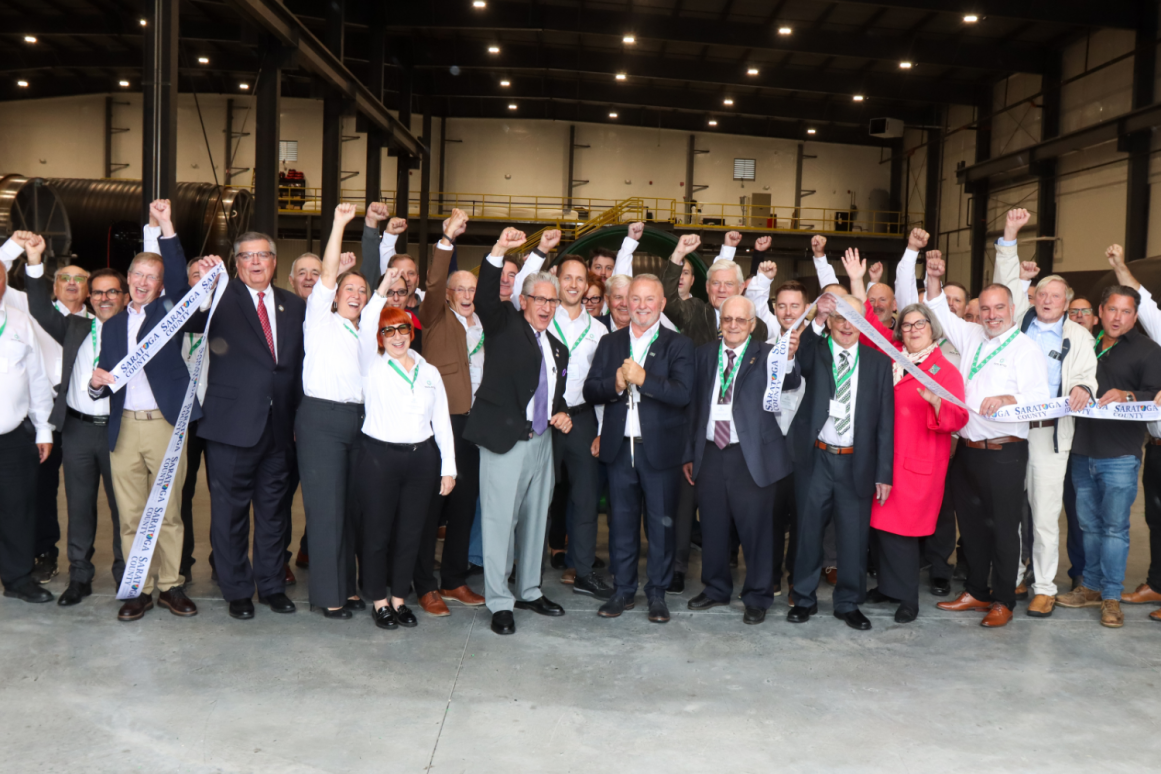
To learn more about the news, read the press release. Saint-Jean-sur-Richelieu, September 26th, […]
More news
HELPING MODERN FARMERS INCREASE CROP YIELDS BY UP TO 30% THROUGH SMARTER WATER MANAGEMENT. AGRICULTURAL EXPERTISE SINCE 1977.
WATER IS MONEY
Today’s farmers face constant pressure: the pressure to produce more with less, improve yields, control costs and make every operation more efficient.
In a world where weather conditions and many external factors remain beyond our control, focusing on what we can manage becomes essential. And one of the most important factors we can manage is water.
Since 1977, Soleno’s mission has been the sustainable management of water. By developing innovative solutions, we help optimize how water is collected, conveyed, controlled and stored to support soil health, crop performance and more efficient farming operations.
Up to 30% more yield from the same field.
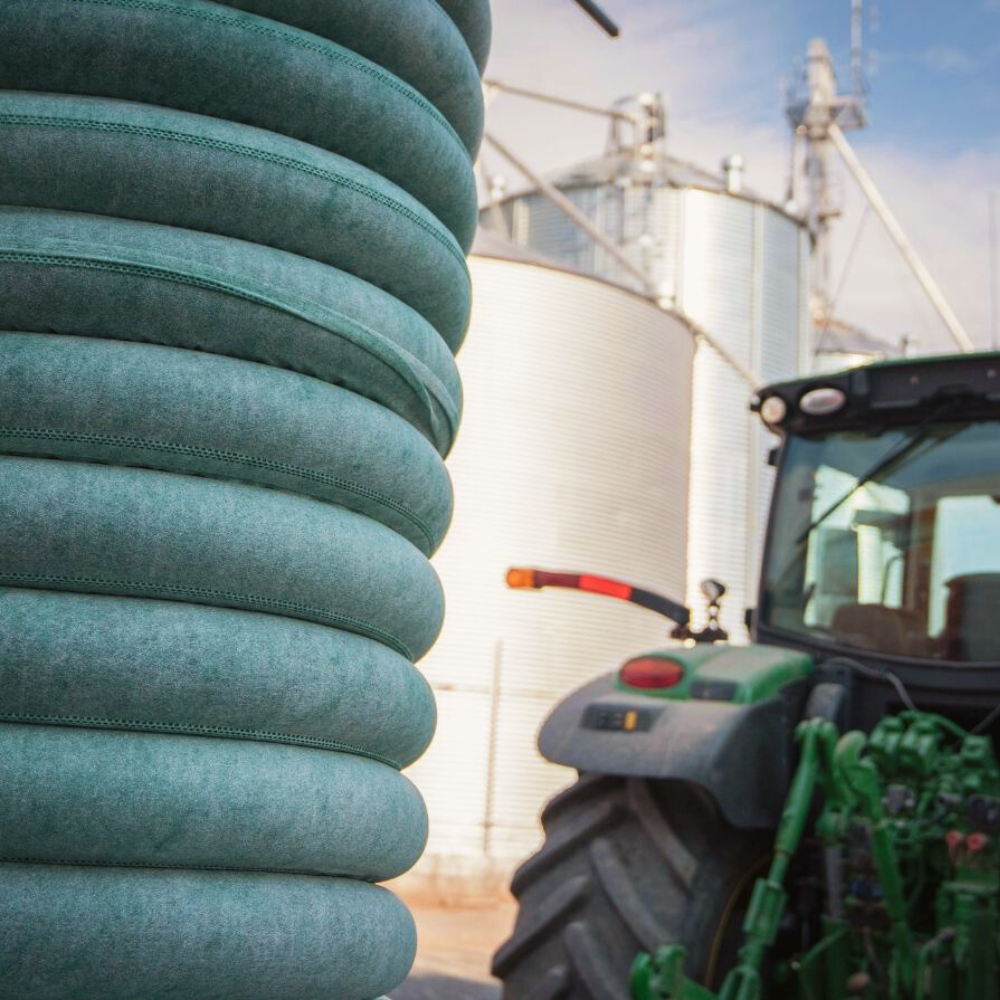
The Most Complete Agricultural Product Ranges on the Market
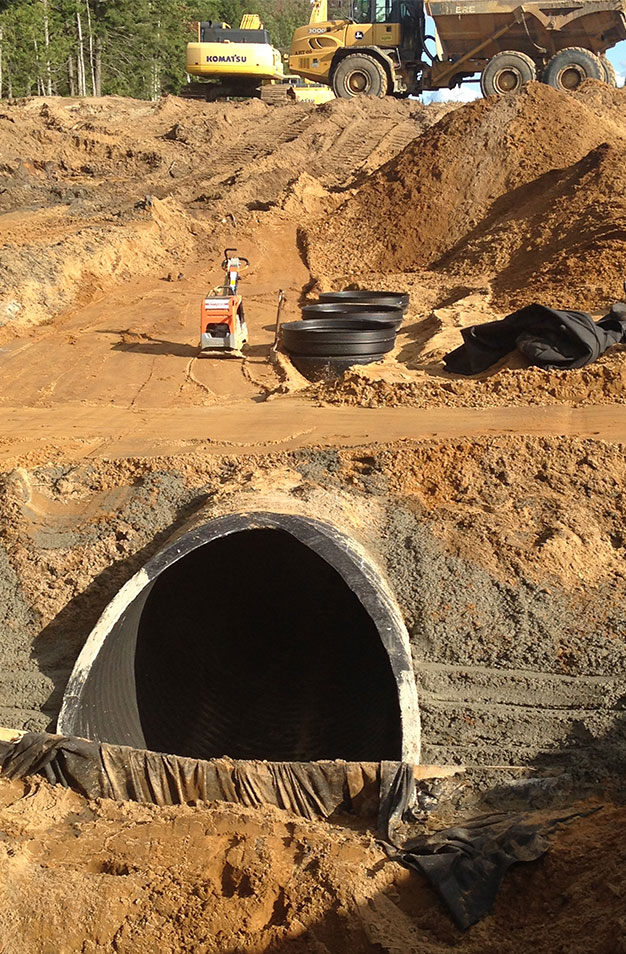
Planning agricultural drainage and water management infrastructure is a key component of an integrated strategy for managing surface water and groundwater, controlling erosion and improving crop performance.
An effective subsurface drainage system should allow excess water to flow out of agricultural soils by gravity while helping maintain the water table at an appropriate level.
With an extensive selection of perforated agricultural drainage pipes, filter socks, drainage accessories, custom water-storage solutions and water-control systems, Soleno offers everything needed to build a solution adapted to your farm:
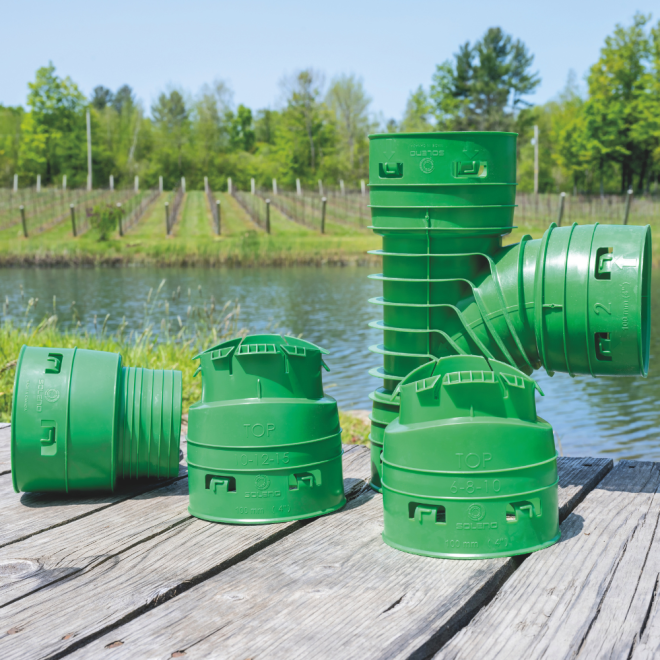
Manufactured using high-precision injection molding, our drainage fittings deliver consistent quality and exceptional dimensional accuracy.
Each component features universal bell connections designed to provide a reliable fit with different types of drainage pipe, whether manufactured by Soleno or another supplier.
Their rigid construction supports lasting performance, even under demanding installation conditions. The universal connection design also helps maintain hydraulic continuity throughout the drainage system.
Combine drainage efficiency with filtration and permittivity performance to optimize field drainage, and thus agricultural yields.
When agricultural drains are buried beneath productive land, consistent quality is essential.
Plastic quality can vary considerably from one product to another. Manufacturers certified by an independent organization rigorously test their raw materials and finished products to verify their dimensions, mechanical properties, performance and manufacturing consistency.
Soleno agricultural drainage pipes are BNQ certified. This independent certification helps reduce the risks associated with product quality and protects the long-term value of the drainage system.
There are many reasons to capture and store water on a farm, from reducing dependence on wells and precipitation to creating a reserve for secondary uses.
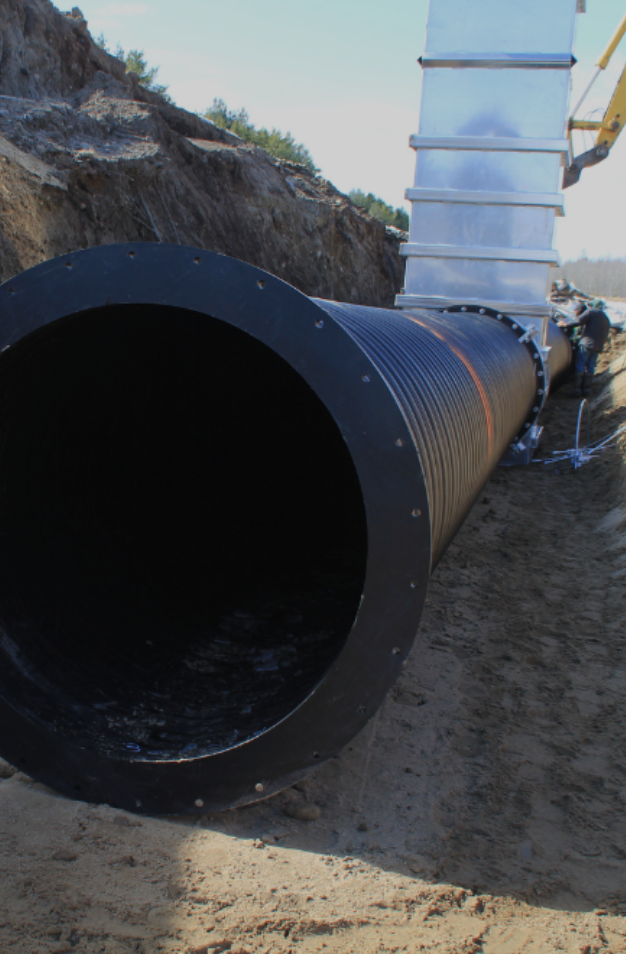
Built using internationally recognized large-diameter HDPE pipe technology, KUSTOMFLO tanks are considerably lighter than many concrete alternatives. Their lower weight can simplify handling and help reduce installation requirements and costs.
KUSTOMFLO tanks also provide excellent resistance to corrosion, root intrusion and biological growth. Their custom design supports durable performance and allows the tank, connections and access points to be adapted to demanding agricultural sites.
During harvest, large volumes of water often need to be moved quickly. System efficiency therefore becomes essential to controlling operating costs and maintaining reliable, durable infrastructure.
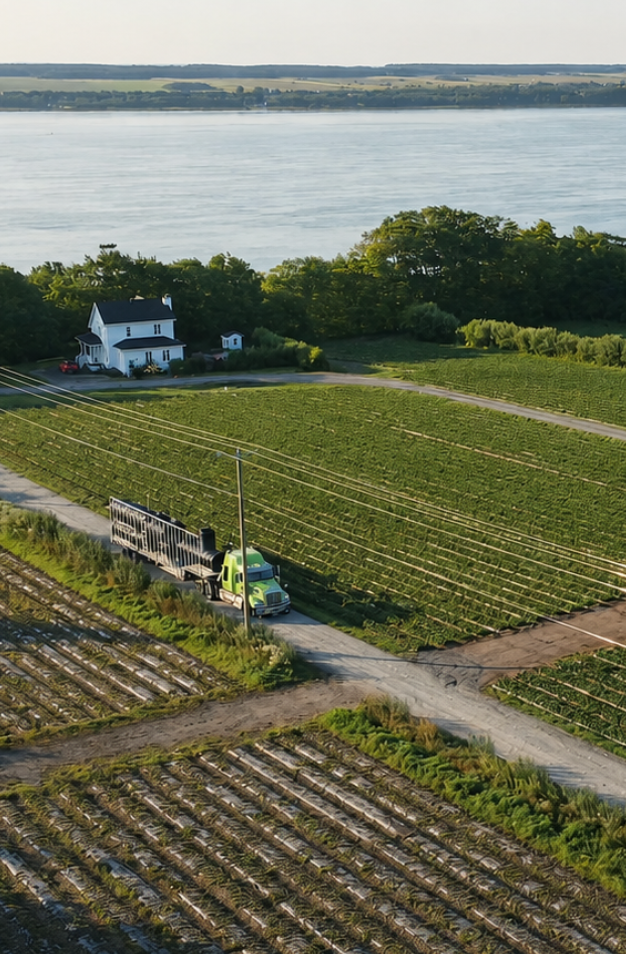
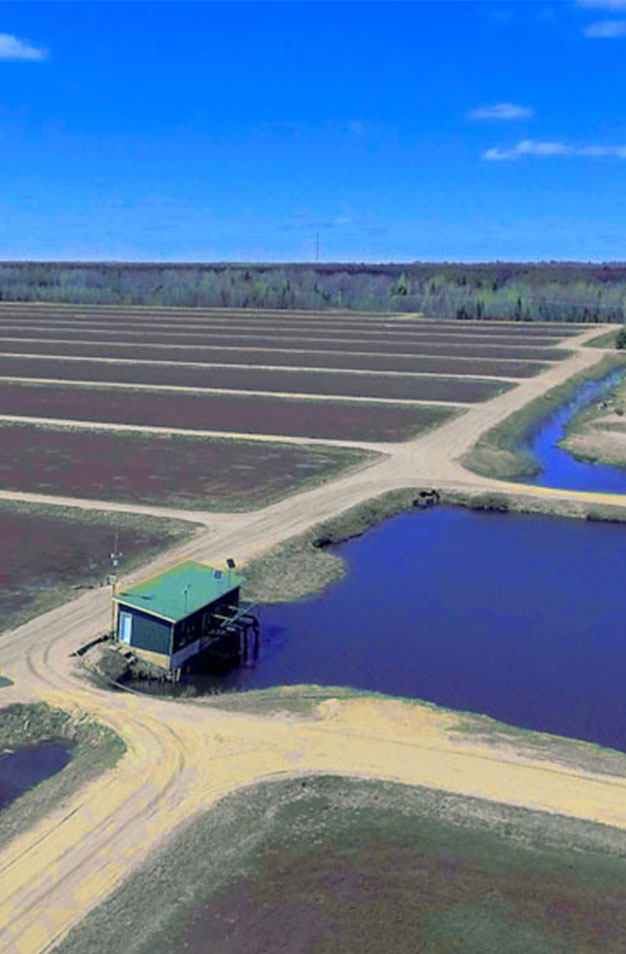
For more than 20 years, Soleno has worked alongside cranberry growers on custom water-management projects. This experience gives our team a clear understanding of field conditions and allows us to adapt every system to the farm’s operational and hydraulic requirements.
Talk to one of our agricultural experts about your project.
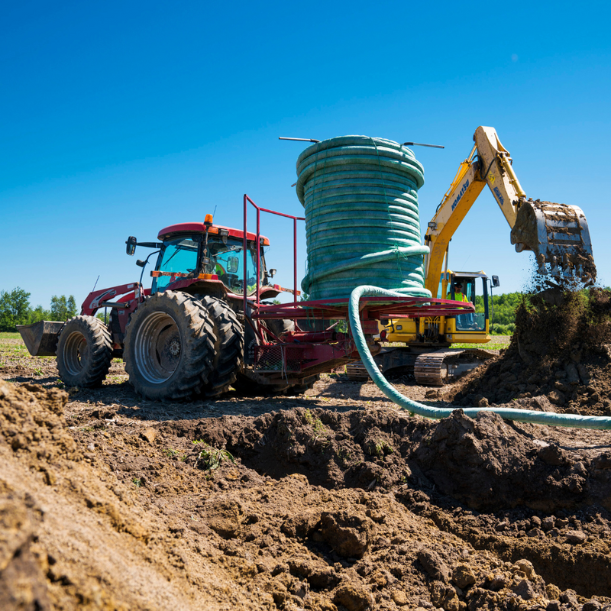
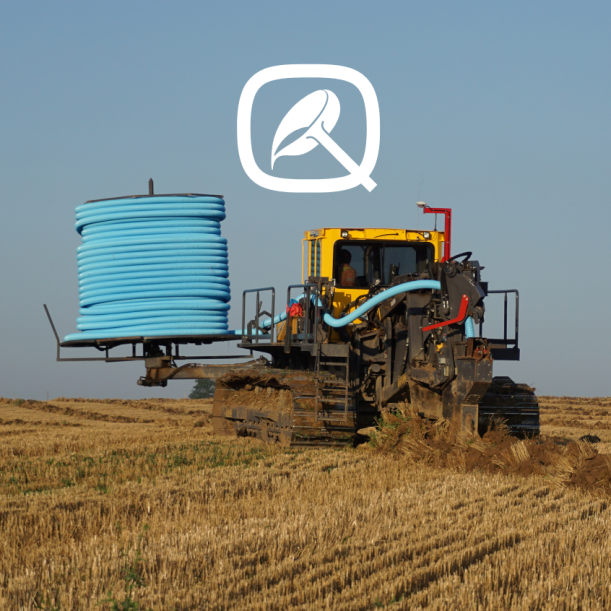
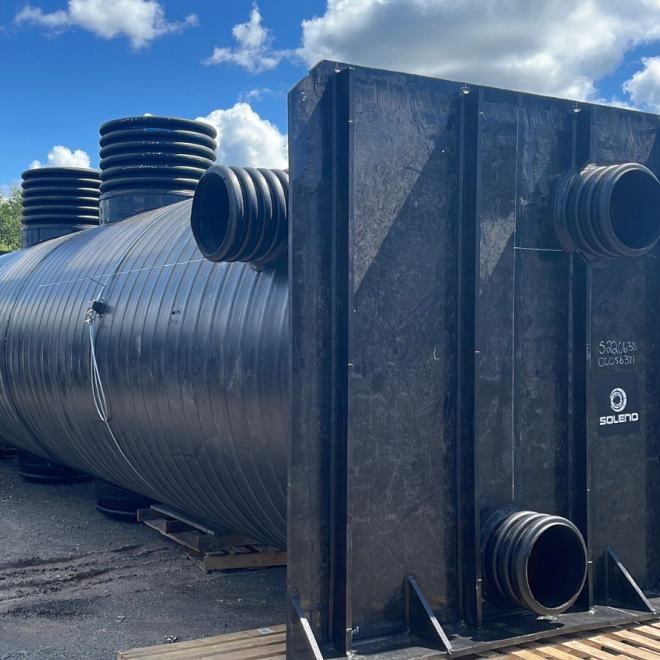
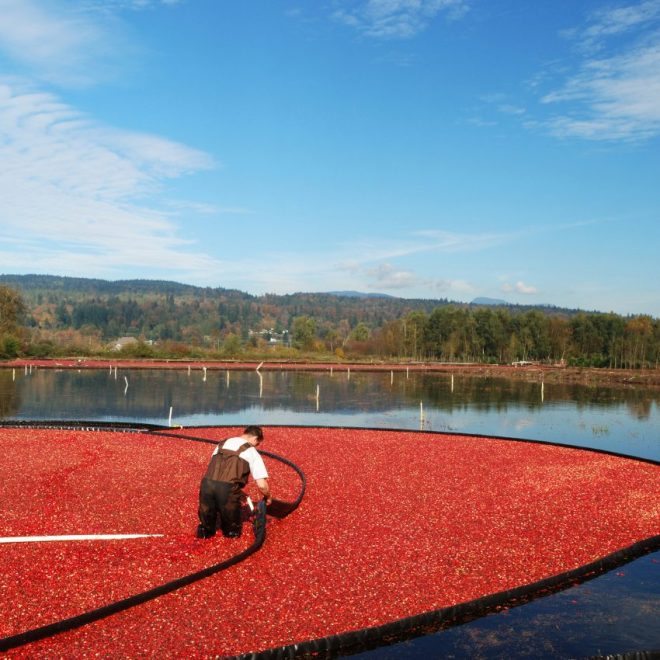
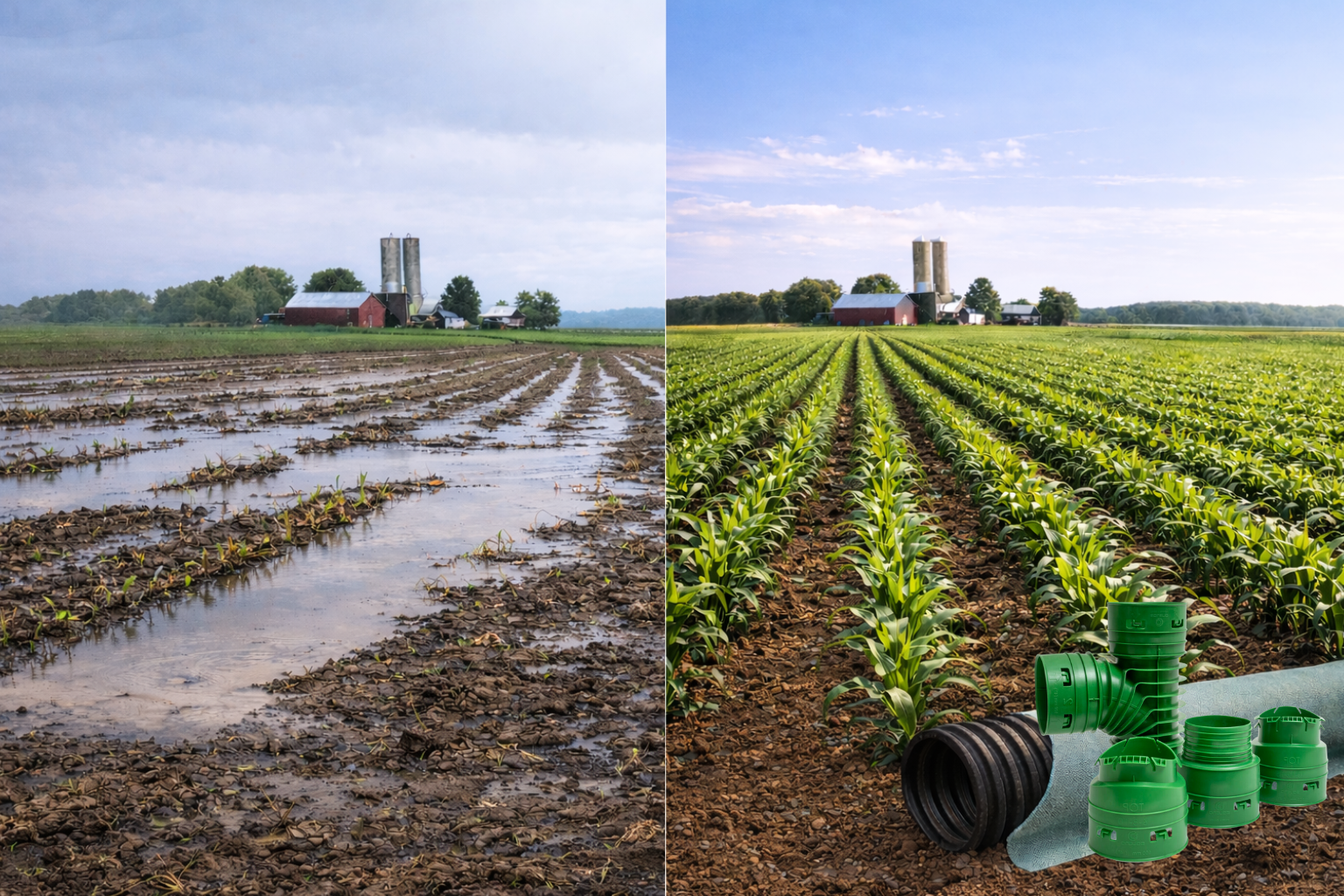
Whether it involves draining saturated fields, harvesting rainwater for everyday operations or controlling flooding in cranberry fields, effective water management directly contributes to farm performance and profitability.
Better-managed water. More productive land. More efficient operations.
Learn More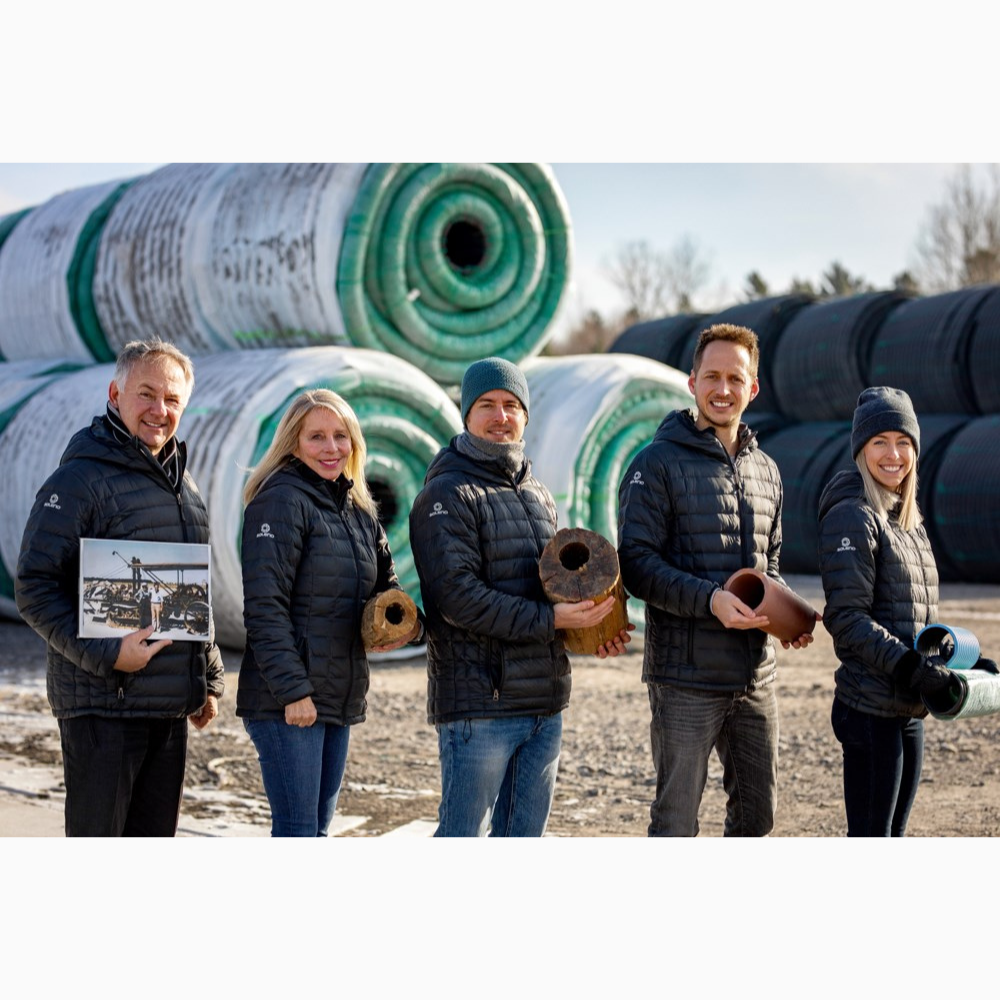
Since 1977
Like you, we believe in thinking long term. A farm is not built in a single season. It grows and evolves over generations.
Soleno is a proudly Canadian-based, family-owned company with deep roots in agriculture. Since our earliest days, we have worked alongside farmers to provide dependable, durable solutions designed to stand the test of time.
Sustainable water management is about more than individual products. It is about building complete systems that support your crops, your operations and the long-term future of your farm.
Everything you need to know about agricultural drainage and water management.
Water can support production, but it can also become a major constraint. Excess water can saturate the soil, reduce aeration, restrict root development and delay fieldwork. Conversely, limited water availability can disrupt farm activities and increase dependence on wells or precipitation.
Effective water management means having the right amount of water in the right place at the right time. Depending on the operation, this may involve draining saturated fields, collecting surface runoff, harvesting rainwater, creating a water reserve or controlling flooding cycles in cranberry fields.
Better water control can help protect yield potential, reduce certain losses, improve fieldwork windows and make operations more predictable. Profitability ultimately depends on implementing a solution suited to the land, crops, existing infrastructure and objectives of the farm.
Working with an experienced supplier such as Soleno provides access to solutions that can be adapted to the technical and operational requirements of each project.
The profitability of a drainage project depends on the circumstances of each farm. Drainage may be particularly valuable when saturated areas regularly cause uneven crop growth, delayed fieldwork or production losses.
The investment should be evaluated according to the affected acreage, crop value, frequency of excess-water problems, installation cost, expected service life and anticipated operational benefits.
A properly designed system can represent a long-term investment in the productivity and practical value of farmland. The calculation should not be based solely on a potential increase in yield. It should also consider avoided losses, the recovery of underperforming acreage, fewer delays and improved working conditions.
Historical losses in wet areas, lost field days, the cost of repeating operations and the value of more consistent production can be compared against the initial investment, maintenance costs and anticipated service life. Using farm-specific historical data produces a more credible estimate of the investment’s payback period.
No. Even neighbouring fields can require very different drainage configurations. Pipe type, diameter, spacing, depth, perforated area, filter sock and collector capacity should all be determined according to actual project conditions.
Soleno recommends conducting a soil particle-size analysis to help identify the appropriate drainage and filtration solution.
Soil texture and permeability, land slope, water-table depth, crop type, drainage area and outlet capacity all influence the design. An oversized system can increase project costs unnecessarily, while an undersized system may not deliver the required performance. Profitability therefore begins with an appropriate design, not with the isolated selection of a product.
The drain must retain its shape and hydraulic capacity during installation and throughout its service life. Its stiffness, perforated area, diameter and compatibility with fittings can influence water collection, connection quality and overall system reliability.
Soleno’s Mega 3 agricultural drain provides a larger perforated surface area than a conventional Type 3 drain. The final selection should nevertheless reflect the soil, required flow, installation method and project constraints.
A properly selected and installed product helps protect the investment by reducing the risk of deformation, poor connections and inadequate drainage performance.
Independent certification verifies that products meet defined requirements for manufacturing, dimensions and performance. It also helps ensure more consistent quality from one production run to another.
This consistency is particularly important for buried drainage systems, since repairing or replacing a component can require major excavation and disrupt farming operations.
Soleno agricultural drains are BNQ certified. Using certified products helps reduce risks related to component quality and protect the long-term value of the installation.
A filter sock allows water to reach the drain while helping limit the movement of soil particles into the pipe. It can therefore support hydraulic performance and reduce the risk of sediment buildup.
The selection should not be based solely on opening size. Soil particle size, water permeability, fabric strength and installation conditions must also be considered.
For certain agricultural soil conditions, Soleno offers the Mega 3 drain with a 250-micron filter sock. A soil or backfill analysis remains necessary to determine the appropriate filtration envelope for each site.
A drainage system depends on more than drainage pipe alone. Tees, reducers, saddles, adapters, caps, grates and outlets connect the various sections and maintain hydraulic continuity throughout the network.
Poor connections can create restrictions, misalignment, soil intrusion or areas that are difficult to inspect and clean. Compatible accessories make installation easier and allow the system to be adapted to the conditions encountered in the field.
Time saved during installation, fewer corrective measures and dependable connections all contribute to the project’s overall profitability. Soleno offers a complete range of universal drainage fittings designed for reliable, durable connections and easier installation.
Rainwater collected from rooftops can become a valuable resource when it is properly captured, conveyed and stored. Depending on its quality, treatment and applicable regulations, it can be used for activities that do not require potable water.
Rainwater harvesting can reduce potable-water consumption, lower demand on wells, increase the farm’s water independence and put water that would otherwise be discharged to productive use.
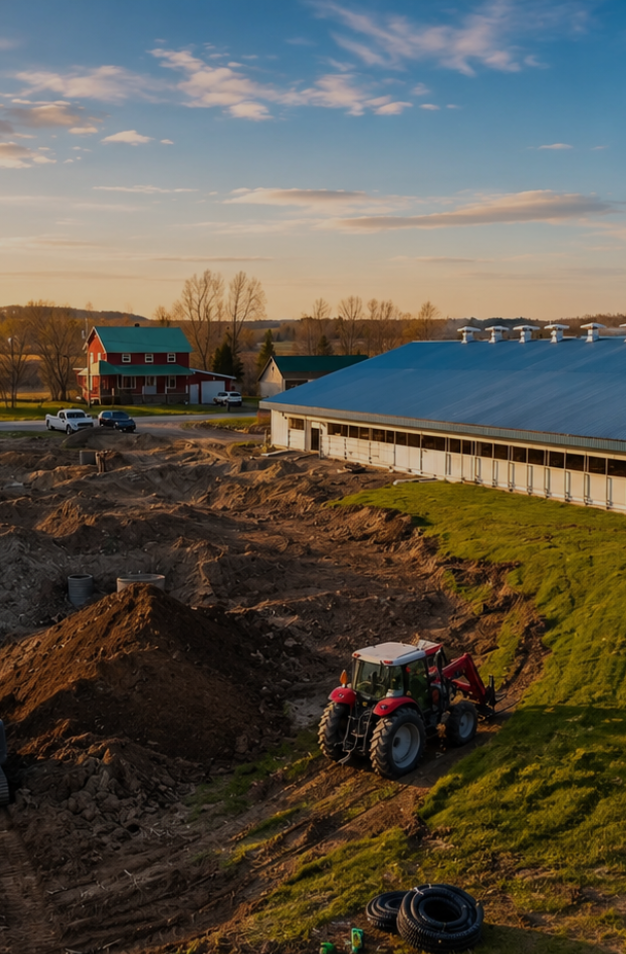
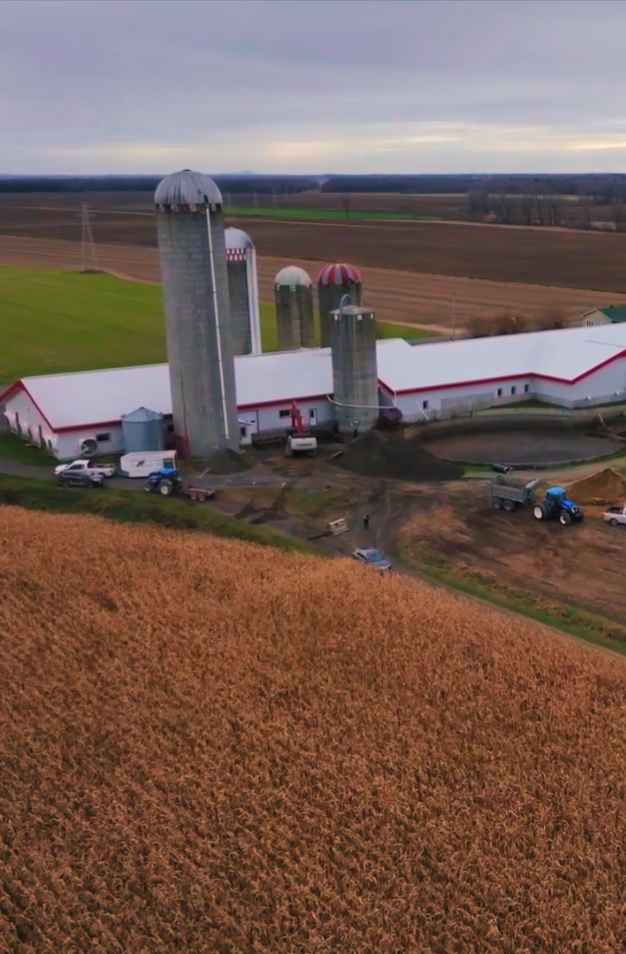
At Valnico Farm, for example, an underground 80 m³ KUSTOMFLO tank collects rooftop runoff and supplies water to a manure separator. The solution reduces dependence on wells while preserving valuable working space at the surface.
At Onésime Pouliot Farm, a custom HDPE tank connected to the building’s gutter system was installed to supply non-potable water to washroom facilities.
In both cases, harvesting rainwater reduces reliance on conventional water sources and generates day-to-day water savings. These projects demonstrate that the profitability of a rainwater-harvesting system depends not only on storage volume, but also on the ability to reuse the collected water regularly throughout farm operations.
An underground tank preserves working space at the surface and helps protect stored water from light, temperature fluctuations and certain external contaminants. This can be particularly advantageous where space around farm buildings is limited or regularly used by machinery.
Tanks manufactured from large-diameter HDPE pipe can be customized according to the required volume, connections, access points and site constraints. Their made-to-order design also facilitates integration with existing farm infrastructure.
Water plays an essential role throughout cranberry production. It may be used for irrigation, frost protection, field management and flooding during harvest.
The operation’s performance depends on its ability to move large volumes of water quickly and under controlled conditions. Pipes, control structures, pumping stations, reservoirs and connections must work together as an integrated network.
An effective system helps growers meet critical operational windows, reduce flooding and drainage times and facilitate fruit recovery. Better control can therefore reduce the risks and costs associated with delays.
Soleno has supported numerous cranberry growers with efficient water-management systems, including the development of a new flanged end designed to provide improved watertightness. One recent example is the project completed with Atocas Saint-François in 2025.
Flooding and drainage often need to be completed within precise operational windows. Insufficient hydraulic capacity can extend the process, require pumps and labour for longer periods and complicate harvest coordination.
Properly sized pipes and adapted control structures allow water to be moved more efficiently. Faster water movement helps growers coordinate each stage of harvest and reduce the time during which production areas remain unavailable.
Profitability therefore depends on more than the purchase price of the pipe. Operating time, energy consumption, labour availability and the ability to act at the right moment must also be considered.
The first step is to define the problem that needs to be solved. Saturated soil, limited storage capacity, excessive dependence on wells and difficulty controlling flooding in cranberry fields require different types of infrastructure.
The assessment should identify the source of the water, the volumes to be conveyed or stored, required flow rates, site characteristics, intended uses and existing infrastructure. This information can then be used to select the appropriate drains, pipes, fittings, tanks or control structures.
Support from a specialist helps prevent undersizing, incompatible components and investments that do not address the actual need. A profitable solution begins with a clear understanding of the farm’s operations.
Soleno offers solutions for draining, collecting, conveying, controlling and storing water in agricultural environments. The range includes BNQ-certified agricultural drains, filter socks, universal fittings, pipes in multiple diameters and custom water-storage tanks.
This complementary product offering makes it possible to approach the project as a complete system rather than a collection of isolated products. Soleno’s agricultural experience since 1977 also helps adapt each solution to field conditions and the operational realities of farmers.
The objective is to build durable infrastructure that supports crop production, simplifies operations and protects the farm’s long-term investment.