STORMWATER GEOCELLULAR RETENTION SYSTEM
OUR STORMWATER RETENTION & INFILTRATION SOLUTIONS
High-capacity modular retention systems designed to maximize stormwater management in the most constrained urban environments.



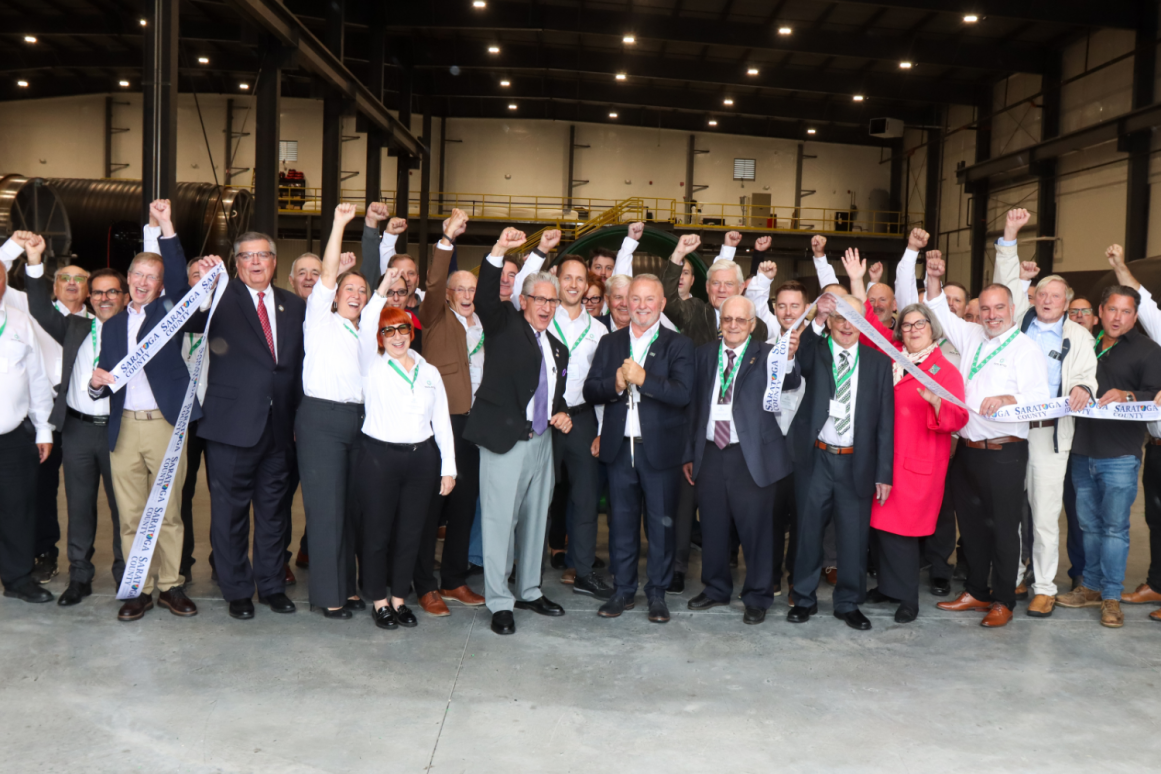
To learn more about the news, read the press release. Saint-Jean-sur-Richelieu, September 26th, […]
More news
High-capacity modular retention systems designed to maximize stormwater management in the most constrained urban environments.
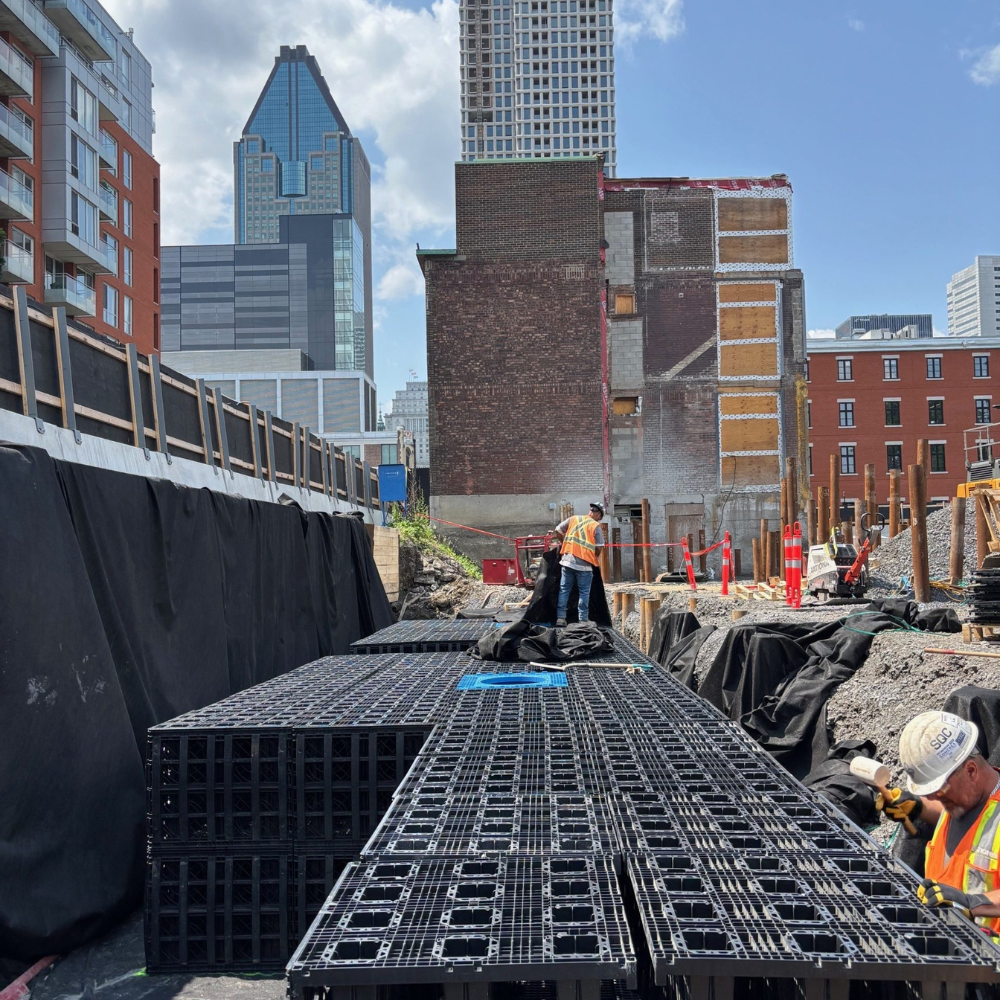
A Stormwater Retention Solution Optimized for Dense Urban Environments
Stormwater management is becoming increasingly challenging in modern urban developments. Growing impervious areas, urban densification, and evolving regulatory requirements demand solutions capable of managing significant stormwater volumes within limited spaces.
Geocellular retention basins offer an efficient approach when site constraints related to footprint, depth, or constructability limit traditional solutions.
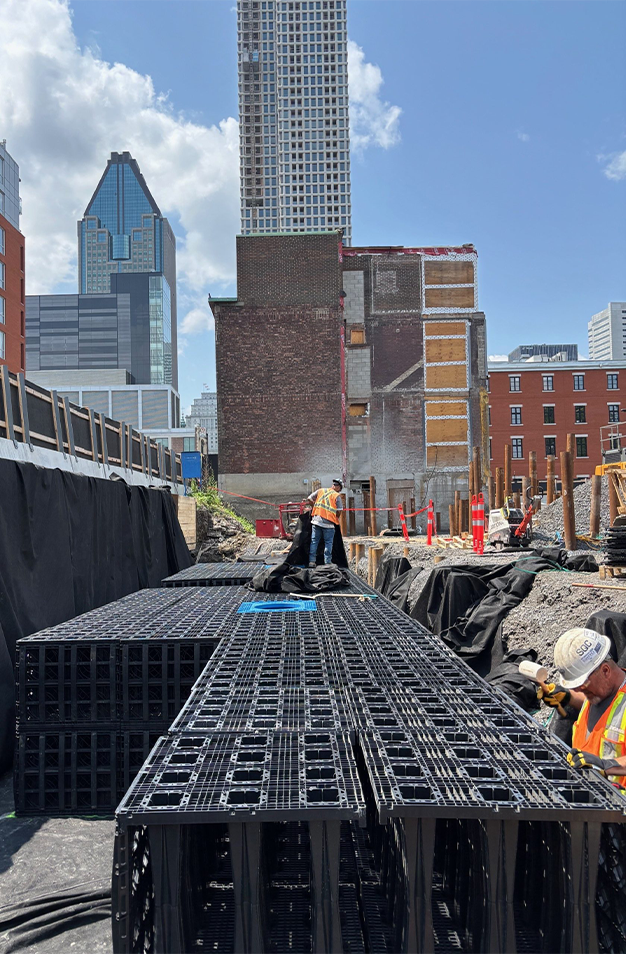
Thanks to their modular structure and extremely high void ratio, they maximize storage capacity while minimizing the space required beneath infrastructure. Geocellular systems are particularly well suited for:
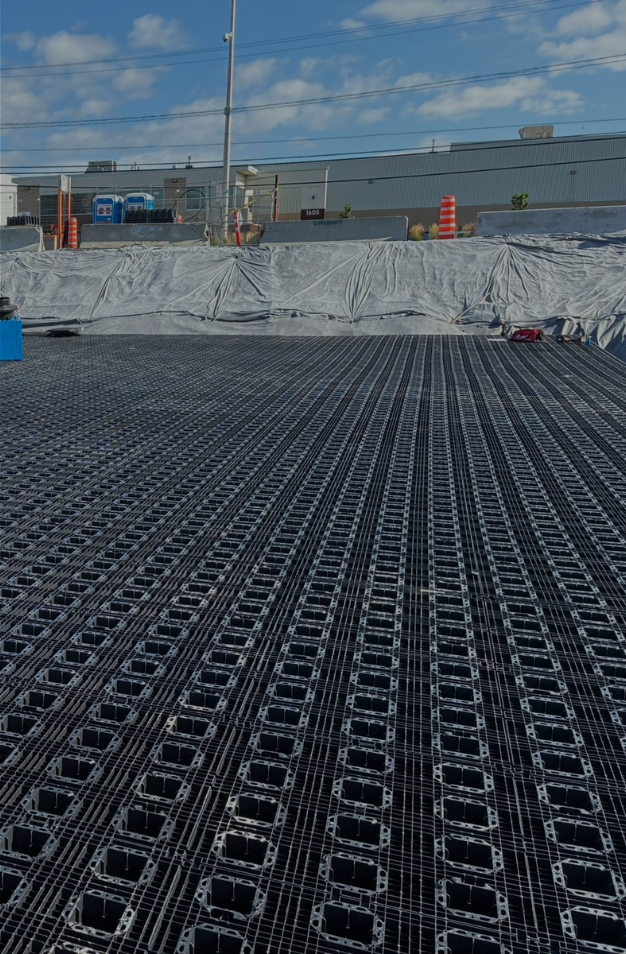
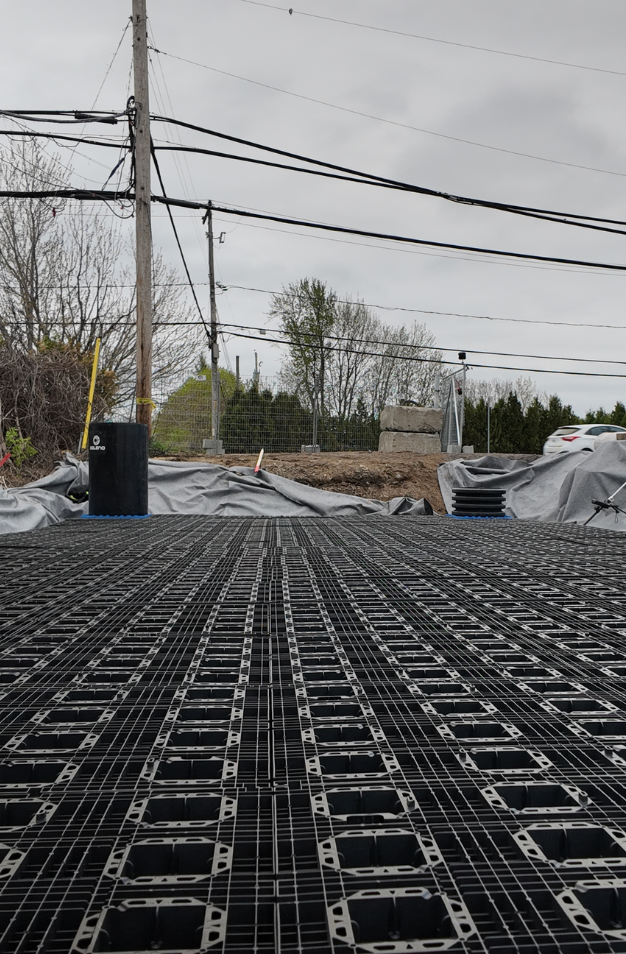
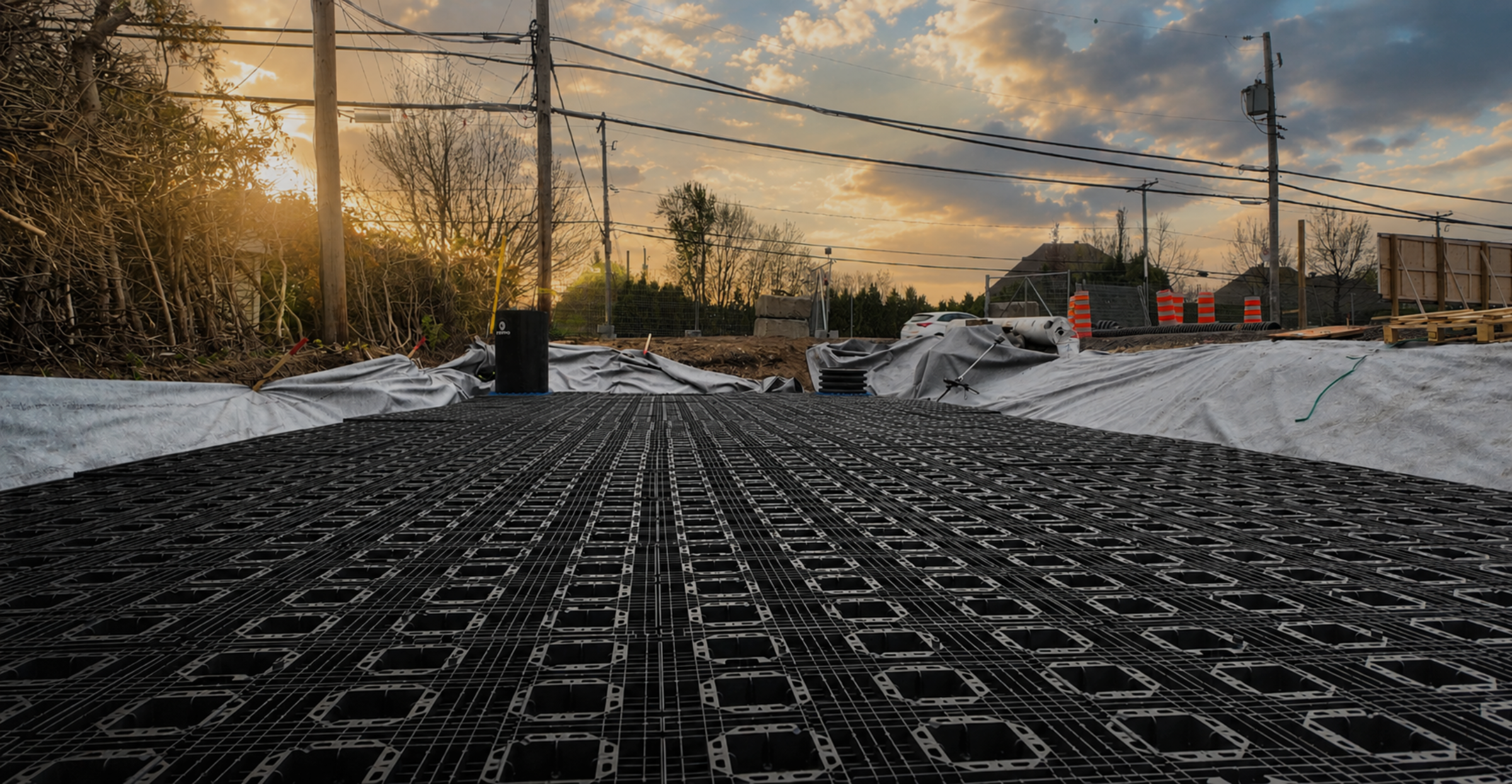
An optimized retention solution for dense urban environments. Retention capacity: 96% of its volume.
Geocellular retention basins are underground modular systems designed to temporarily store stormwater, control peak flows, and reduce pressure on existing drainage networks.
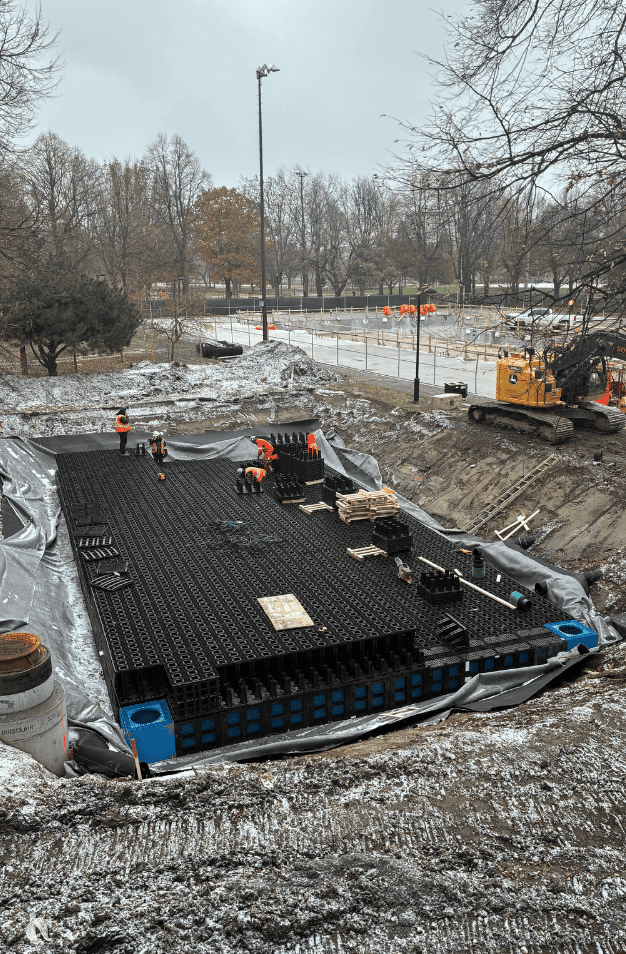
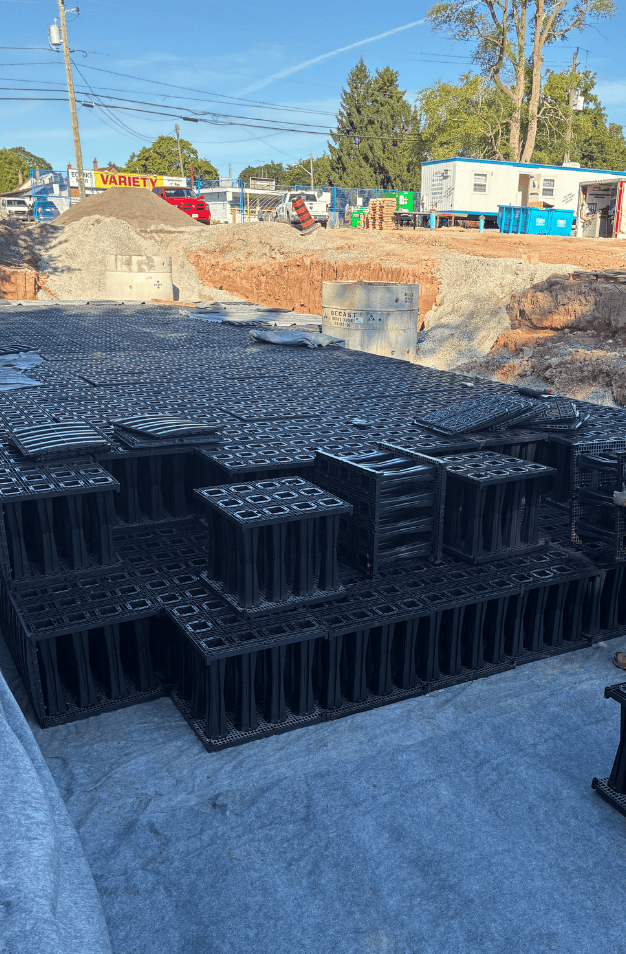
Stormwater first enters a sedimentation chamber where sediments and debris are captured before reaching the storage system. The water is then temporarily stored inside high-void structural cells that maximize storage capacity within a compact footprint.
Depending on the project objectives, the water may be gradually infiltrated into the ground and released back to the drainage network at a controlled rate.
Geocellular systems can be designed for either infiltration or retention applications using geotextile fabrics or impermeable liners according to project requirements.
Their modular design allows the basin to be configured according to site dimensions, available depth, and specific project constraints.
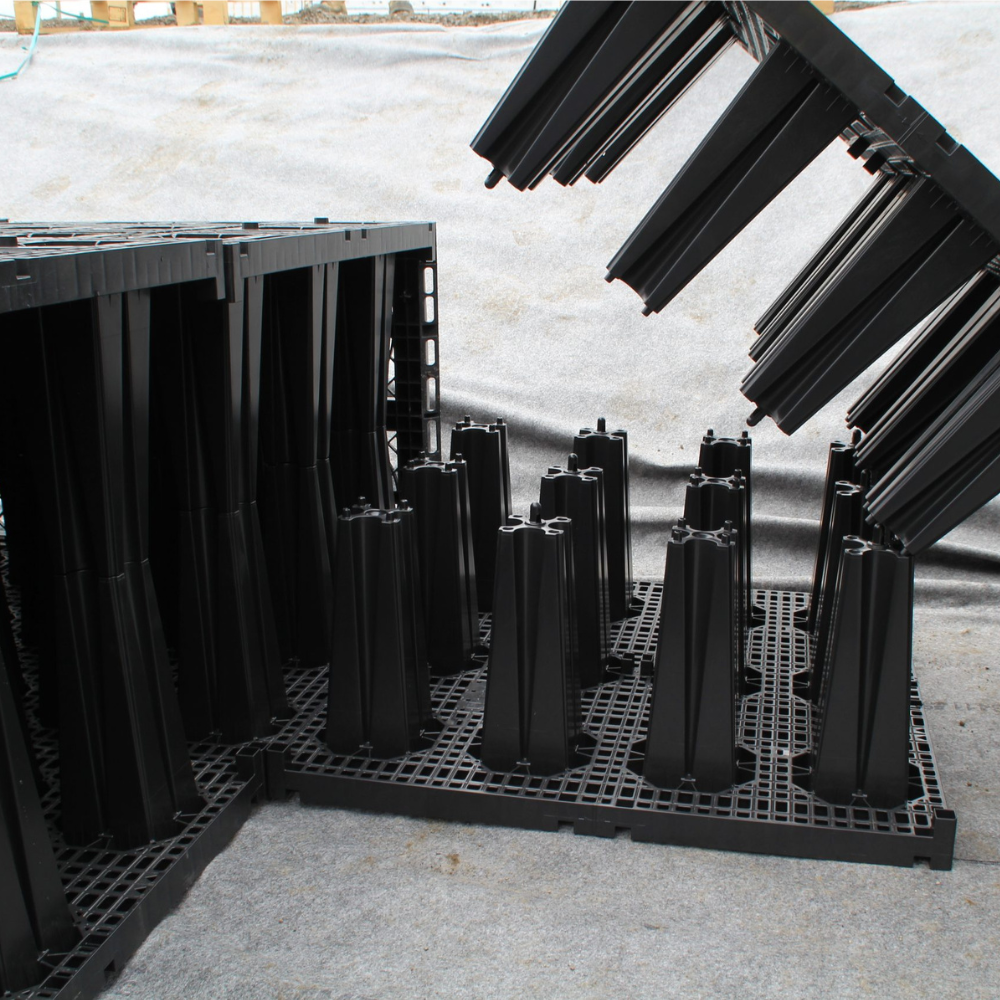
The next generation of retention basins.
Geocellular retention basins are particularly effective when projects require maximum storage capacity within a minimal footprint. Their modular design optimizes stormwater storage while providing flexibility in layout and easy integration into complex urban environments.
With void ratios of up to 96%, geocellular systems can store significant volumes of stormwater within a compact footprint. This makes them especially attractive for projects where space is limited or where infrastructure must be installed beneath existing developments.
Geocellular basins can be configured according to site dimensions, available depths, and structural requirements. Their modularity provides exceptional design flexibility and facilitates integration into complex environments.
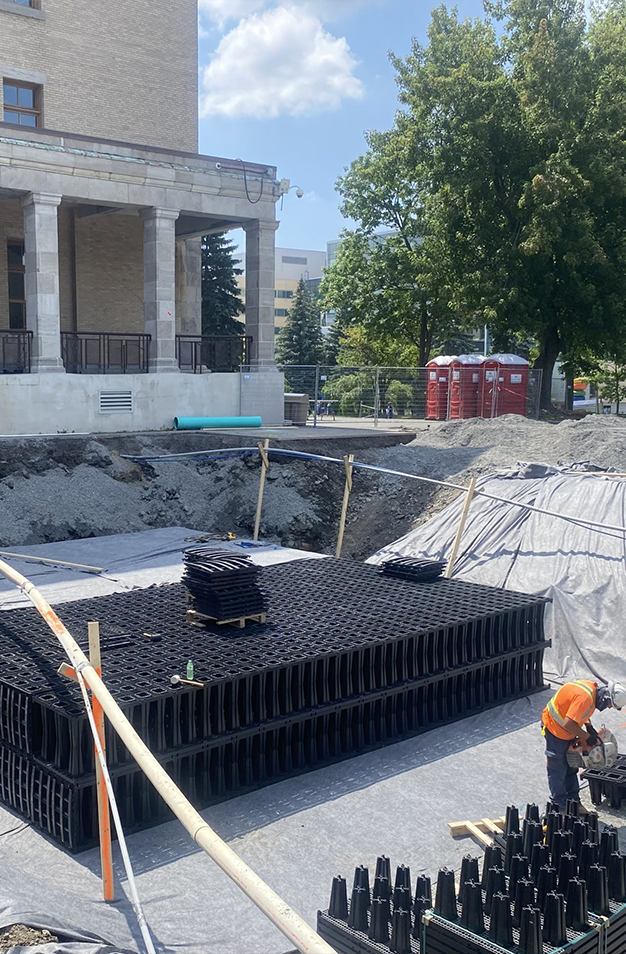
Lightweight modular components simplify transportation, handling, and installation. This modular approach also accelerates construction, particularly in urban environments with limited workspace.
Geocellular systems can be installed beneath parking lots, roads, green spaces, sports fields, and other developed areas, allowing efficient land use without compromising storage capacity.
Modern systems incorporate features that facilitate CCTV inspection, sediment management, and cleaning operations, helping maintain long-term hydraulic performance.
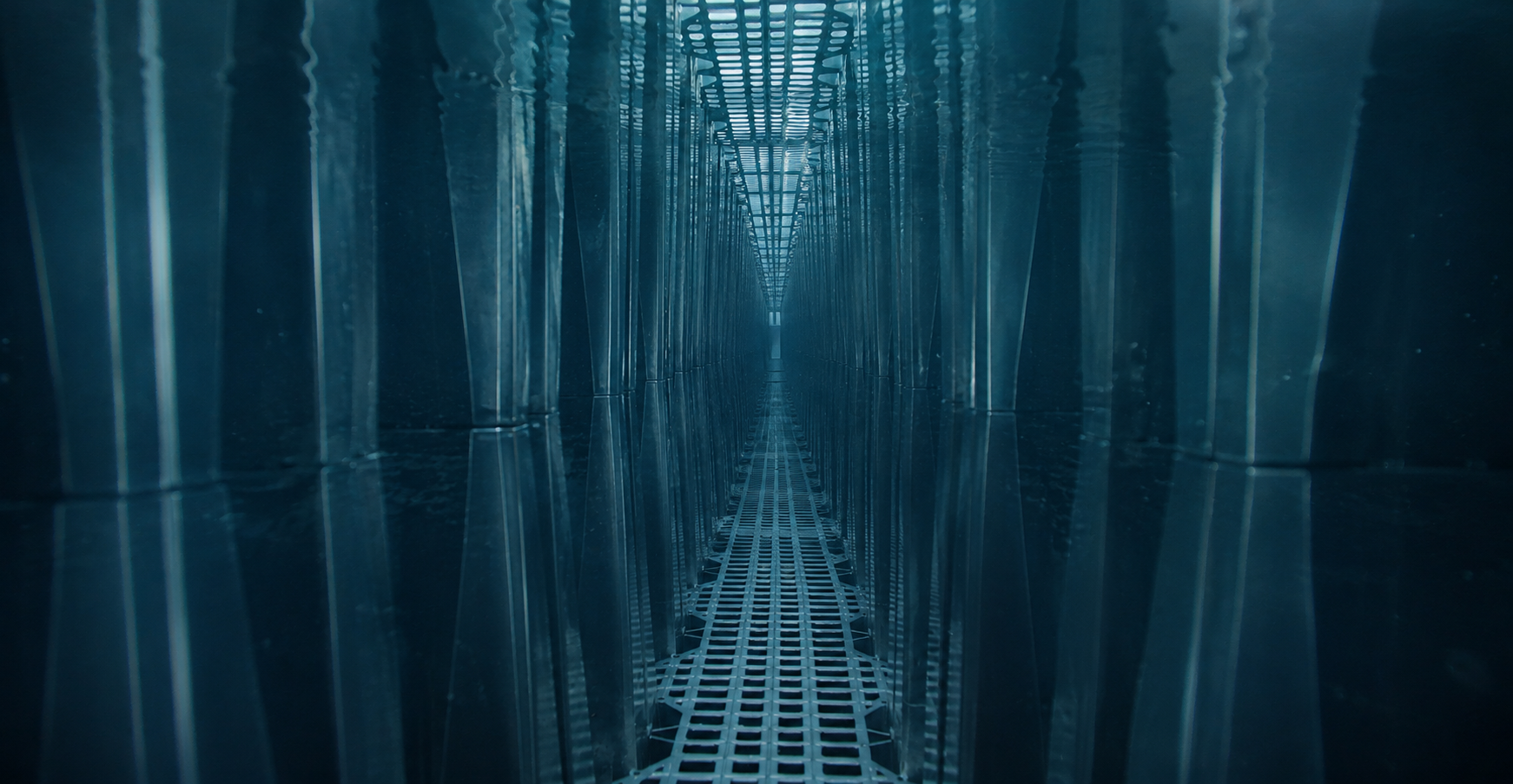
Modular system with the smallest land footprint.
Our high-performance geocellular basin solution.
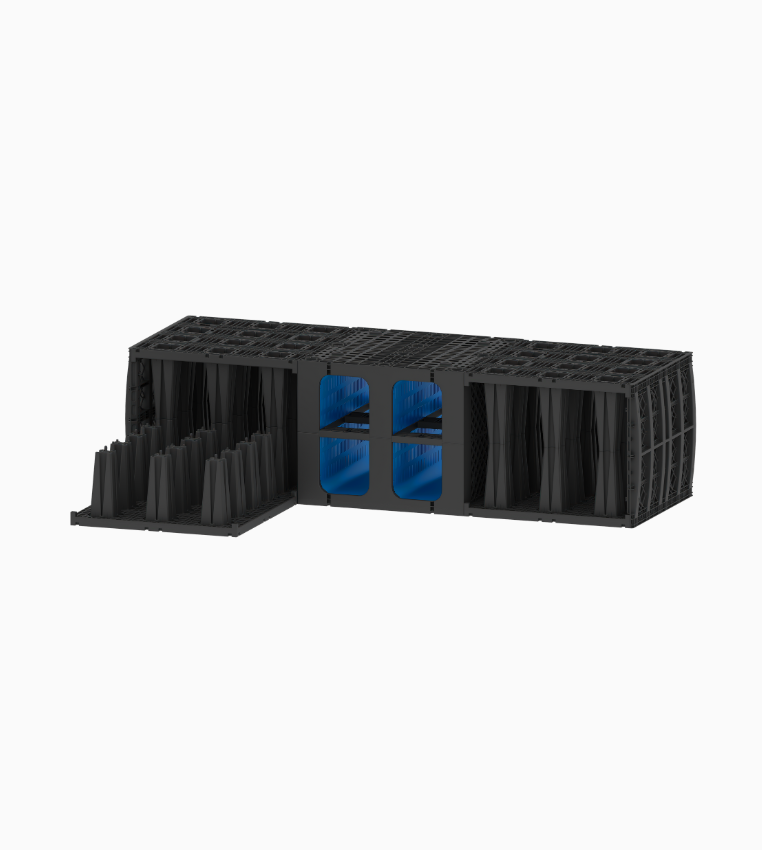
The RAUSIKKO geocellular system was designed to meet the requirements of stormwater management projects that demand high storage capacity, great design flexibility, and superior structural performance.
Thanks to its modular design, RAUSIKKO makes it possible to optimize configurations according to the specific constraints of each project while simplifying installation and maintenance.
Choosing a detention system depends on several technical, hydraulic, and operational factors. Each technology offers specific advantages depending on the constraints of the project.
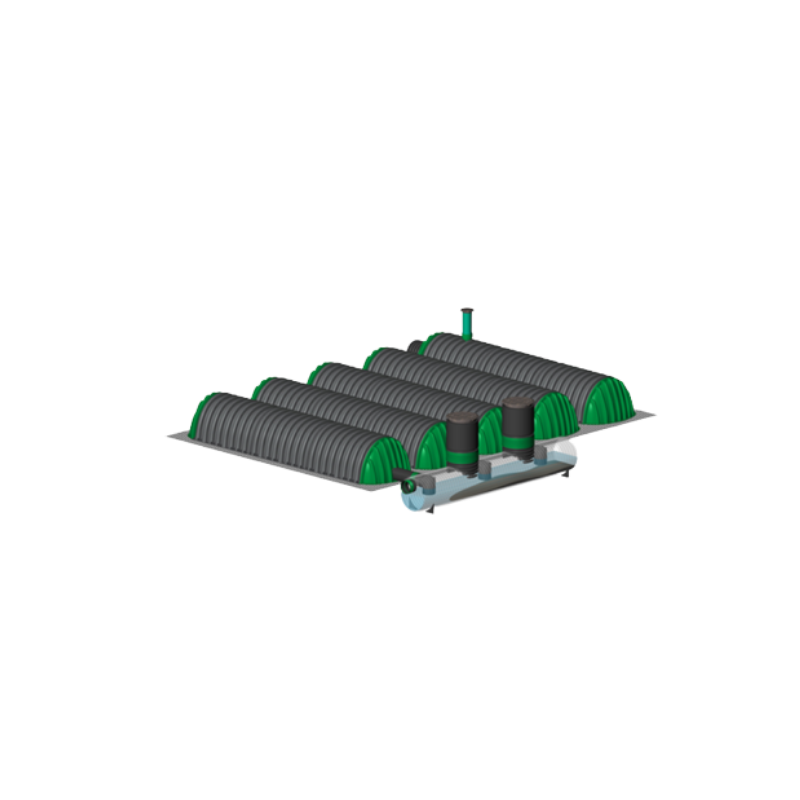
Chamber retention systems are ideal when fast installation and optimization of construction costs are priorities.
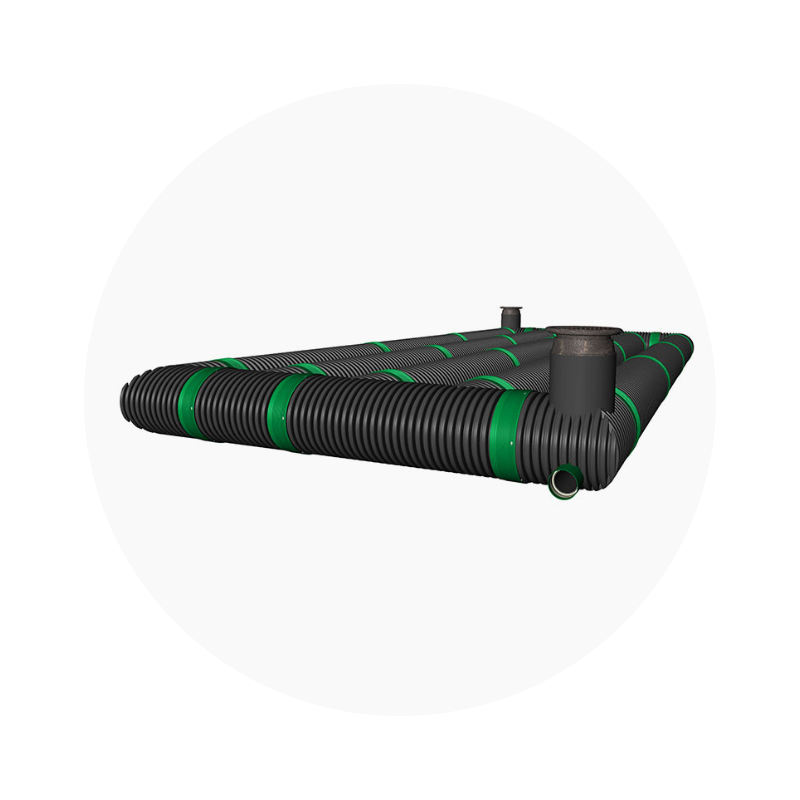
Pipe retention systems are particularly effective for projects requiring very large storage volumes or simplified access for inspection.
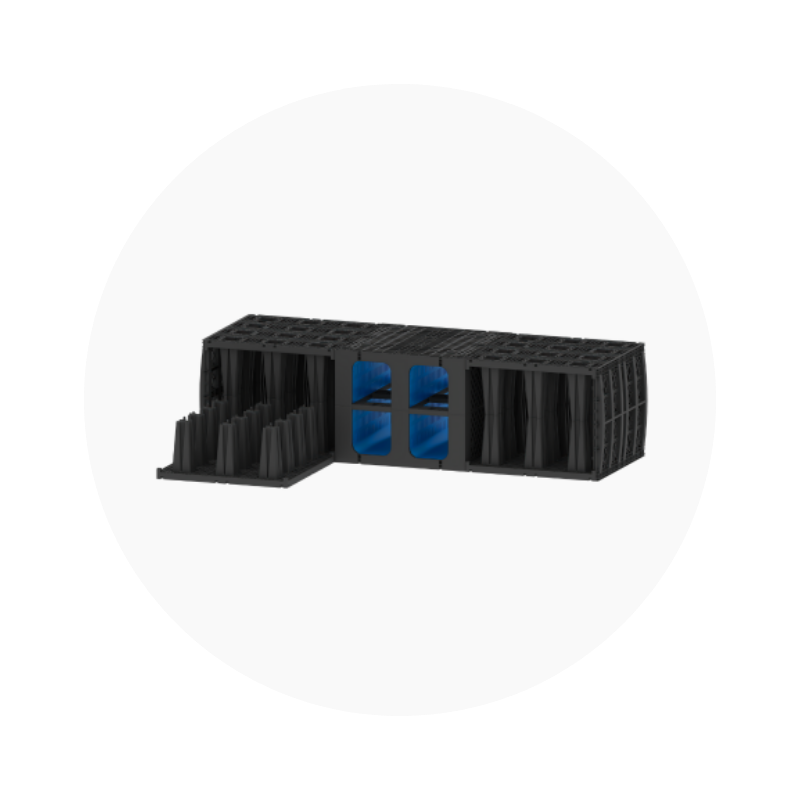
Geocellular basins are recommended in dense urban environments where every square meter must be optimized.
A versatile solution designed to optimize stormwater management in dense urban, municipal, and commercial environments where space is limited and storage capacity is essential.

Our engineering and project teams support engineers, consultants, and contractors throughout every stage of the project to optimize hydraulic performance and constructability.
A geocellular retention basin is an underground modular system designed to temporarily store stormwater in order to control peak flows and reduce pressure on drainage networks. It is composed of high-void structural modules that maximize stormwater retention or infiltration capacity within a compact footprint.
Geocellular retention basins use stacked structural modules with an exceptionally high void ratio (96%), whereas pipe retention basins rely on large-diameter pipes installed in parallel or network configurations. Geocellular systems are generally preferred when available space is limited, when the project footprint must be minimized, or when site geometry is complex. Pipe retention systems are often selected for very large storage volumes, projects requiring maximum watertightness, deep installations, or certain municipal and industrial applications.
Retention chambers are typically open-arch structures installed within a bed of clean stone, while geocellular retention basins consist of enclosed structural modules designed to maximize storage capacity. Because of their high void ratio, geocellular systems often provide greater storage capacity per square meter, more compact configurations, improved space optimization, and easier integration beneath urban infrastructure.
Geocellular retention basins are used in a broad range of applications, including urban developments, commercial parking lots, municipal infrastructure, schools, parks, sports facilities, industrial projects, and multi-family residential developments. Their modular design and compact footprint make them particularly well suited to projects where space is limited and efficient stormwater management is essential.
Geocellular systems can be designed for both stormwater retention and stormwater infiltration. Depending on the project objectives, water may either be stored temporarily and released at a controlled rate or infiltrated gradually into the surrounding soil. Infiltration systems are generally wrapped with geotextile, while retention systems use an impermeable liner to prevent infiltration into the surrounding ground.
The main advantage of geocellular retention basins is their ability to provide very high storage capacity within a minimal footprint. With void ratios of up to 96%, these systems maximize stormwater storage while minimizing the amount of space required, making them especially attractive for urban and space-constrained projects.
Yes. Geocellular systems are commonly installed beneath parking lots, roads, sports fields, landscaped areas, and other developed surfaces. Their structural design can be adapted to accommodate anticipated traffic loads and specific project requirements while preserving the usable surface above the system.
Geocellular systems manufactured from durable polypropylene are designed to provide a long service life when installed according to manufacturer recommendations and project specifications. Most high-quality stormwater management systems are designed for a service life exceeding 100 years. Actual longevity will depend on site conditions, applied loads, installation quality, and long-term maintenance practices.
Yes. Like any stormwater management system, periodic maintenance is recommended to ensure long-term hydraulic performance. Maintenance generally includes CCTV inspections, sediment management, cleaning of maintenance channels, and inspection of access points.
One of the key advantages of the RAUSIKKO system is its integrated sedimentation channels. These channels concentrate sediments in a dedicated area, preventing contamination of the storage basin and allowing efficient cleaning operations. This approach simplifies maintenance and helps preserve the hydraulic performance of the system throughout its service life.
Yes. Geocellular retention basins are frequently used for stormwater infiltration when soil conditions and local regulations permit. Their modular design provides a large infiltration surface area while maximizing underground storage capacity.
Yes. Geocellular systems can be integrated into sustainable stormwater management strategies and combined with biofiltration systems, permeable surfaces, landscape features, and other forms of green infrastructure. Their underground installation allows stormwater to be managed effectively while preserving valuable surface space.
Yes. Geocellular retention basins are widely used in municipal applications to control peak flows, optimize infrastructure performance, manage stormwater in urban environments, and reduce the burden on existing drainage networks. Their flexibility and compact design make them particularly well suited to modern municipal stormwater management strategies.
Yes. Soleno’s technical teams support engineers, designers, and contractors throughout the design and construction process. This support includes solution selection, preliminary system configuration, hydraulic optimization, technical drawings and details, constructability reviews, and integration of the stormwater system into the overall project design.