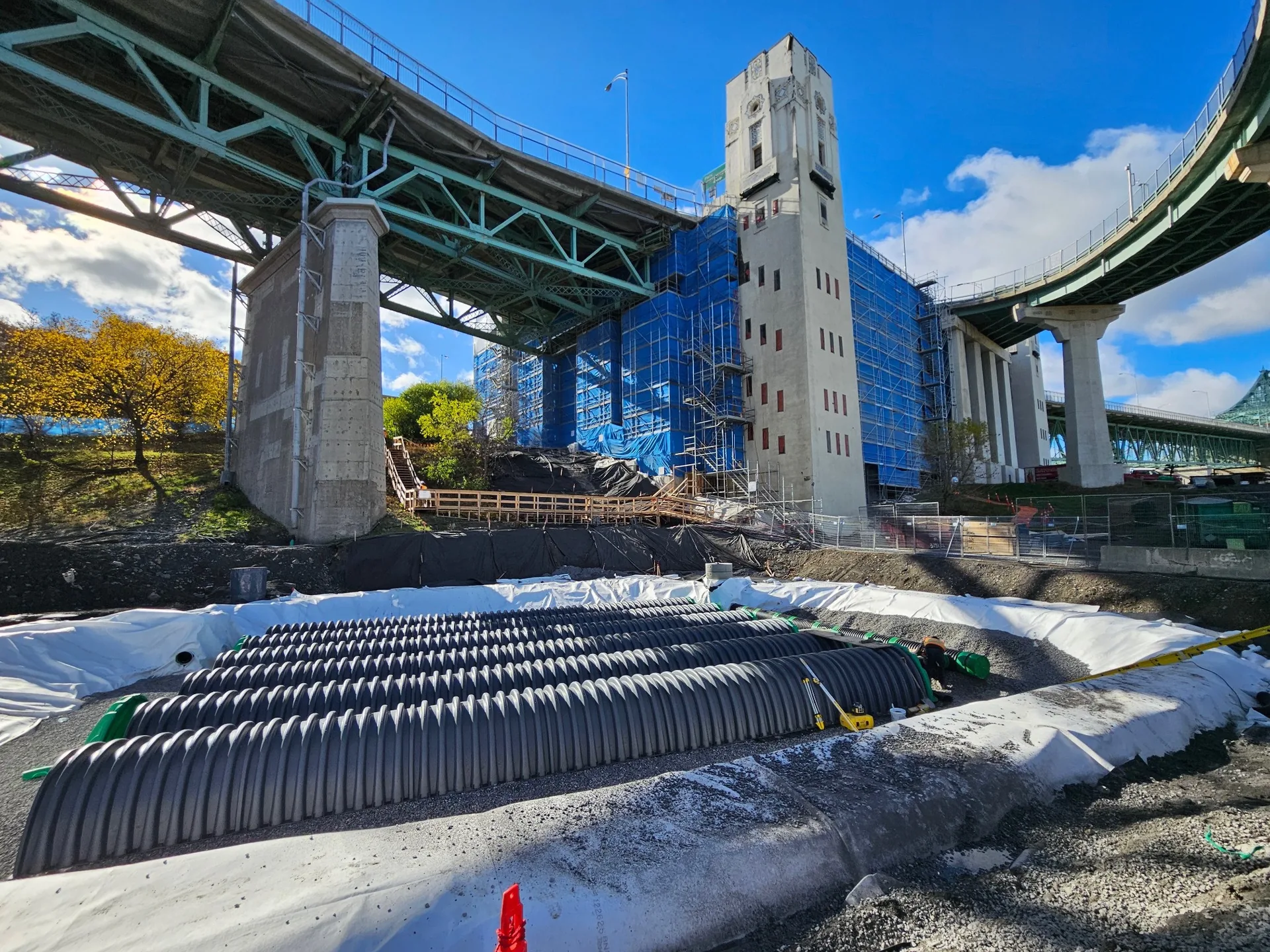
Underground Detention and Infiltration Systems
Explore underground systems for stormwater detention and infiltration, onsite septic dispersal and water storage.


To learn more about the news, read the press release. Saint-Jean-sur-Richelieu, September 26th, […]
More news
Explore underground systems for stormwater detention and infiltration, onsite septic dispersal and water storage.
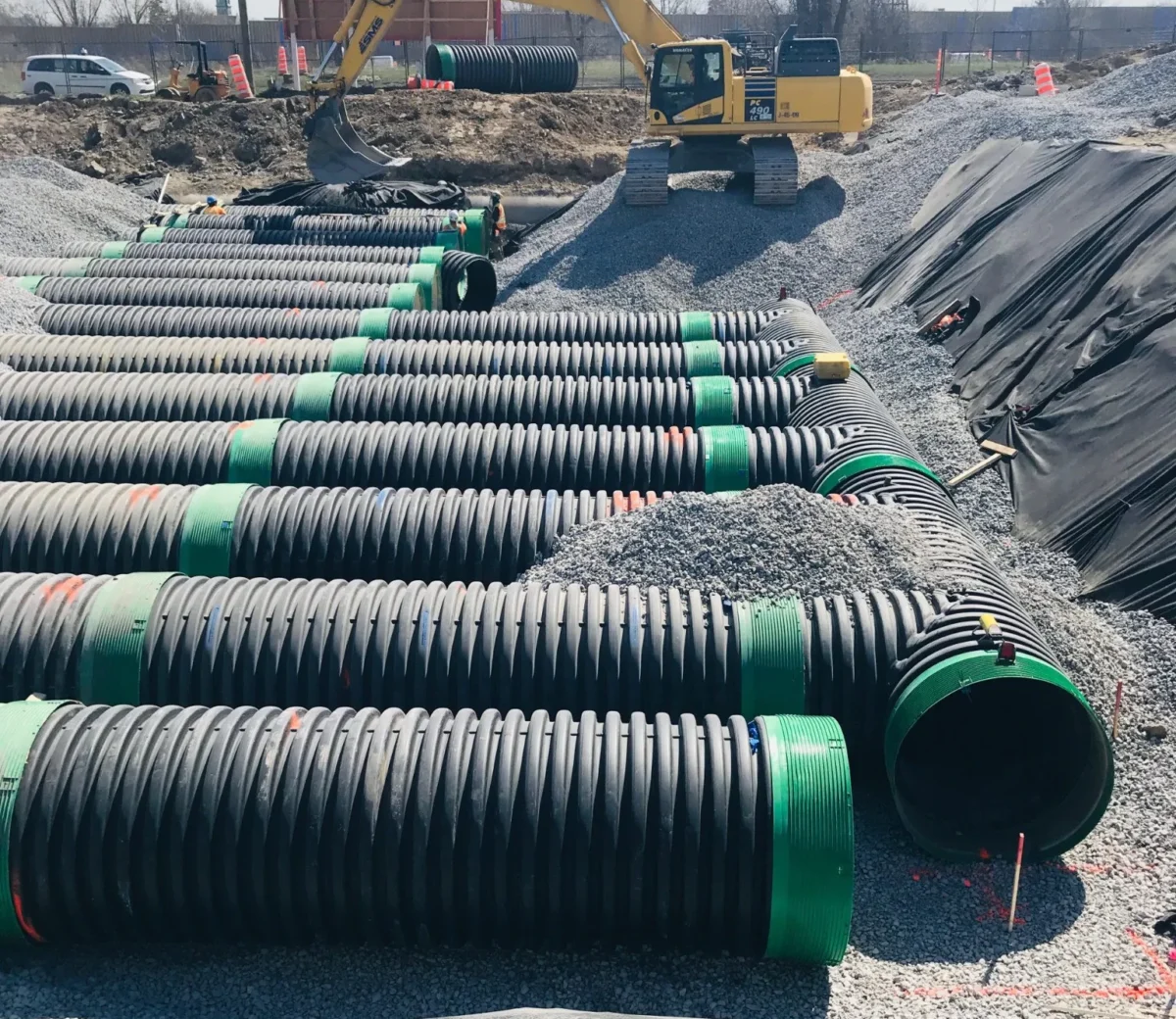
Managing water underground can reduce peak discharge rates, support infiltration, distribute septic effluent or create a water reserve while preserving the surface for buildings, roads, parking areas, landscaping and other uses.
Soleno offers stormwater chamber systems, septic chambers, geocellular systems, HDPE pipe detention systems and sealed underground water storage tanks. These product categories address municipal, commercial, institutional, agricultural, residential and industrial requirements.
The appropriate system depends on its intended function, required storage volume, available footprint, excavation depth, surface loading, soil infiltration capacity, groundwater conditions, outlet configuration, watertightness and maintenance requirements. Explore the categories below to identify the right starting point for your project.
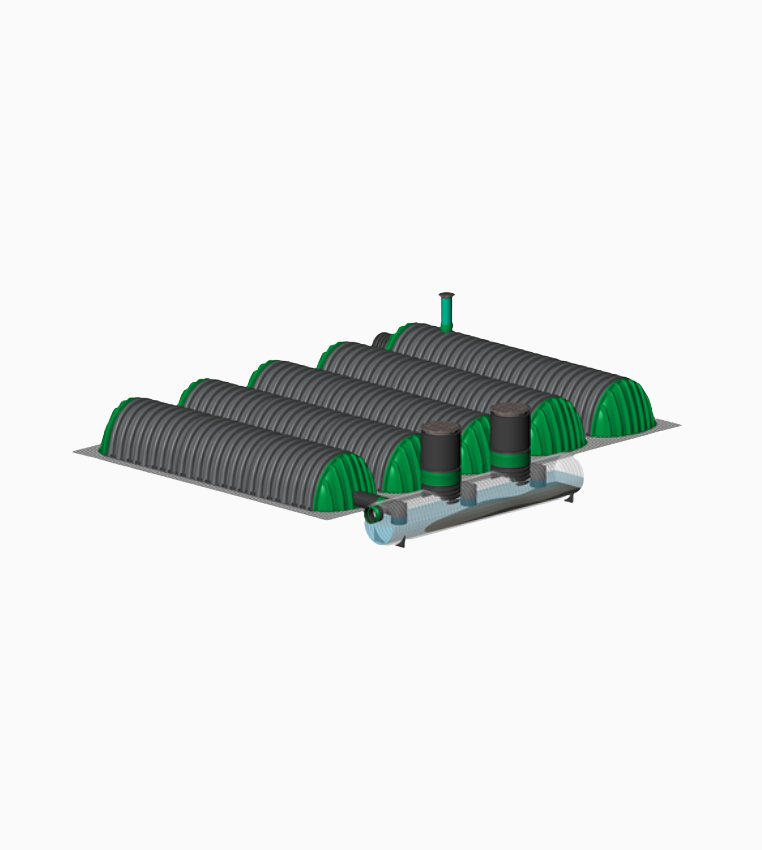
STORMWATER
Modular underground chambers designed to temporarily store stormwater, control its release or allow infiltration into the surrounding soil. Different chamber sizes and configurations make it possible to adapt the system to the available footprint, excavation depth, storage volume and surface-loading requirements.
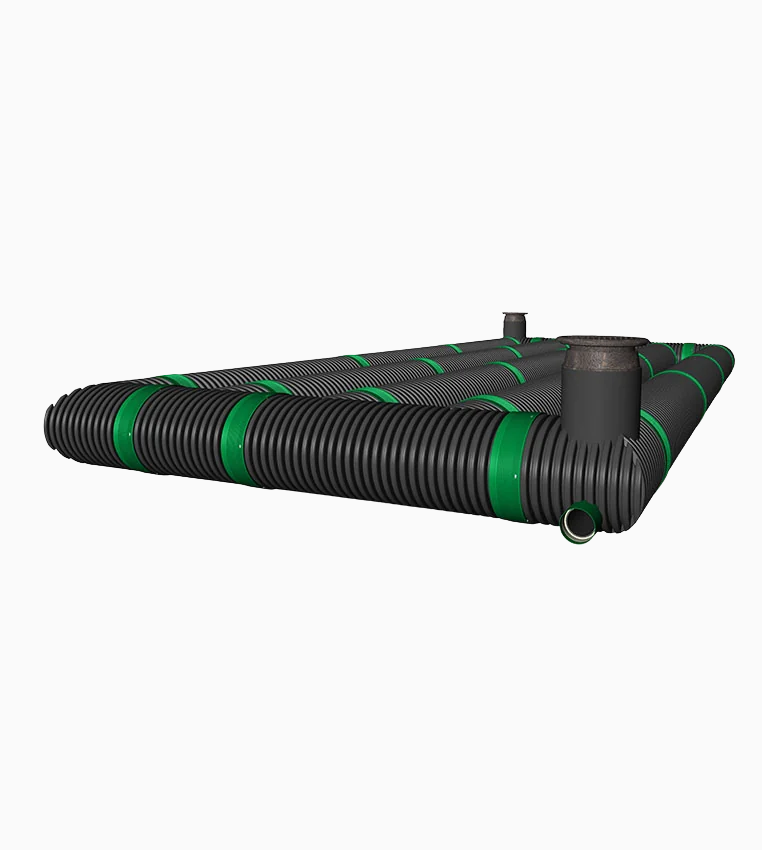
PIPE DETENTION &
Underground storage systems constructed from large-diameter HDPE pipe. Perforated or watertight configurations can be adapted to the required storage volume, site geometry, installation depth, outlet conditions and inspection requirements.
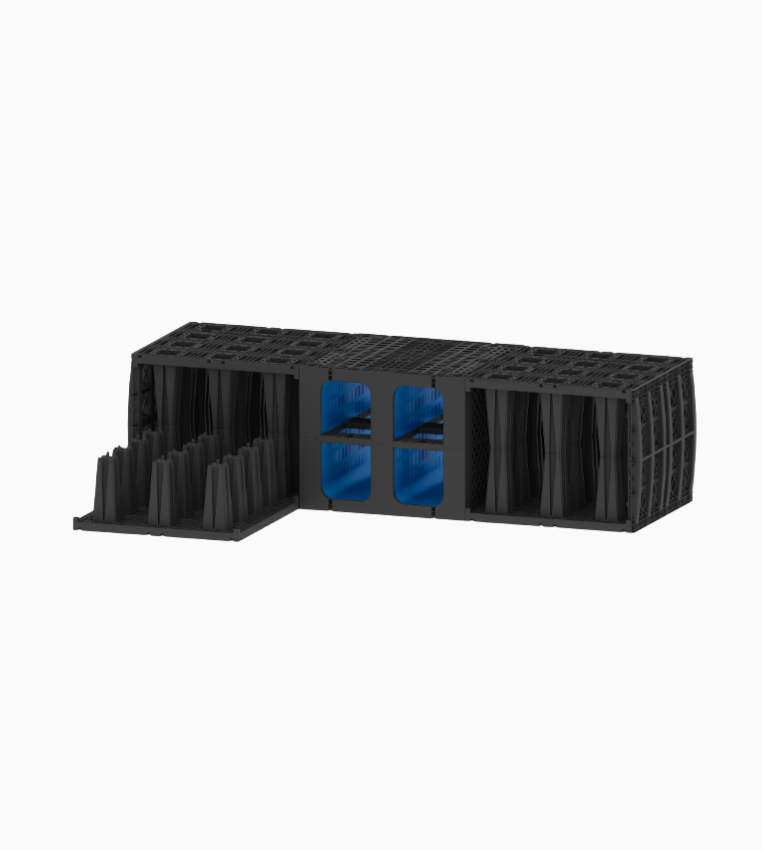
GEOCELLULAR
High-void modular systems designed to maximize underground stormwater storage within a compact excavated volume. Geocellular systems can be configured for detention or infiltration and are particularly suited to constrained sites where storage efficiency, inspection and maintenance access are priorities.
WATER STORAGE
Sealed underground HDPE tanks designed to create a water reserve for future use or temporary storage. Available options range from compact residential systems to custom high-volume tanks for agricultural, municipal, commercial, industrial and remote-site applications.
SEPTIC
Gravelless underground chambers designed to distribute septic effluent throughout an onsite leach field. Their open-bottom configuration supports infiltration into the native soil while reducing the amount of aggregate required for trench installation.

Our team can help you evaluate the required storage volume, available footprint, excavation depth, surface loading, soil conditions, groundwater level, outlet configuration, pretreatment and maintenance requirements of your project.
Find an ExpertFrequently asked questions about underground detention and infiltration systems
An underground detention or infiltration system stores stormwater below the surface. A detention system temporarily holds runoff and releases it at a controlled rate, while an infiltration system allows stored water to gradually enter the surrounding soil. These systems can help manage peak flows while preserving the surface for development or other uses.
Detention generally refers to temporary storage followed by a controlled release. Infiltration allows water to enter the surrounding soil. The term retention may refer to storage without an immediate outlet or may be used more broadly to describe stormwater storage systems. Because terminology varies between jurisdictions and project specifications, the required hydraulic function and outlet conditions should always be clearly defined.
Soleno offers stormwater chamber systems, septic chambers, geocellular systems, HDPE pipe detention and retention systems, and sealed underground water storage tanks. Each category serves a different function and provides different options for storage volume, footprint, depth, loading, infiltration and maintenance.
The choice depends on the required storage volume, available surface area, excavation depth, site geometry, traffic loads, soil and groundwater conditions, infiltration objectives, inspection requirements and installation constraints. Chamber systems offer flexible layouts and a range of chamber sizes. Geocellular systems maximize storage within a compact excavated volume. Pipe systems can accommodate custom alignments and substantial storage volumes.
Pretreatment is often recommended and may be required to limit the amount of sediment, oils and floating debris entering a detention or infiltration system. Reducing the contaminant load can help prevent clogging, simplify maintenance and preserve long-term performance. The appropriate pretreatment approach depends on runoff quality, site use, system type and regulatory requirements. Learn more about our pretreatment solution here.
A stormwater chamber stores runoff for detention or infiltration as part of a stormwater-management system. A septic chamber distributes treated septic effluent within an onsite leach field. Although both systems may use open-bottom underground chambers, they manage different water streams and follow different design, installation and regulatory requirements. They are not interchangeable.
Yes. Purpose-designed sealed underground tanks can store water collected from runoff, roofs or other approved sources for future use. The tank, pretreatment, pumping system and water-quality requirements must be selected according to the intended use and applicable regulations.
Selection typically requires the design inflow, required storage volume, allowable release rate, available footprint, site elevations, excavation depth, surface loads, soil infiltration rate, groundwater level, inlet and outlet configuration, water-quality objectives and maintenance requirements. This information allows the system to be evaluated as part of the complete stormwater-management design.
Product data sheets, specifications, typical drawings, and installation or maintenance guides are available through the individual product pages and Soleno’s Resource Center. Sol’O Design can also support the preliminary design of compatible stormwater detention systems. For project-specific assistance, contact a Soleno expert.