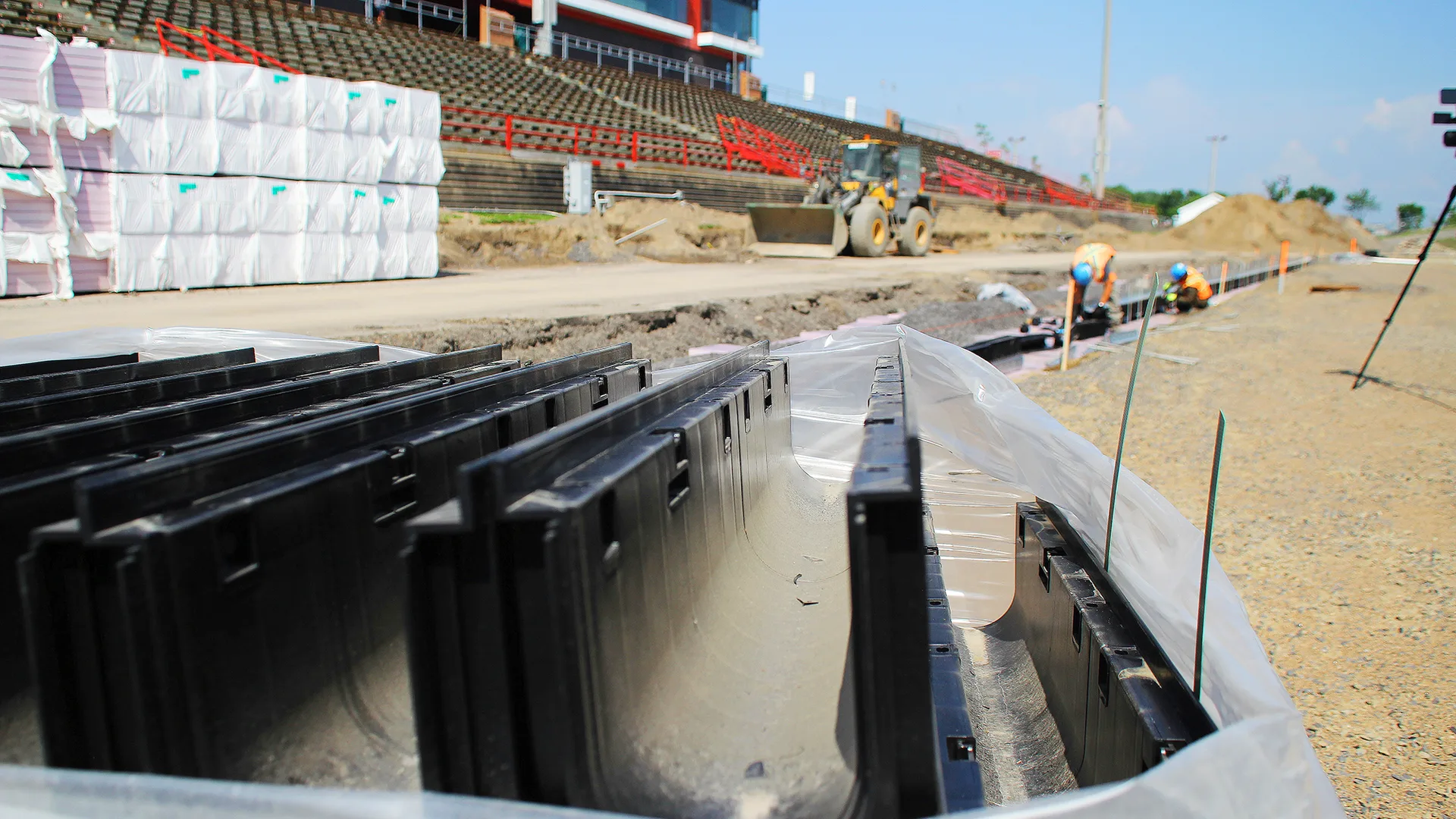
Surface Drainage
Explore linear drainage systems designed to collect surface water across driveways, parking areas, streets, pedestrian spaces and commercial or industrial sites.



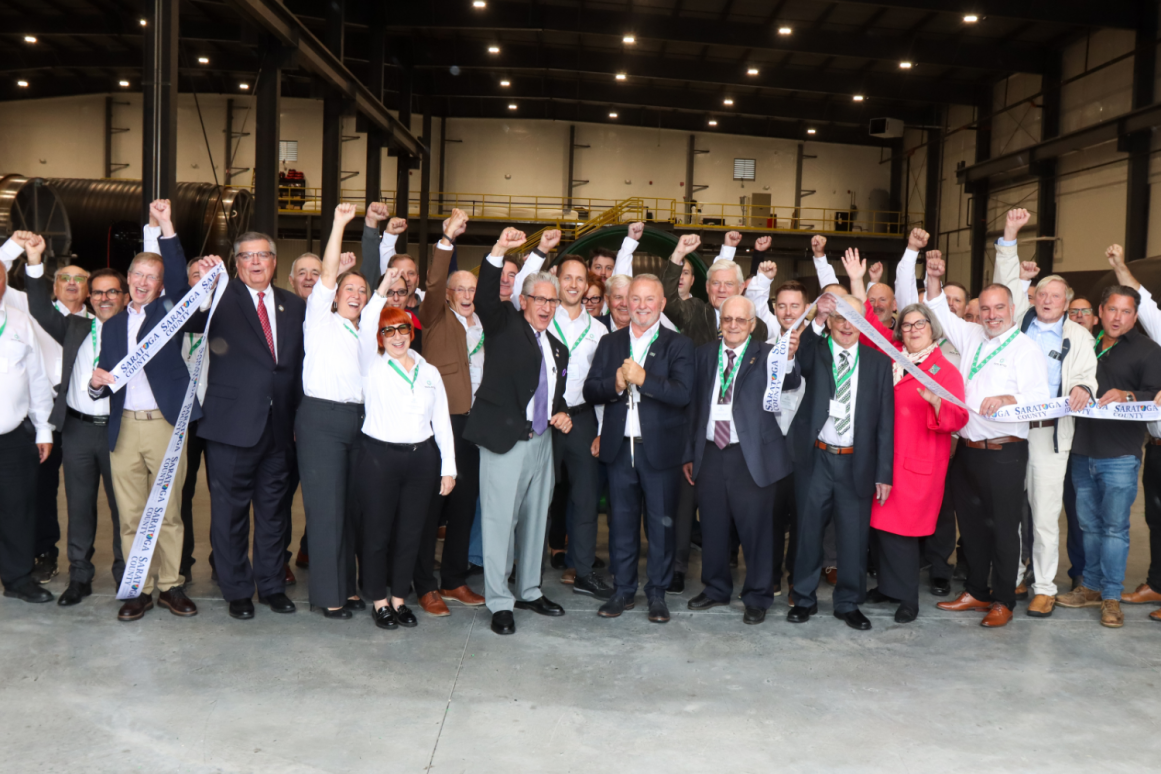
To learn more about the news, read the press release. Saint-Jean-sur-Richelieu, September 26th, […]
More news
Explore linear drainage systems designed to collect surface water across driveways, parking areas, streets, pedestrian spaces and commercial or industrial sites.
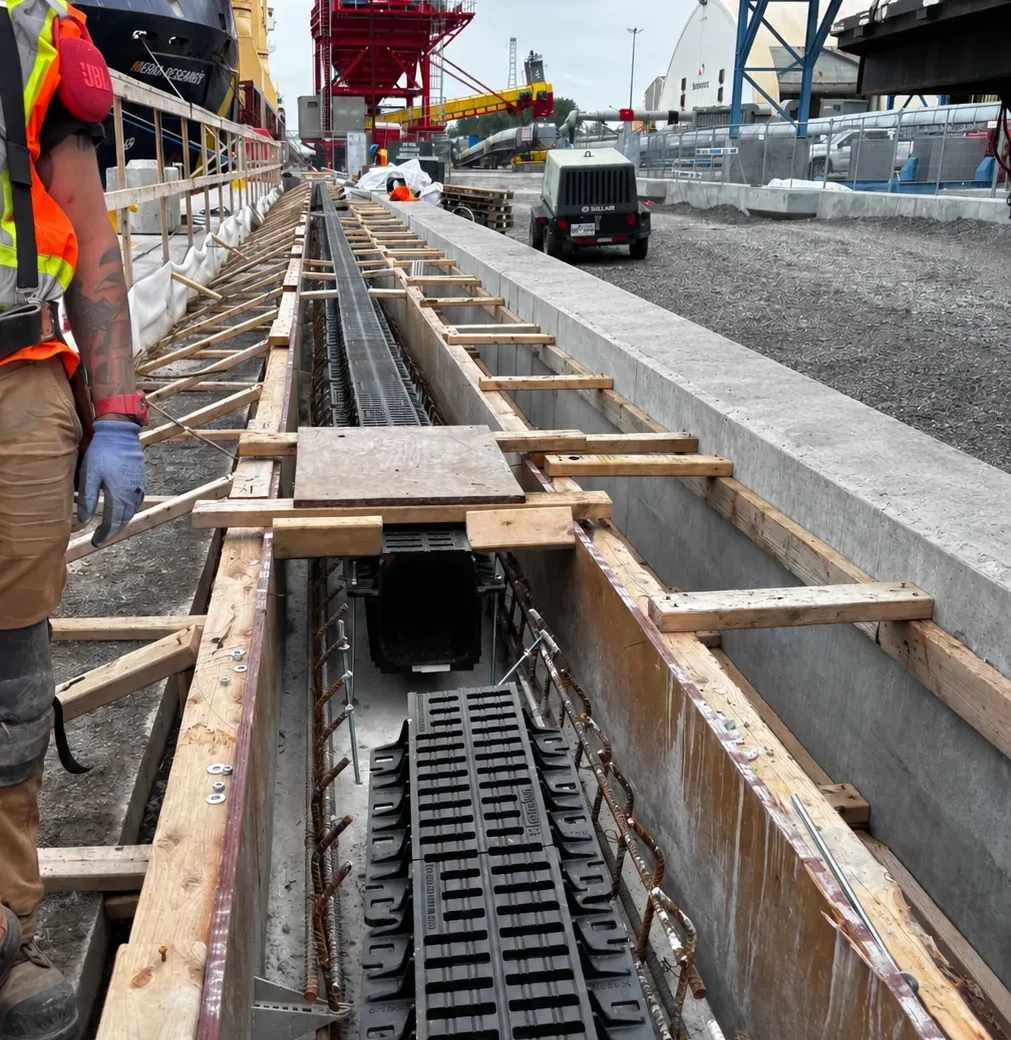
Surface drainage begins where rainwater and snowmelt meet the ground. When grading directs runoff across a paved, landscaped or trafficked surface, a linear collection system can intercept the flow before water accumulates or reaches buildings, entrances and other sensitive areas.
Soleno offers modular trench drains and linear catch basins for residential, commercial, institutional, municipal and industrial applications. These systems collect runoff across a continuous width and convey it toward a storm sewer, treatment system, storage system, infiltration system or approved outlet.
The appropriate system depends on the design flow, collection width, surface slope, anticipated loads, available installation depth, outlet configuration, grate requirements, surface integration and maintenance needs. Explore the categories below to identify the right starting point for your project.
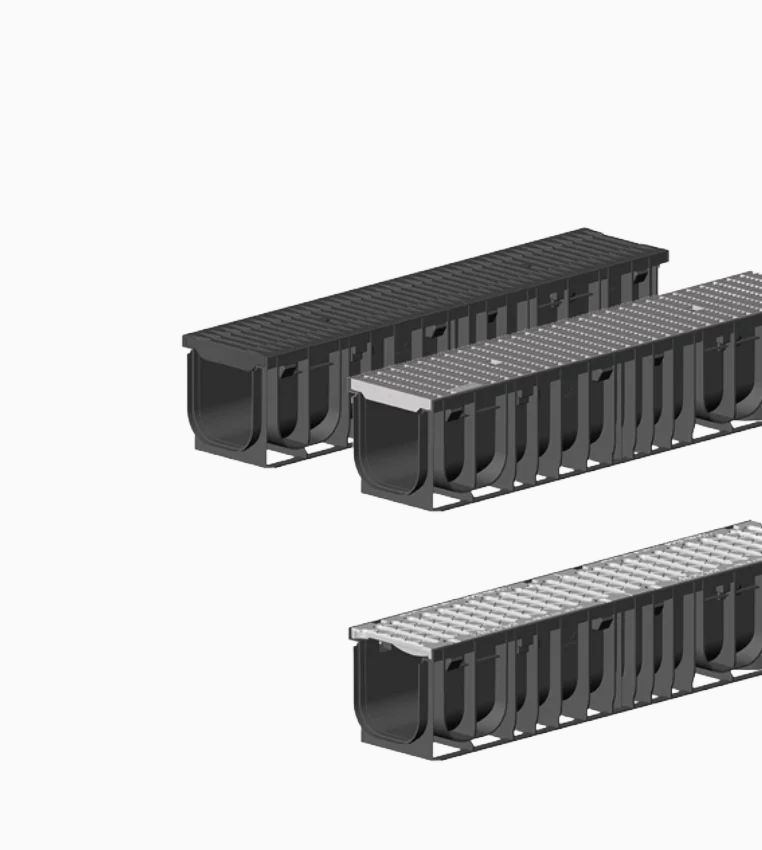
TRENCH
Modular surface channels equipped with a continuous grate to collect runoff across or along a drainage area. Available systems range from lightweight residential trench drains for driveways, patios and landscaped areas to reinforced commercial and industrial systems designed for higher flows and traffic loads.
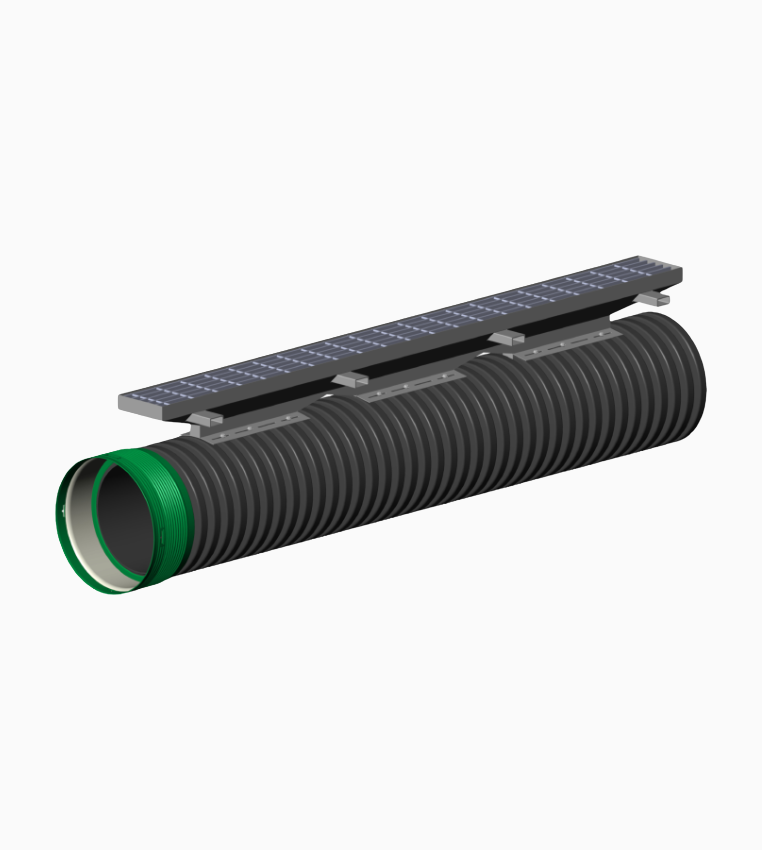
LINEAR
Continuous stormwater collection structures built around a non-perforated rigid dual-wall pipe with a horizontal grate. Linear catch basins intercept runoff across parking areas, streets, paved surfaces and sloped entrances while conveying water toward the drainage network. Factory adjustment can help adapt the structure to site slopes and project requirements.

Our team can help you evaluate the design flow, collection width, surface slope, anticipated traffic loads, installation depth, available outlet, grate requirements, surface materials and maintenance conditions of your project.
Find an ExpertA surface drainage system collects rainwater, snowmelt and other runoff before it accumulates on a paved or landscaped area. Linear systems such as trench drains and linear catch basins intercept water across a continuous width and convey it toward a drainage network or approved outlet. (Q) What types of surface drainage systems does Soleno offer?
Soleno offers modular trench drains and linear catch basins. Trench drain options include systems for residential, pedestrian, commercial, industrial and trafficked applications. Linear catch basins provide another continuous collection approach using a grate assembled on a rigid drainage pipe.
Soleno offers modular trench drains and linear catch basins. Trench drain options include systems for residential, pedestrian, commercial, industrial and trafficked applications. Linear catch basins provide another continuous collection approach using a grate assembled on a rigid drainage pipe.
A trench drain uses a modular channel installed at the surface beneath a continuous grate. A linear catch basin uses a continuous grate assembled on a rigid non-perforated pipe. The appropriate system depends on hydraulic requirements, available depth, anticipated loads, surface integration, outlet configuration and installation constraints.
A standard catch basin collects runoff at a specific point, usually a low point in the grading. A linear catch basin collects water across a continuous width. It is especially useful where runoff flows across a driveway, street, parking area or entrance and must be intercepted before continuing downstream.
TOP X is intended primarily for residential and light-load applications such as private driveways, courtyards, patios, gardens, pedestrian areas and bicycle paths. RECYFIX systems are designed for commercial, industrial and trafficked applications, with configurations available for different hydraulic capacities and load classes. The final selection must consider the application, design flow, traffic, grate and installation requirements.
Yes, when a system and grate with the appropriate load classification are selected and installed according to the manufacturer’s requirements. Residential, commercial and heavy-traffic areas require different channel, grate and installation configurations. The complete assembly—not only the channel—must be evaluated for the anticipated loads.
A linear drainage system is commonly installed across the path of runoff or along a defined drainage line. Typical locations include garage entrances, sloped driveways, parking areas, streets, courtyards, patios, pedestrian spaces, loading areas and industrial sites.
Installing the system perpendicular to the runoff allows water to be intercepted across the width of the drainage surface before it continues toward a building, access point, roadway or other sensitive area. The final position should follow the site grading and hydraulic design.
Sizing depends on the contributing drainage area, rainfall intensity, runoff coefficient, surface slope, design flow, collection length, channel or pipe capacity and outlet conditions. The grate’s intake capacity and the downstream drainage network must also be considered.
Grate selection depends on anticipated vehicle or pedestrian loads, opening size, accessibility requirements, corrosion exposure, slip resistance, aesthetics and maintenance needs. The grate, locking system and supporting channel or structure must be compatible and rated for the application.
Yes. Trench drains and linear catch basins can convey collected runoff toward a storm sewer or another approved downstream system. Pipe size, outlet elevation, connection type, backflow conditions and available downstream capacity must be validated as part of the design.
Yes. Grates should be kept clear of leaves, sediment, ice and debris, while channels, pipes and outlets should be inspected and cleaned as required. Maintenance frequency depends on the site, surrounding activities, runoff quality and seasonal conditions.