


Systems for stormwater quality and flow management.
Effective stormwater management addresses both water quality and water quantity. Runoff can carry sediment, debris, oils, nutrients, metals and other pollutants, while uncontrolled peak flows can exceed the capacity of downstream networks and receiving systems.
Soleno offers stormwater filtration, separation and pretreatment systems, as well as devices and structures for controlling discharge rates, water levels and backflow. These product categories can be used individually or combined as part of a treatment train adapted to the project’s objectives.
The appropriate system depends on the pollutants to be controlled, required treatment performance, design and peak flow rates, drainage area, site use, available footprint, inlet and outlet conditions, downstream infrastructure, regulatory requirements and maintenance strategy. Explore the categories below to identify the right starting point for your project.
STORMWATER
FILTRATION SYSTEMS
Systems that use filter media, cartridges or inlet filters to retain suspended particles and target selected stormwater pollutants. Available configurations range from catch-basin filters for sediment and debris control to advanced media-filtration systems designed for fine particles, nutrients, metals, hydrocarbons and other project-specific contaminants.
STORMWATER
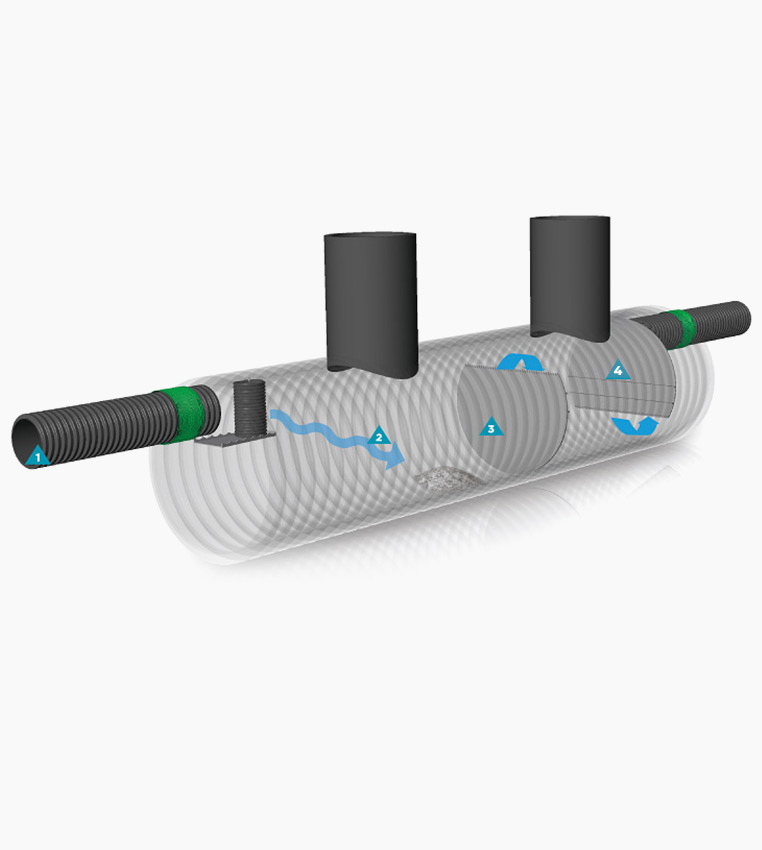
SEPERATION SYSTEMS
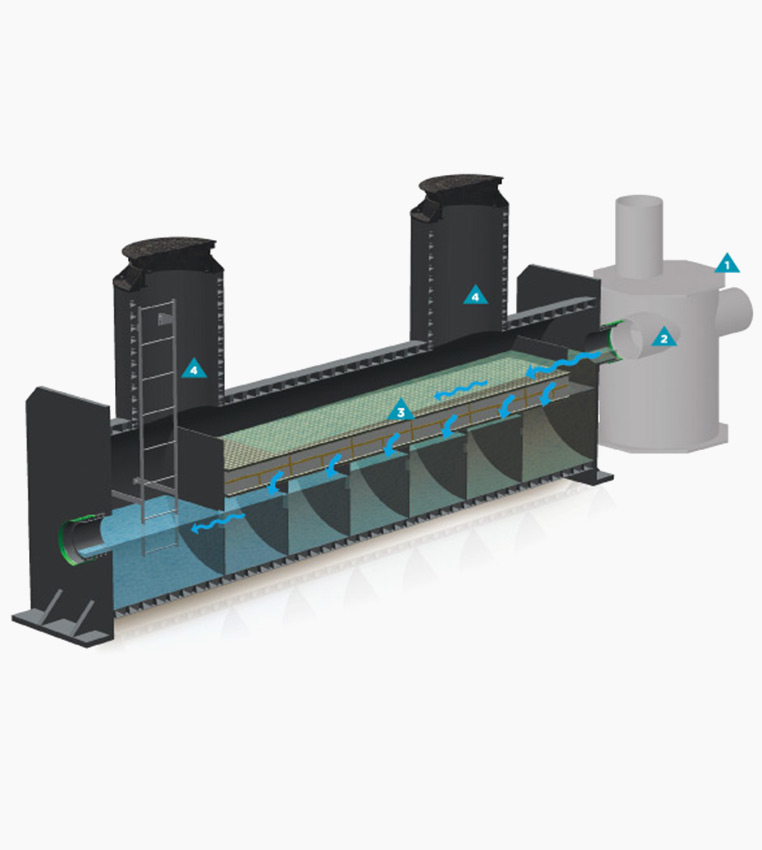
Structures that use gravity, settling or hydrodynamic separation to remove suspended solids, oils and floating debris from stormwater. Available products include settling and separation tanks and continuous deflection separation systems manufactured in HDPE or concrete.
STORMWATER
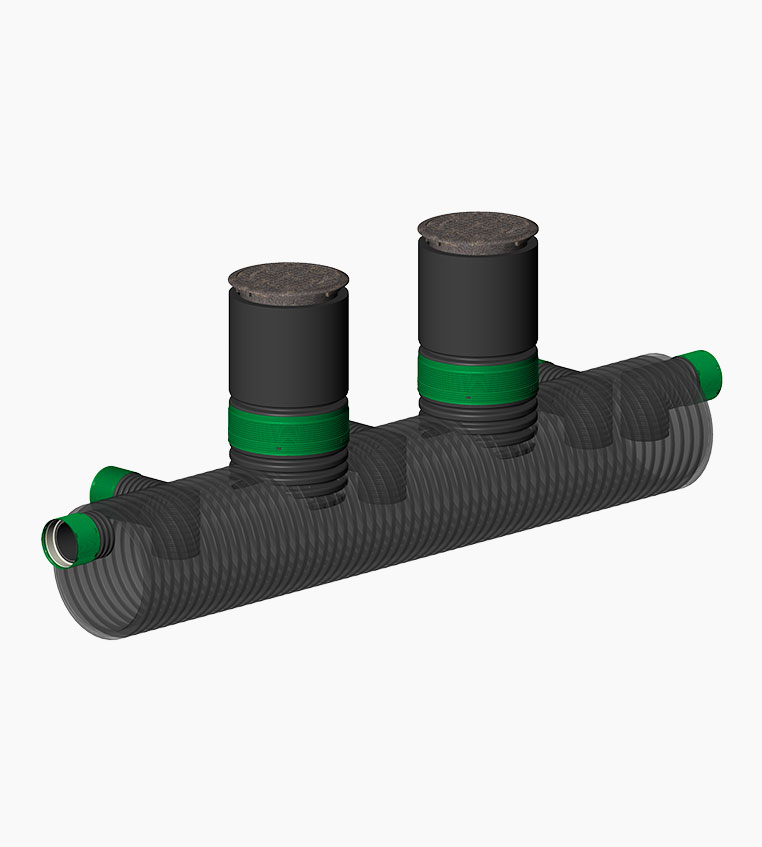
PRETREATMENT SYSTEMS
Upstream systems designed to capture sediment, oils and floating debris before runoff reaches a detention, infiltration or advanced treatment system. Pretreatment units and treatment catch basins can help reduce downstream contaminant loads, limit clogging risks and support long-term system performance.
FLOW CONTROL
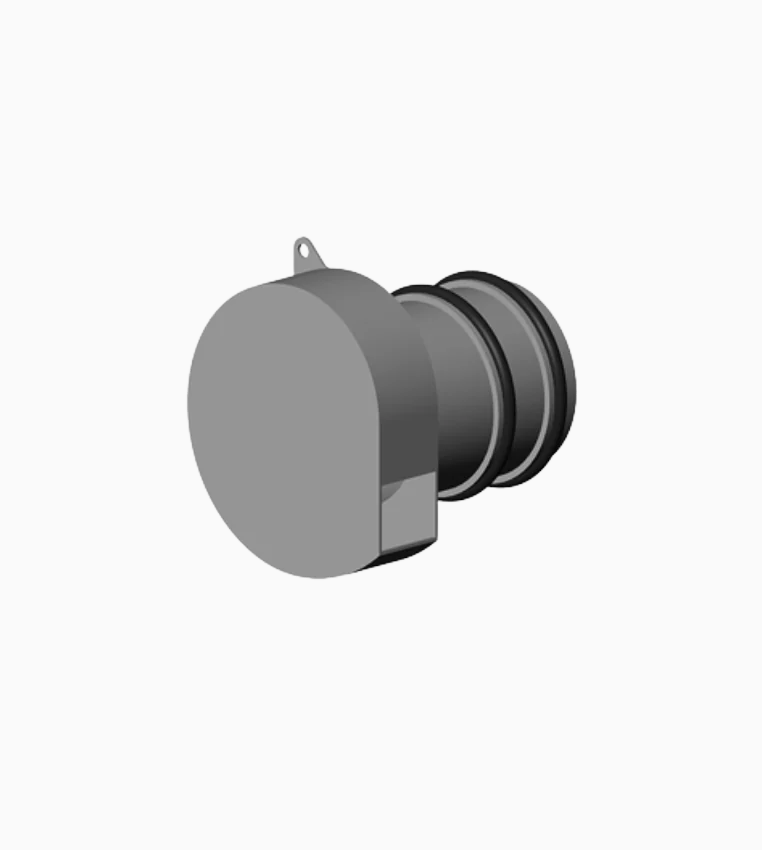
DEVICES & STRUCTURES
Devices designed to regulate peak discharge rates, control water levels, support temporary storage or prevent backflow within a drainage network. Available products include vortex, plug-style and plate flow regulators, spillways, check valves and flexible weirs for different hydraulic conditions.

Need help selecting a stormwater treatment or flow-control system?
Our team can help you evaluate the target pollutants, required treatment performance, design and peak flow rates, drainage area, site use, available footprint, pipe elevations, downstream conditions, discharge limits and maintenance requirements of your project.
Find an ExpertFAQ
Frequently asked questions about stormwater treatment and flow control
A stormwater treatment system removes or retains pollutants carried by runoff before the water reaches downstream infrastructure, receiving waters or an infiltration system. Depending on the treatment objective, the system may use screening, settling, hydrodynamic separation, filtration or adsorption.
Soleno offers stormwater filtration systems, settling and separation systems, and pretreatment systems. Available products include media-filled filtration cartridges, catch-basin filters, settling tanks, hydrodynamic separators, pretreatment units and treatment catch basins. Soleno also offers devices for regulating discharge rates and water levels.
Pretreatment is installed upstream to capture sediment, debris, oils and floating pollutants before they reach a downstream system. Separation uses gravity or controlled hydraulic movement to remove suspended solids, oils and floatables from runoff. Filtration passes water through a fabric or specialized media to retain finer particles or target pollutants requiring more advanced treatment.
Depending on the selected technology and treatment media, stormwater systems can target sediment, total suspended solids, debris, oils, grease, hydrocarbons, phosphorus, nutrients, metals and selected organic pollutants. No single system removes every contaminant, so the target pollutants and required performance must be established before product selection.
A hydrodynamic separator is an underground stormwater-treatment structure that uses controlled flow patterns to separate suspended solids, oils and floating debris from runoff. Captured pollutants are stored within the structure for removal during maintenance, while treated flow continues toward the downstream system.
Filtration may be required when settling or separation alone cannot meet the project’s water-quality objectives. It is particularly relevant when fine particles, dissolved pollutants, nutrients, metals, hydrocarbons or other contaminants must be targeted. The selected filtration media should correspond to the pollutants and required performance.
Yes. Stormwater treatment is often designed as a treatment train in which multiple processes are applied in sequence. Pretreatment may first remove coarse sediment and debris, followed by separation for suspended solids and oils, and then filtration for finer or dissolved pollutants. The appropriate sequence depends on runoff quality and project objectives.
A flow-control device restricts or regulates the amount of stormwater discharged from a catch basin, manhole, storage system or drainage network. It can help limit peak flows, create temporary upstream storage or maintain a target water level. Flow control manages water quantity but does not, by itself, provide water-quality treatment.
A vortex regulator uses rotational flow to limit discharge and can provide a larger flow opening than a conventional orifice for a comparable controlled flow, helping reduce clogging risk. Plug-style and plate regulators control flow through a calibrated opening and provide a simple, economical approach. The appropriate device depends on the target discharge rate, available head, debris conditions, installation structure and maintenance requirements.
Flow-control devices are commonly installed in catch basins, manholes, outlet-control structures or at the outlet of detention systems. The installation location must provide the required upstream water level, hydraulic head, structural attachment and access for inspection or replacement.
A check valve allows water to flow in the intended direction while limiting reverse flow. It may be used where downstream water levels could cause water to back up into a drainage network, storage system or protected area. The valve must be selected according to pipe size, hydraulic conditions and debris exposure.
Selection begins with the pollutants of concern, required removal performance, design treatment flow, peak bypass flow, drainage area, site use and regulatory criteria. Available space, inlet and outlet elevations, pipe connections, downstream infrastructure, access and maintenance requirements must also be considered.
Yes. Sediment, debris, oils and spent filtration media must be removed before they reduce treatment capacity or hydraulic performance. Inspection and maintenance frequency depends on pollutant loading, drainage-area use, rainfall conditions, system capacity and manufacturer recommendations.
Product data sheets, specifications, performance reports, approvals, typical drawings and installation or maintenance guides are available through the individual product pages and Soleno’s Resource Center. For project-specific assistance, contact a Soleno expert.