Soleno
0%

Geosynthetics

Explore our large range of geotextiles, geogrids, geocells and erosion control products for civil engineering projects, drainage, transportation, environmental and landscaping projects—backed by more than 25 years of nonwoven textile expertise.

Explore Product Categories

High-performance geosynthetics for the places we build and protect.

Geosynthetics are everywhere—beneath our roads, neighbourhoods, homes and fields. Often hidden once construction is complete, they perform essential functions: separating soils, filtering water, reinforcing weak ground, providing drainage, controlling erosion and protecting critical infrastructure.

Traditional construction methods can present limitations in terms of durability, cost-effectiveness and flexibility. As projects face increasingly demanding technical and environmental requirements, Soleno responds as an integrator of high-performance solutions. Our geosynthetic expertise complements our leadership in sustainable water management, allowing us to address a wider range of project challenges—not only how water is managed, but also how soils, materials and infrastructure perform.

Soleno offers woven and nonwoven geotextiles, drainage geocomposites, filter sheaths, geogrids, geocells, permeable ground-stabilization systems and erosion- and sediment-control products. Designed for exceptional performance and resistance, these solutions support infrastructure, residential, natural-resource, agricultural and landscaping projects.

The appropriate product depends on its intended function, soil gradation and permeability, hydraulic requirements, strength, anticipated loads, subgrade conditions, aggregate, slope, exposure, installation constraints and applicable standards. Explore the categories below to identify the right starting point for your project.

Nonwoven intelligence for more than 25 years

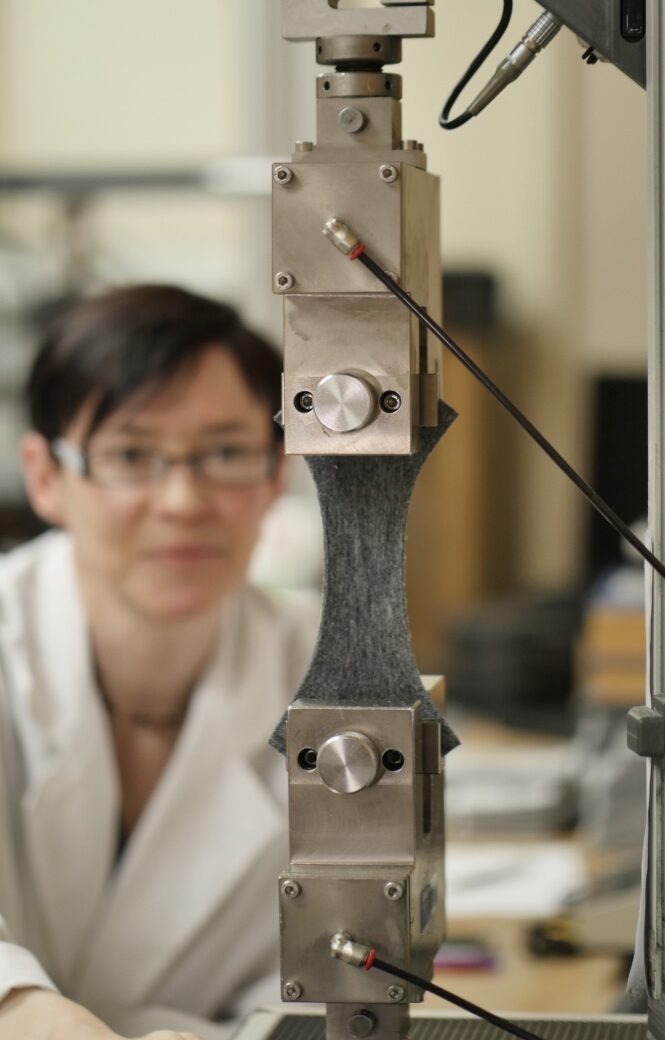
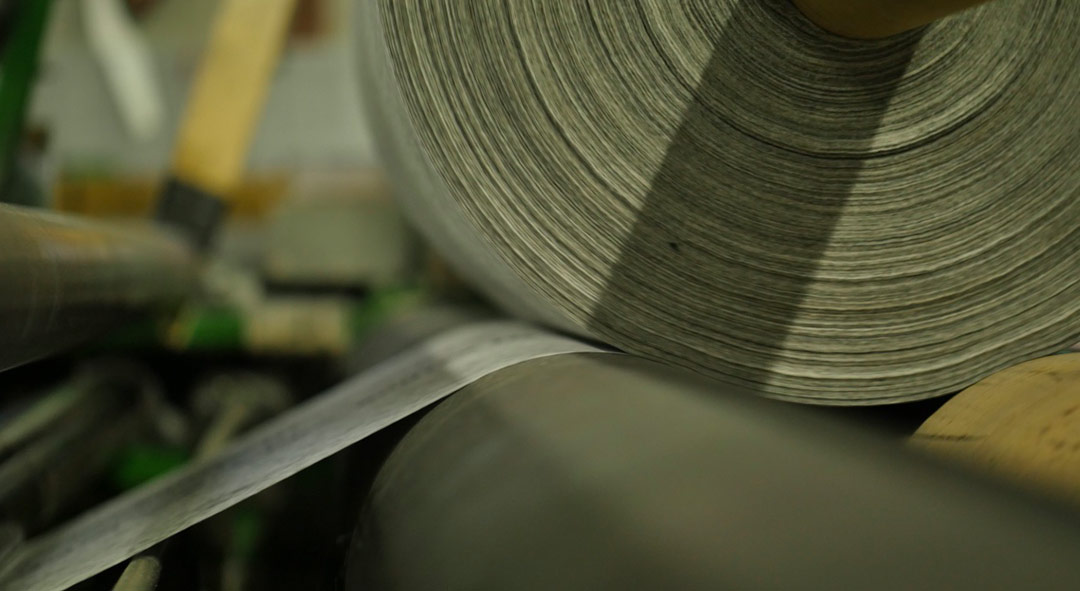
Soleno Textile is a designer and manufacturer of bold solutions using nonwoven textiles. For more than 25 years, we have manufactured these solutions at our facility in Laval, Québec, serving a wide range of geotechnical, civil-engineering, infrastructure, construction, agricultural, horticultural and specialized applications.

At the heart of this expertise is a cutting-edge production line that is unique in North America. It gives us the flexibility to manufacture proven products and develop customized nonwoven solutions that respond to specific performance requirements, technical standards and project constraints.

Every project is unique. Our team works closely with clients and partners to understand the intended application and identify the right technical approach. Through research, product development and manufacturing expertise, we can transform complex requirements and creative ideas into nonwoven textiles designed around how they will actually be used.

This combination of innovation, technical support and local manufacturing makes Soleno Textile a trusted partner for clients seeking performance, resistance, cost-effectiveness and flexibility from their geosynthetic solutions.

Explore our geosynthetics by function

FUNCTION OF

SEPARATION

Woven and nonwoven geotextiles placed between dissimilar soils, aggregate or construction materials to prevent them from mixing. Separation helps maintain the integrity of granular layers and support the long-term performance of roads, access routes, parking areas, drainage trenches and other civil works.

FUNCTION OF

FILTRATION

Geotextiles designed to allow water to pass through while retaining soil particles. Selected according to soil gradation and hydraulic requirements, filtration products help limit particle migration around drainage trenches, foundations, retaining walls, septic fields and infiltration systems.

FUNCTION OF

DRAINAGE

Filter sheaths and drainage geocomposites designed to collect, direct or transmit water while limiting the movement of fine soil particles. Available solutions support agricultural subsurface drainage, foundation drainage and vertical or horizontal drainage within roads and other civil-engineering structures.

FUNCTION OF

REINFORCEMENT & STABILIZATION

Geogrids, reinforced geotextiles and geocells designed to distribute loads, confine aggregate or soil and limit lateral movement within a constructed layer. These products can help stabilize weak subgrades and improve the performance of roads, access routes, parking areas, storage and loading areas, slopes and other loaded surfaces.

FUNCTION OF

PROTECTION

Geotextiles and specialty textiles designed to protect critical materials, structures and vegetation. Available solutions can cushion geomembranes, protect basins, banks and dams, reduce the effects of frost around structures, support concrete curing, control root migration or provide winter protection.

FUNCTION OF

EROSION & SEDIMENT CONTROL

Temporary and permanent products designed to protect exposed soil, support vegetation establishment and limit sediment movement during and after construction. The category includes erosion-control blankets, sediment barriers, turbidity curtains and wood-fibre logs for slopes, banks, waterways and other disturbed sites.

PERMEABLE PAVING & GROUND STABILIZATION

Cellular systems designed to stabilize gravel or vegetated surfaces while maintaining permeability. These systems support load transfer, help limit rutting and compaction, and allow water to infiltrate through parking areas, access roads, fire lanes, pathways and landscaped spaces.

FAQ

Frequently asked questions about geosynthetics

A geosynthetic is a manufactured material used in contact with soil, aggregate, rock or another construction material to perform one or more functions within a civil, drainage or environmental system. These functions commonly include separation, filtration, drainage, reinforcement, stabilization, protection and erosion or sediment control.

Soleno offers woven and nonwoven geotextiles, drainage geocomposites, filter sheaths, geogrids, reinforced geotextiles, geocells, permeable ground-stabilization systems, protective textiles, erosion-control blankets, sediment barriers, turbidity curtains and wood-fibre erosion-control logs.

Selection begins with the function the product must perform. The required mechanical and hydraulic properties must then be evaluated according to the soil, water movement, anticipated loads, subgrade, aggregate, slope, exposure, installation conditions and applicable standards. Because one product may perform several functions, selection should be based on the complete application rather than fabric type or weight alone.

Woven geotextiles are manufactured by interlacing fibres or filaments into a structured fabric. They are commonly selected when tensile strength, dimensional stability, separation or reinforcement is important.

Nonwoven geotextiles have a three-dimensional, needle-punched structure and are commonly used for filtration, drainage, separation, cushioning and protection. Final selection must be based on the mechanical and hydraulic properties required by the project rather than the manufacturing method alone.

Separation prevents two dissimilar materials, such as native soil and granular aggregate, from mixing. Filtration allows water to pass through a geotextile while retaining soil particles.

A single geotextile may perform both functions, but its opening size, permeability and mechanical properties must be compatible with the soil, anticipated water flow and structural requirements.

Selection should consider soil gradation, particle size, apparent opening size, permeability or permittivity, anticipated water flow, clogging potential and the required mechanical strength.

The geotextile must retain the applicable soil particles while allowing sufficient water movement through the system. A soil analysis, project specifications and applicable standards should be reviewed before final selection.

A geogrid is an open-grid geosynthetic used primarily for reinforcement and stabilization. When installed within or beneath an aggregate layer, its openings allow the aggregate to interlock with the grid.

This interaction can help distribute loads across a wider area, limit lateral movement of the aggregate and reduce deformation over weak subgrades. Performance depends on the selected geogrid, subgrade, aggregate, anticipated loads, drainage and installation.

Geocells create a three-dimensional cellular-confinement system that can be filled with soil, aggregate or another compatible material. The cells confine the fill, distribute loads and help stabilize surfaces or slopes.

Applications can include access roads, parking areas, embankments, berms, retaining structures and erosion-prone surfaces.

A drainage geocomposite combines multiple geosynthetic components to collect, direct or transmit water within a structure. Depending on its design, it may incorporate filtration layers, a drainage core and a connection for a perforated collection pipe.

Drainage geocomposites can be installed vertically or horizontally within roadways, foundations, retaining structures and other civil-engineering applications.

A filter sheath is a permeable textile installed around a perforated drainage pipe. It allows water to reach the pipe while helping limit the entry of soil particles that could accumulate around or inside the perforations.

The appropriate filtration opening must be selected according to the soil gradation and backfill surrounding the pipe. A filter sheath should not be selected by micron rating alone.

Permeable ground-stabilization systems use interconnected cells to confine gravel, support vegetation or stabilize another permeable surface material.

The cells help transfer loads to the supporting base, limit rutting and compaction, and maintain an open surface through which water can infiltrate. Applications can include parking areas, access roads, fire lanes, pathways and landscaped spaces.

Geosynthetics can provide separation, filtration, drainage, reinforcement or protection around underground chambers, pipes, geocellular systems, aggregate layers, geomembranes, engineered soils and permeable surfaces.

The selected product must be compatible with the intended movement of water. A geotextile used in an infiltration or bioretention system must support water passage without creating an unacceptable risk of soil migration or clogging, while a watertight detention system may require protective textiles around a geomembrane.

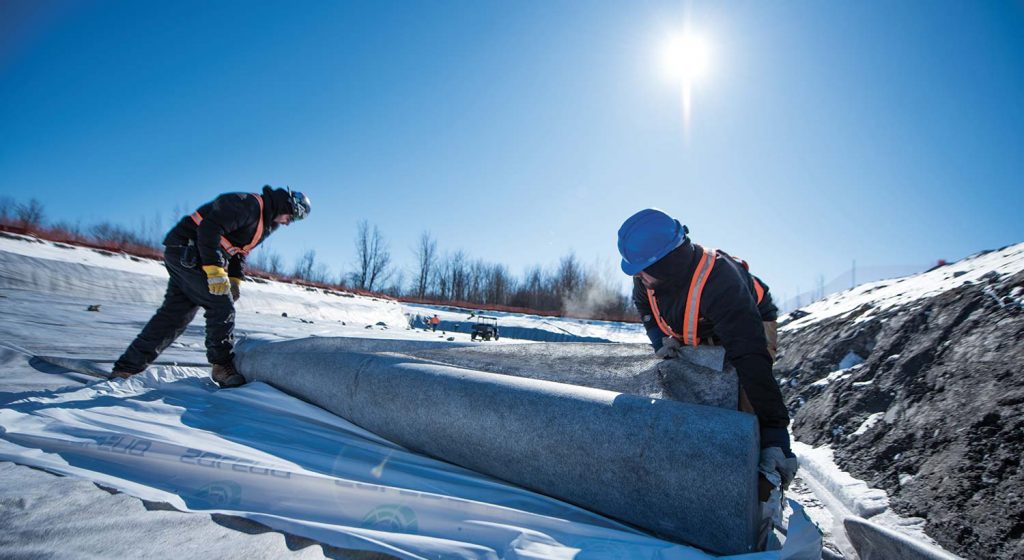
Installation requirements can include subgrade preparation, roll orientation, overlap or seam dimensions, anchoring, wrinkle removal, protection from wind and ultraviolet exposure, aggregate-placement methods and prevention of construction damage.

The geosynthetic must be installed according to the project specifications, applicable standards and manufacturer’s instructions. Construction equipment should not travel directly over the product unless the installation procedure specifically permits it.

Soleno Textile has manufactured nonwoven textile solutions at its facility in Laval, Québec, for more than 25 years. Its production capabilities support standard products and the development of specialized nonwoven solutions for civil engineering, infrastructure, construction, agriculture, horticulture and other applications.

Soleno Textile can evaluate customized nonwoven solutions according to the intended function, required performance, technical specifications, material requirements and installation constraints.

The technical team must review the project requirements, manufacturing feasibility and available development options before a customized solution can be recommended.