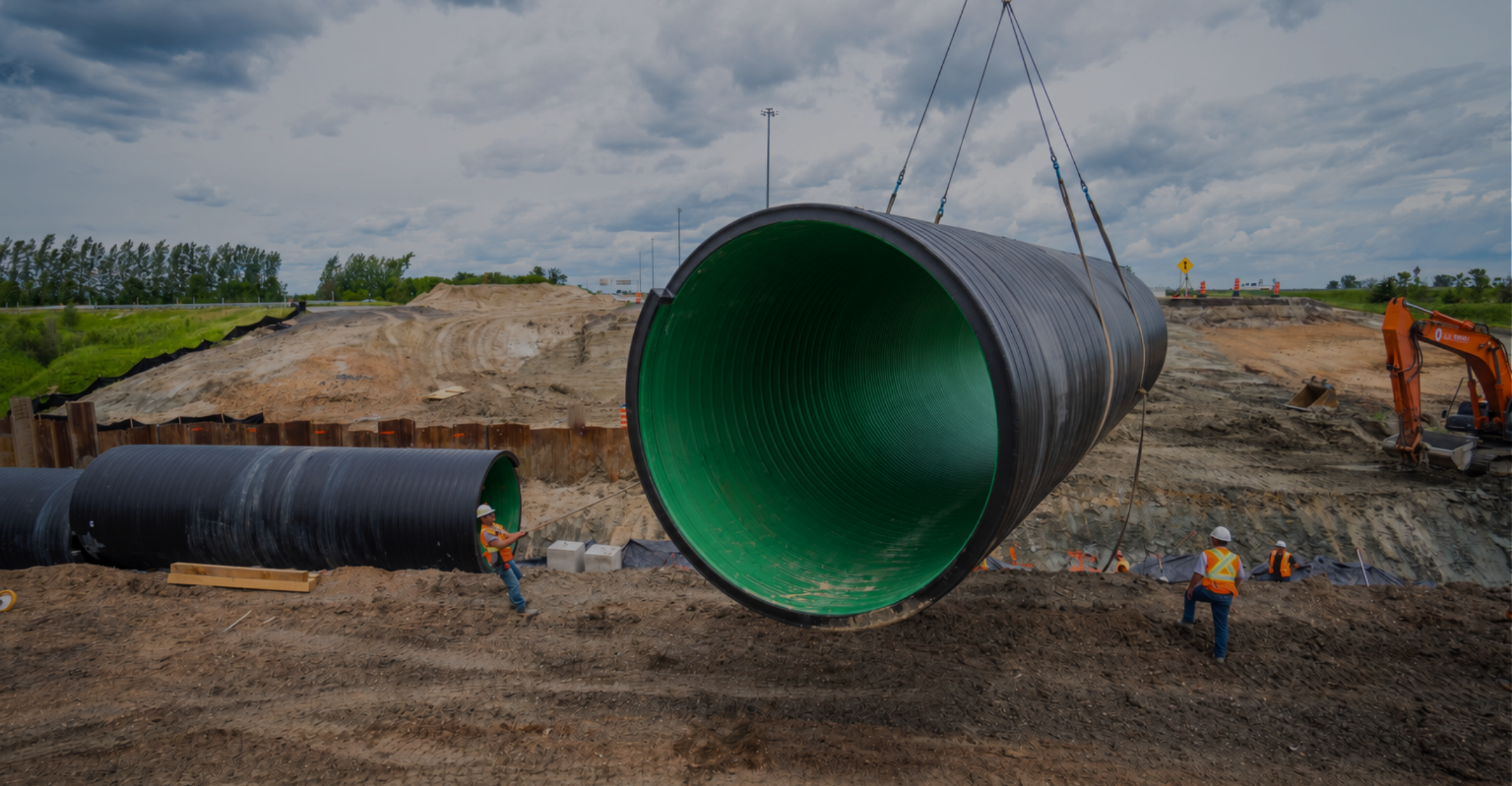
Stormwater Conveyance
SUSTAINABLE SYSTEMS DESIGNED TO PROTECT NETWORK PERFORMANCE
High-strength pipes and dependable connections help maintain hydraulic continuity, limit infiltration and exfiltration, and protect long-term network integrity.


High-strength pipes and dependable connections help maintain hydraulic continuity, limit infiltration and exfiltration, and protect long-term network integrity.
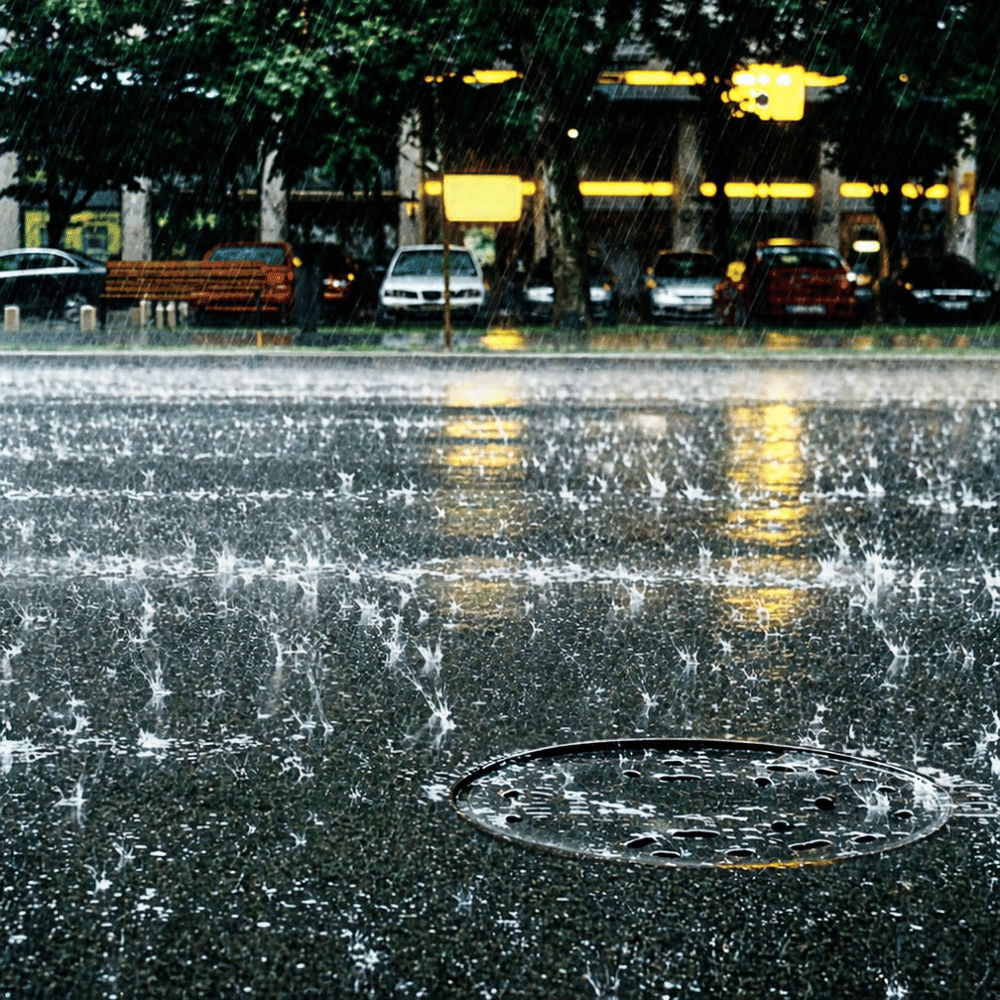
Aging infrastructure, urban development and climate change are reshaping the demands place on stormwater networks
Stormwater network managers must extend the service life of aging infrastructure, some of which is deteriorating faster than expected. At the same time, urban development adds impervious surfaces and increases the volume of water that networks must convey, even where capacity is already limited.
Climate change adds to this pressure by altering the hydrological conditions used to design existing infrastructure and new projects.
These realities call for a reassessment of underground network design, including hydraulic capacity, structural strength, connection integrity and long-term maintenance needs.
In stormwater networks already under pressure, every uncontrolled inflow or outflow has consequences
Pipes must withstand loads and site conditions. Connections must maintain continuity between components and provide the required level of tightness. For culverts, inlet and outlet design also helps maintain flow and protect the stability of the structure.
When these conditions are not met, unwanted infiltration, sediment buildup or deterioration of the installation can reduce available capacity and increase maintenance needs.
As demands on infrastructure grow, pipes, connections and structures must be selected as parts of one system. Their compatibility, reliability and durability help maintain the performance established during design.
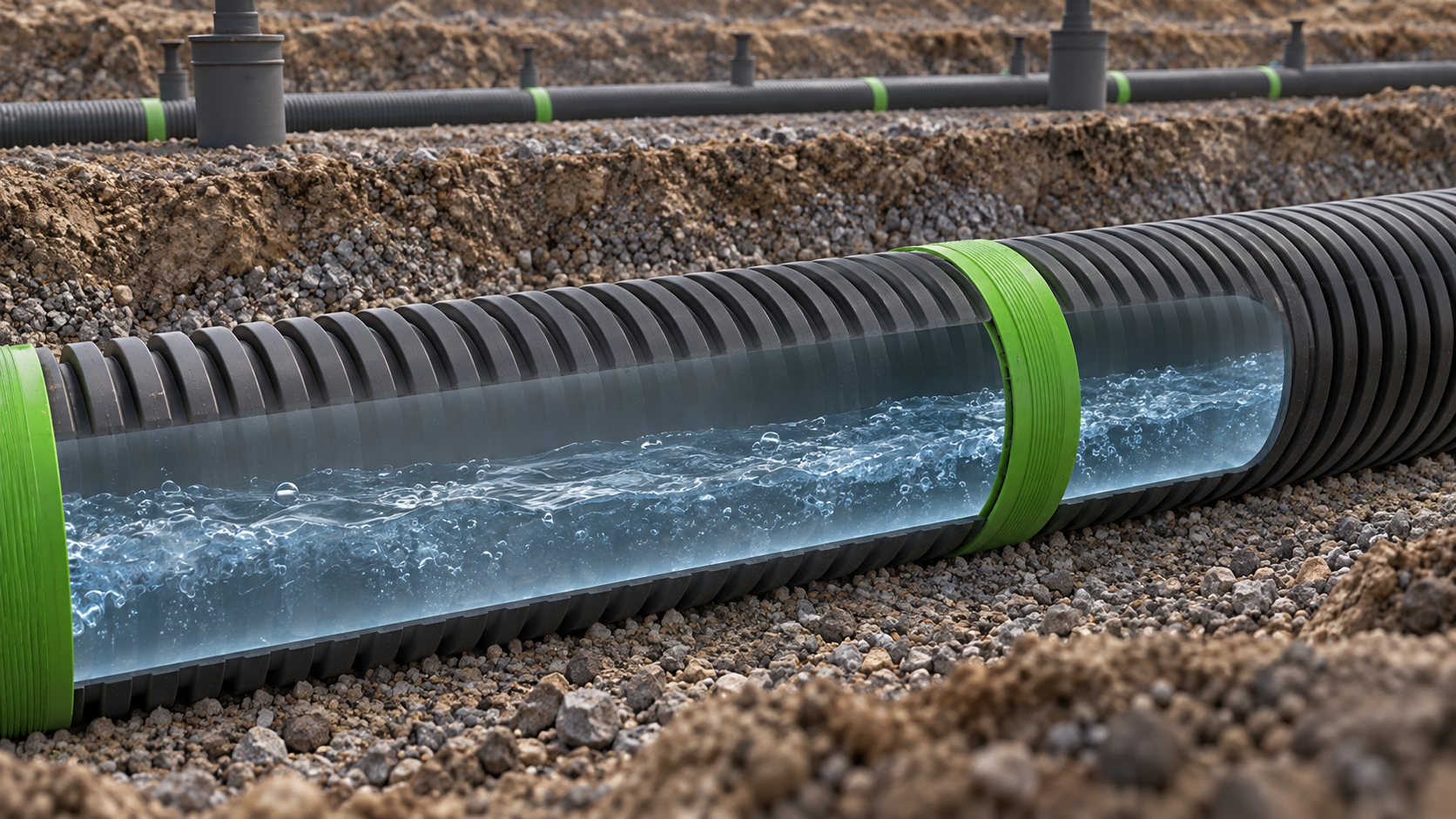
Every project brings a different combination of flow rates, loads, soils and installation constraints. The right configuration brings together pipes, connections, access structures and installation components suited to the project’s actual conditions.
Key criteria include:
Considering these criteria together helps configure a system that preserve capacity, protects the installation and maintains reliable long-term performance
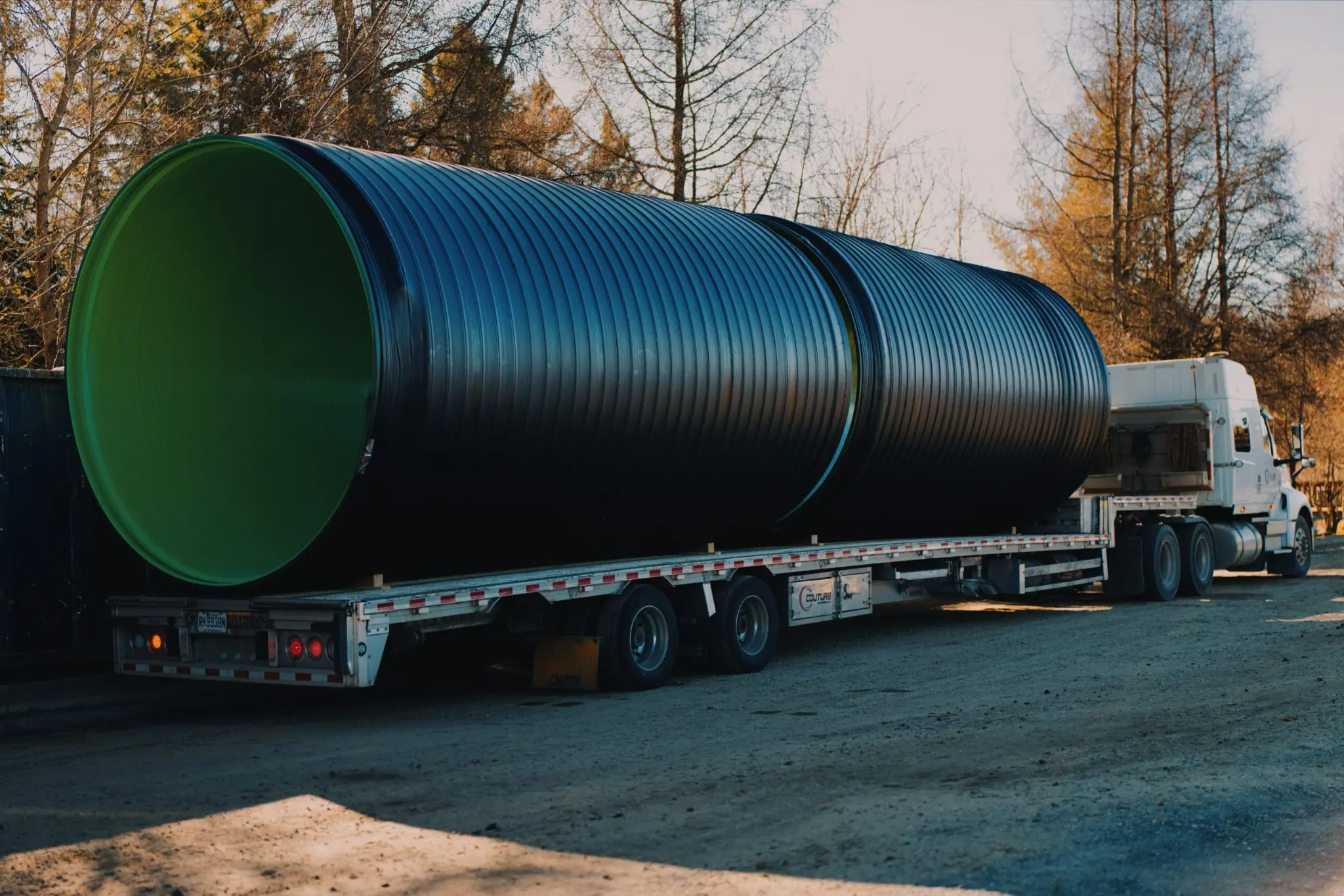
Soleno offers three complementary solutions to convey stormwater from capture to a basin, treatment system, network or outlet, with configurations adapted to the infrastructure, connections and site conditions.
These solutions can be combined to maintain hydraulic continuity and preserve overall system performance.
Convey water through a network configured for your project
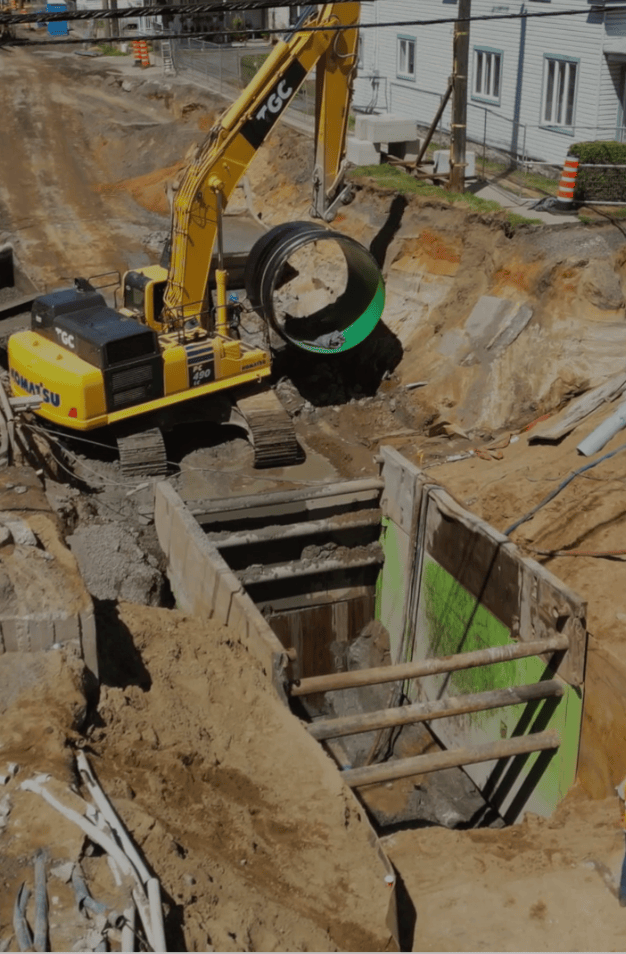
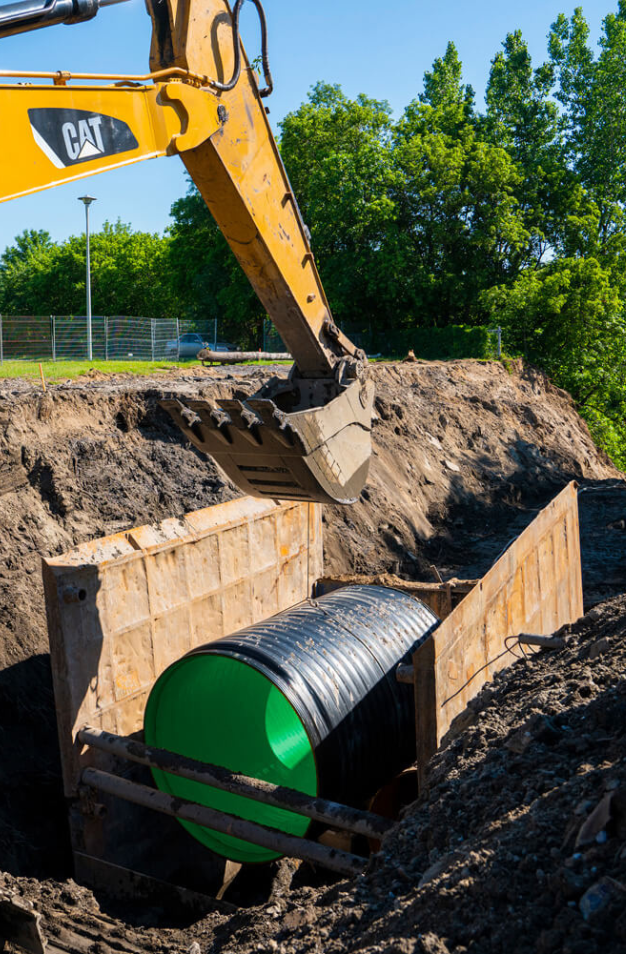
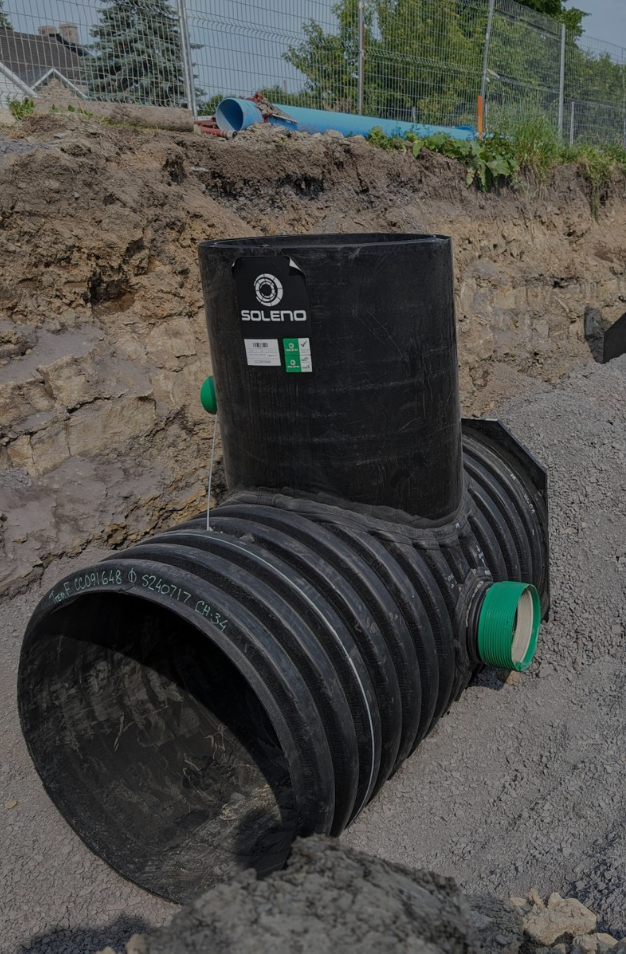
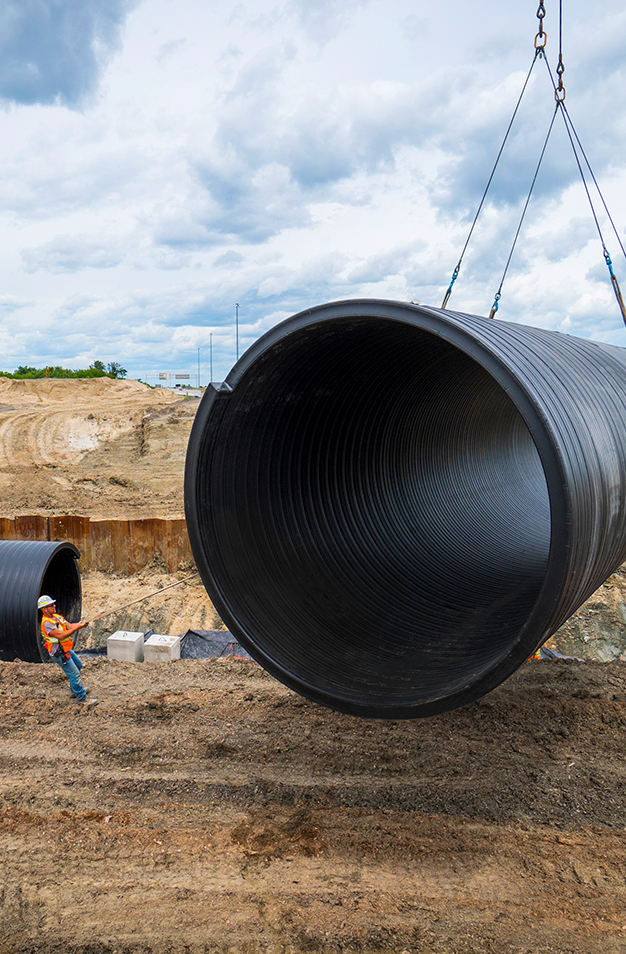
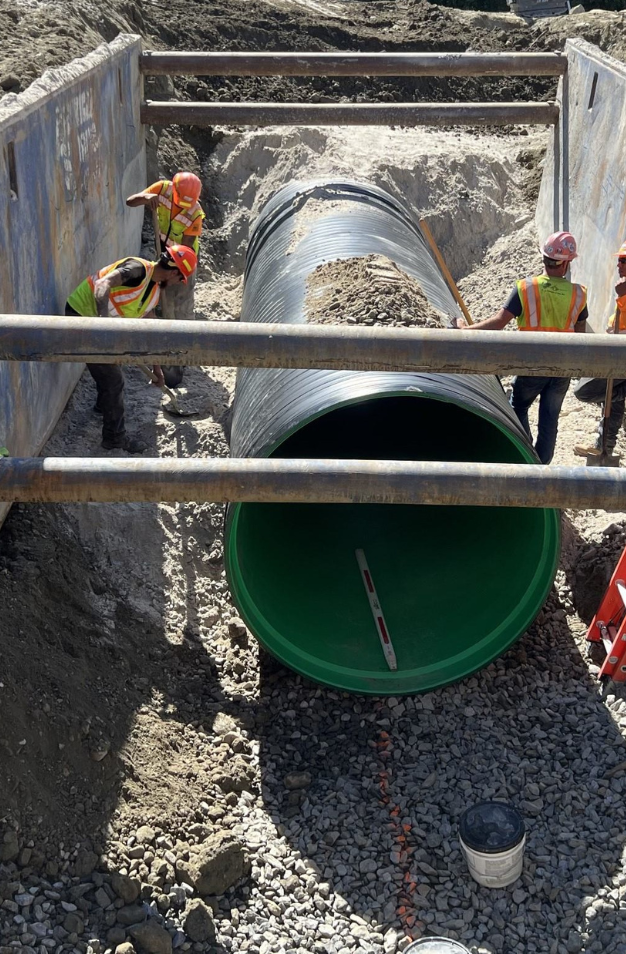
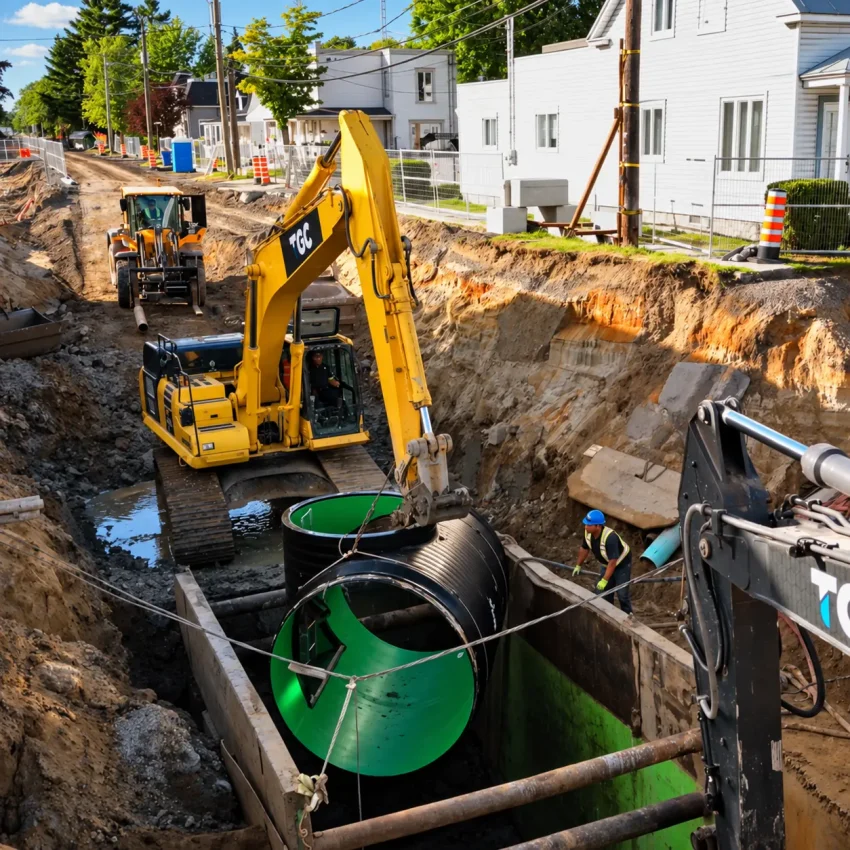
Piping solutions combine dual-wall or large-diameter HDPE pipes, manholes, catch basins and connections to convey stormwater through a closed network. From pipe selection to maintenance access, each component helps create a system suited to flow rates, loads and installation conditions.
Suited to:
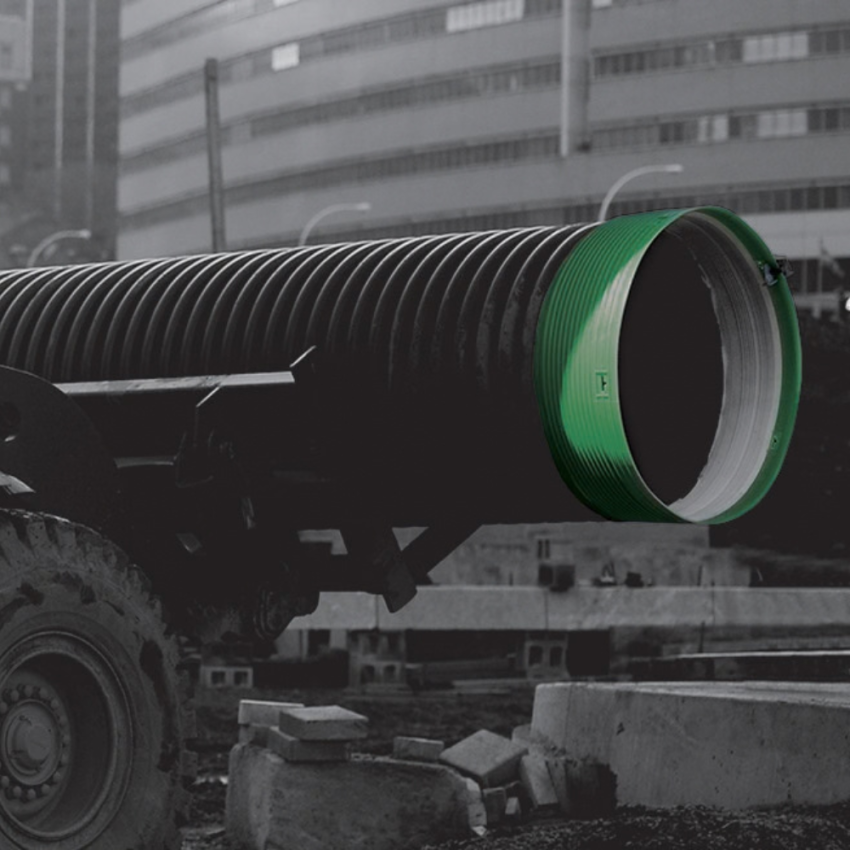
Connection technologies for your network
Settling and separation solutions remove pollutants from runoff using physical principles such as flow reduction, gravity, separation of floating materials or hydrodynamic separation.
They are especially useful when a project requires a dedicated treatment structure to manage sediment, suspended solids, oils, hydrocarbons and floating debris before discharge or before water is directed toward downstream infrastructure.
Suited to:
Maintain flow beneath roads, driveways and other infrastructure
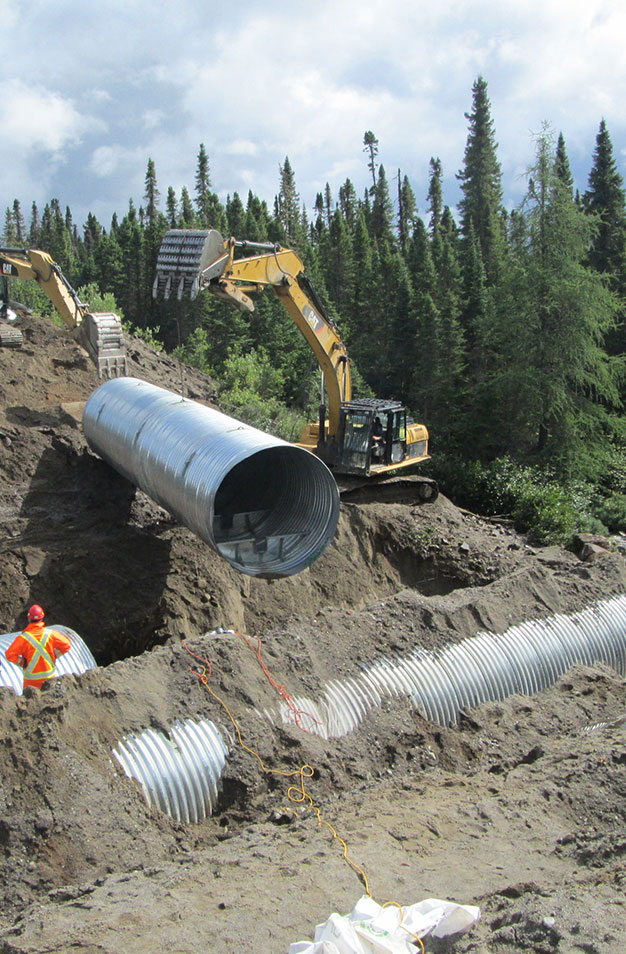
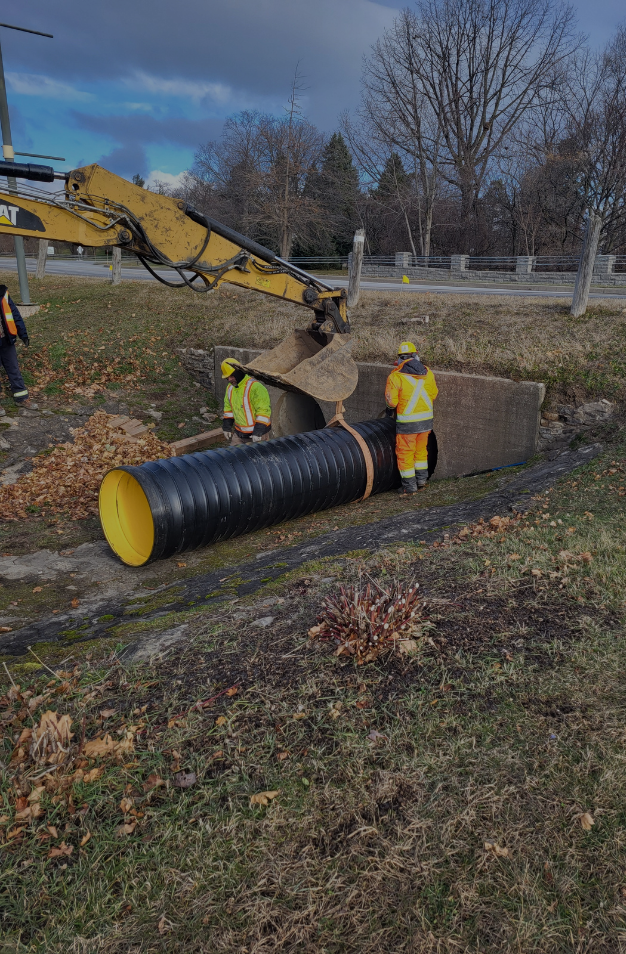
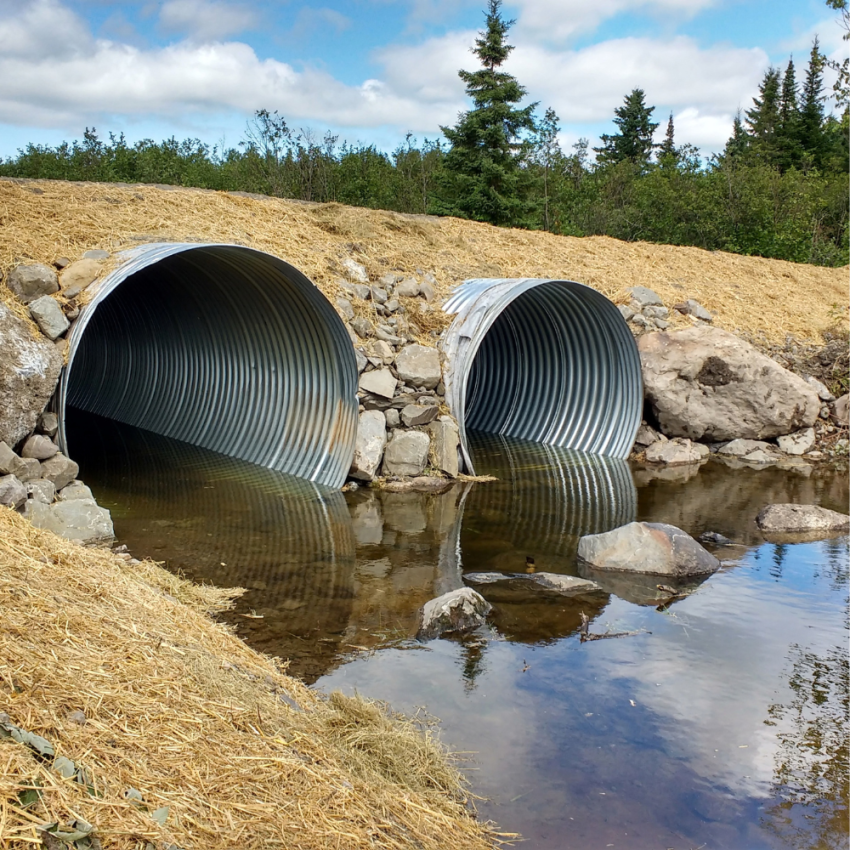
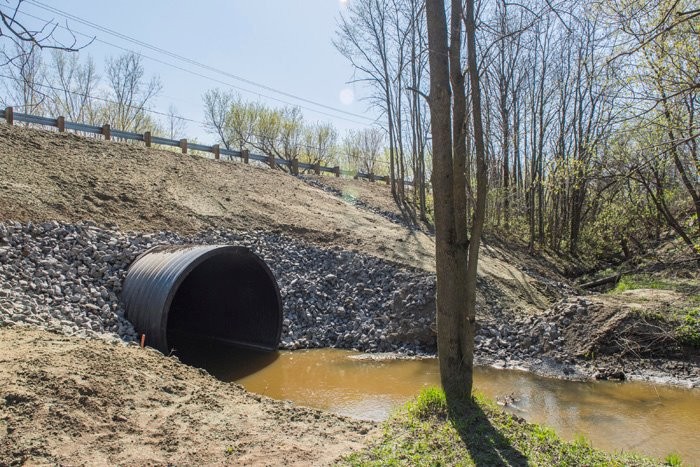
Diameter, material, end treatments and accessories allow a culvert to be adapted to the flow, loads and geometry of the crossing. Soleno offers dual-wall or custom-fabricated HDPE pipes, corrugated steel pipes and open-bottom arch systems. Complementary components help adapt inlets and outlets, limit obstructions and support aquatic passage where required.
Suited to:
Stormwater network rehabilitation aims to restore or increase capacity while accounting for existing infrastructure and construction constraints. A project may require pipe replacement, additional access structures and connections between different materials or diameters.
KEY CONSTRAINTS
Relevant solutions
Stormwater piping and sewer systems, pipe connections and rehabilitation components.
Road infrastructure must convey runoff alongside the roadway and maintain flow beneath it. Systems must withstand traffic loads, accommodate cover depths and preserve hydraulic capacity at crossings.
KEY CONSTRAINTS
Relevant solutions
Stormwater piping and sewer systems, pipe connections and culverts.
Commercial streets bring together several types of infrastructure within limited space. The stormwater network must fit around existing utilities, support traffic loads and remain accessible for inspection and maintenance while limiting disruption during construction.
KEY CONSTRAINTS
Relevant solutions
Stormwater piping and sewer systems, pipe connections and access structures.
These facilities impose heavy loads, strict service continuity requirements and limited construction windows. Conveyance systems must provide reliable flow beneath large areas or critical corridors while reducing the need for long-term intervention.
KEY CONSTRAINTS
Relevant solutions
Stormwater piping and sewer systems, pipe connections and large-span culverts.
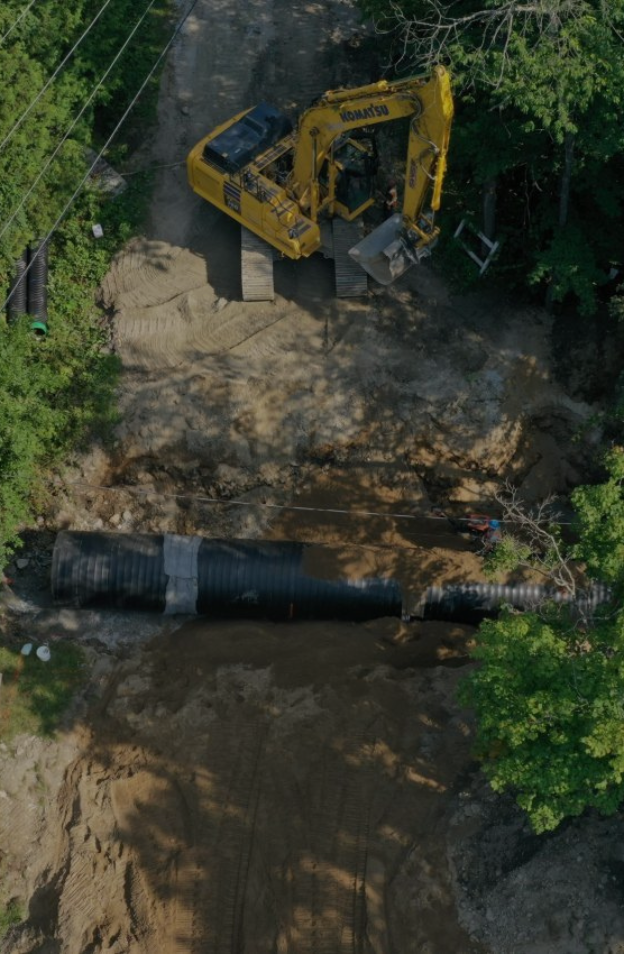
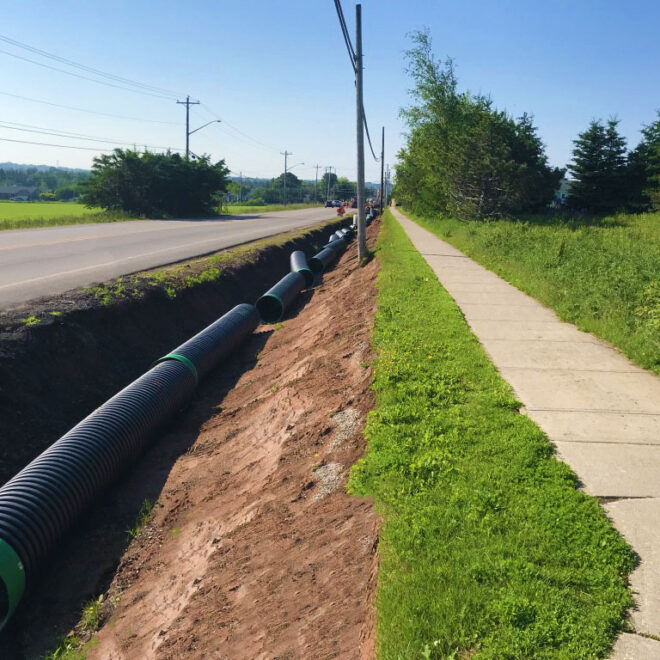
Ditch piping conveys runoff through an underground system while freeing up or allowing redevelopment of the surface above. Depending on project objectives, non-perforated pipes can direct water to an outlet, while perforated and filtered configurations can support controlled infiltration or exfiltration.
KEY CONSTRAINTS
Relevant solutions
Stormwater piping and sewer systems, pipe connections, catch basins, geotextiles and accessories.
A durable alternative to concrete for stormwater infrastructure
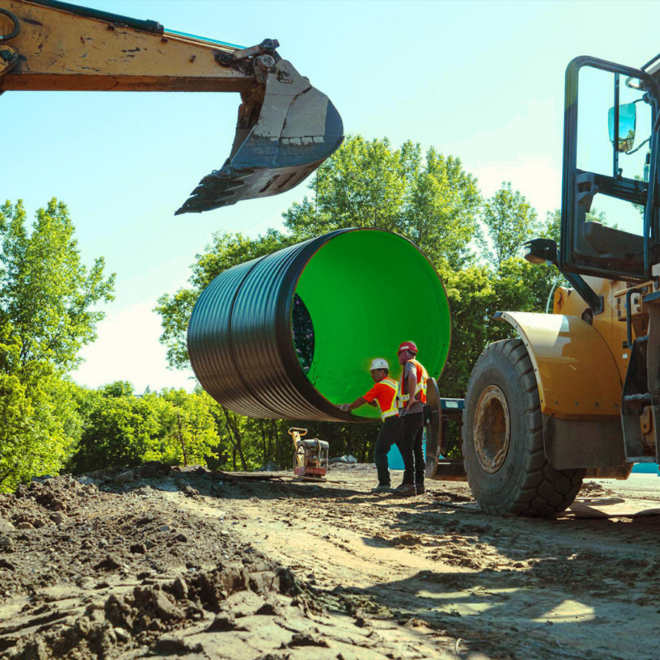
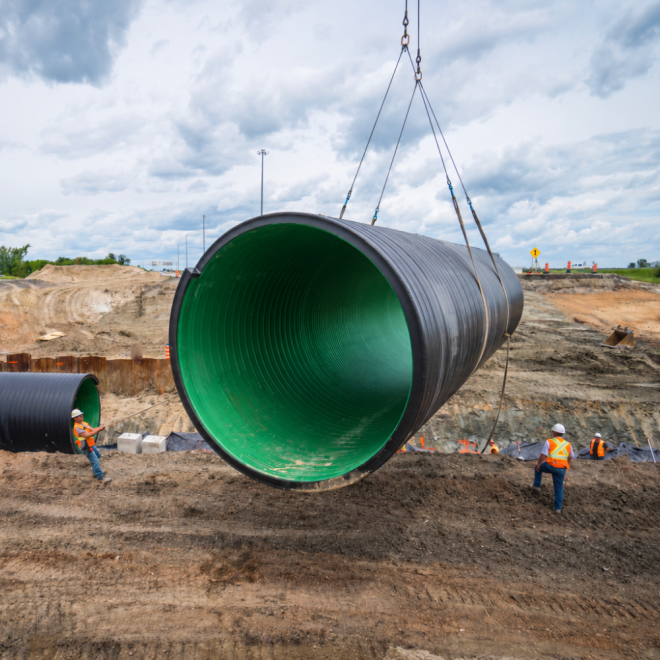
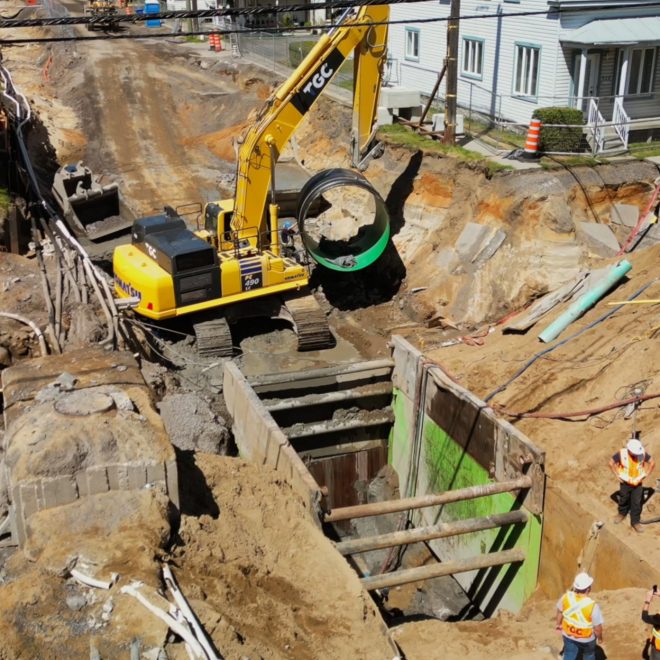
More and more stormwater management projects are turning to HDPE systems to reduce installation costs, improve infrastructure durability and simplify construction site operations.
Compared with traditional concrete infrastructure, HDPE systems can offer several advantages:
When HDPE is adapted to the project objectives, it can offer several advantages over certain traditional concrete infrastructures.
Discover more HDPE benefits for stormwater management
Every project has different hydraulic, structural and installation requirements. Our experts can help you select and configure pipes, connections, access structures and culverts suited to your project conditions
A conveyance system moves runoff from its point of capture to treatment, a detention or infiltration basin, an existing network, a storage facility or an outlet. It can include pipes, connections, manholes, catch basins, culverts and various access or transition components.
Sizing considers the drainage area, design rainfall and flow, slope, internal roughness, inlet and outlet conditions, and available downstream capacity. Cover depth, loads and future development must also be considered. The final diameter must be determined by a qualified professional according to project requirements.
Selection depends on the required hydraulic capacity, installation depth, anticipated loads, soils, groundwater and site conditions. Required joint performance, maintenance needs, target service life and rehabilitation constraints can also influence pipe material, profile and stiffness.
Connections maintain continuity between pipes and structures. When they do not provide the required level of tightness, groundwater and sediment can enter the network while conveyed water can escape into the surrounding soils. These exchanges can reduce usable capacity, increase maintenance and affect the installation over time.
A watertight connection is designed to limit groundwater infiltration and exfiltration of conveyed water. A soil-tight connection primarily prevents surrounding soil and sediment from entering the pipe. The required level of tightness depends on soil and groundwater conditions and the project’s performance requirements
Yes. Couplers, adapters, gaskets, fittings and custom structures allow transitions between HDPE and different existing materials. The solution must be selected according to dimensions, profile, alignment and the required level of tightness.
HDPE pipes can be incorporated into certain replacement or rehabilitation strategies. The appropriate approach depends on the network’s condition and geometry, required hydraulic capacity, site access and installation constraints. A technical assessment helps determine the suitable solution.
Culvert selection depends on design flow, watercourse or ditch geometry, diameter, slope, cover depth and structural loads. Inlet and outlet conditions, erosion, debris, service life and aquatic passage requirements can also influence the design.
Conveyance connects capture to the next stages of water management. Pipes and structures can direct stormwater to treatment, detention, infiltration or storage solutions, then to a network or controlled outlet. Designing these interfaces helps preserve continuity and performance throughout the system.