STORMWATER PIPING AND SEWER SYSTEMS
OUR STORMWATER CONVEYANCE SOLUTIONS
Pipes, connections and access structures configured as a closed system to convey stormwater from collection points to its destination and preserve network performance.



Pipes, connections and access structures configured as a closed system to convey stormwater from collection points to its destination and preserve network performance.
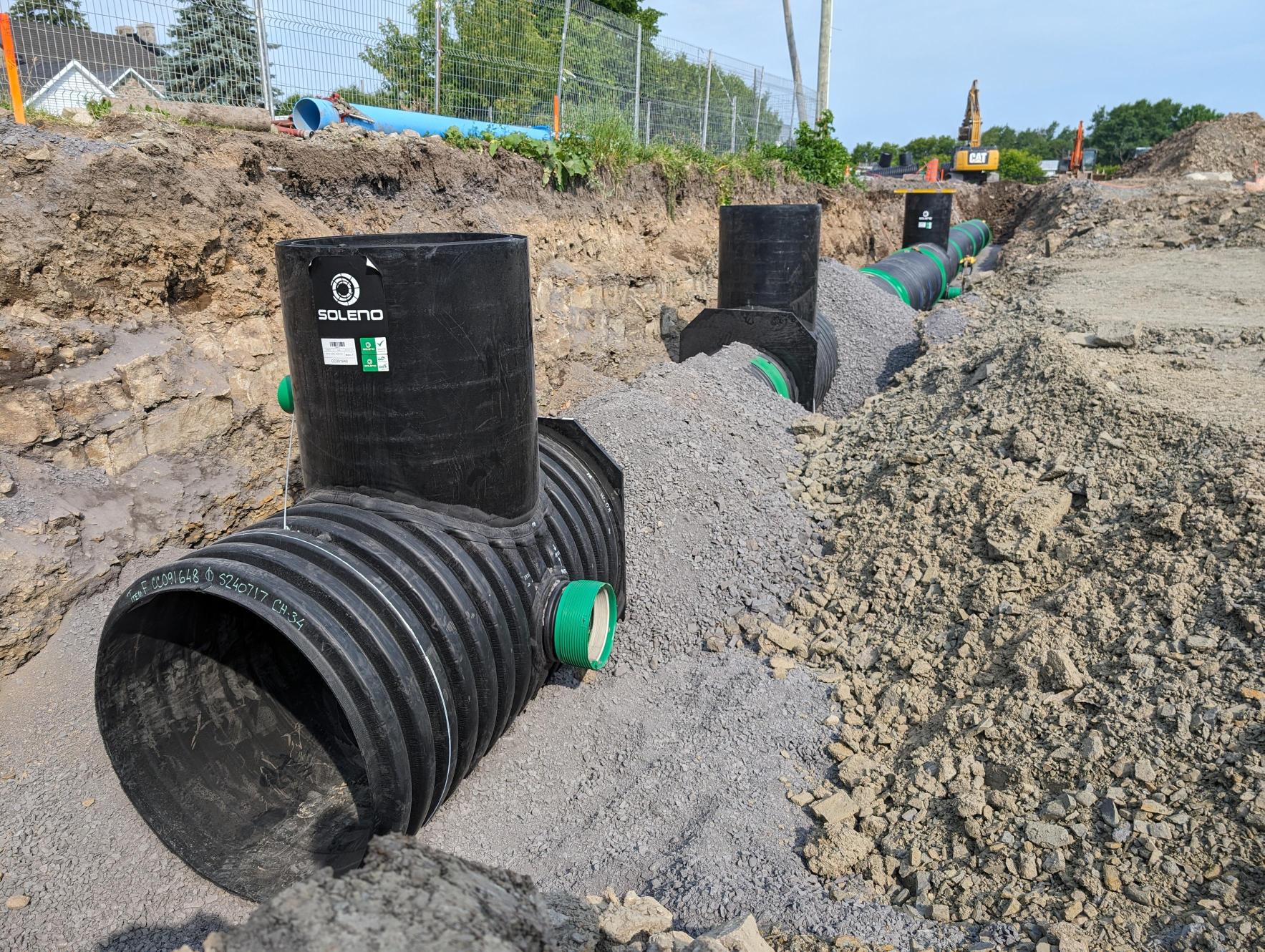
Underground piping defines the flow path when water needs to travel beneath developed surfaces or connect multiple collection points.
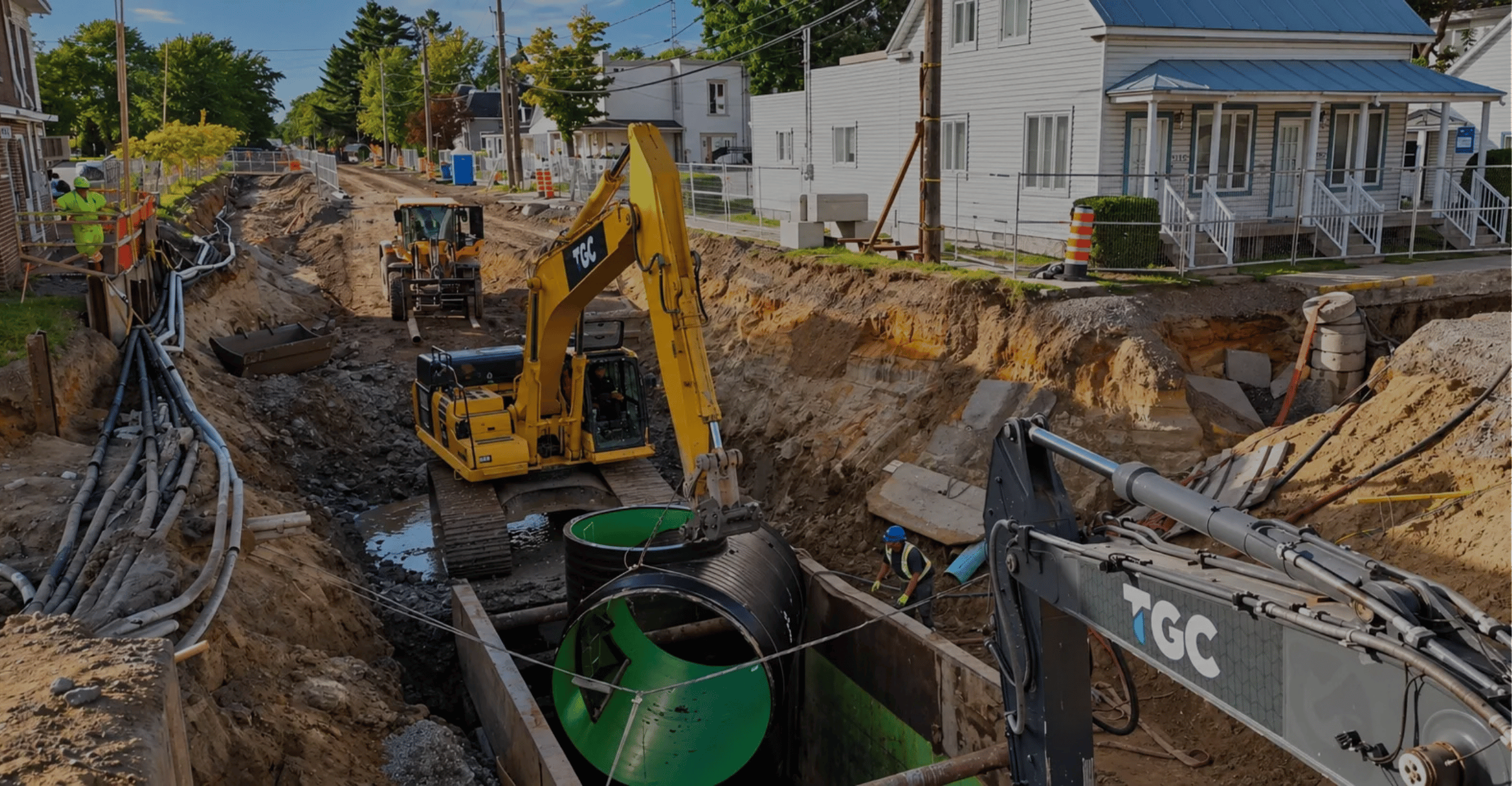
Once captured, runoff must be directed to a treatment system, a detention basin, an infiltration or storage facility, an existing network or an outlet. A closed network conveys this water primarily by gravity while allowing continued use of the surface above.
This approach is particularly relevant when:
System selection and configuration then depend on the design flow, available slope, loads, soils, project footprint and discharge destination.
A closed stormwater network receives water from collection points and conveys it primarily by gravity. Its operation depends on the integration of pipes, fittings and structures that carry water, accommodate changes in its route and provide access to the network.
To maintain a continuous flow path, pipes, connections, access structures and installation conditions must be considered together as part of one system. .
Design flow, loads, soil conditions, required joints performance and site constraints must be considered together
Stormwater network configuration must account for the entire flow path, from the inlets to the final destination. These parameters guide the network layout and the selection of pipes, connections, access structures and installation components.
Drainage area, design flow, available slope, internal roughness and inlet and outlet conditions determine hydraulic capacity and the required pipe diameter.
Burial depth, traffic loads and backfill conditions influence the pipe’s profile, stiffness and structural configuration.
Soil characteristics, bearing capacity and groundwater conditions guide bedding preparation, backfill selection, geotextile use and the measures needed to protect the installation.
The required level of tightness, groundwater conditions, changes in diameter or material and connections to structures guide the selection of joints, fittings and transitions.
Available space, excavation limits, handling requirements, construction phasing and inspection needs influence pipe section lengths, prefabrication and access point locations.
Considering these criteria together helps define the network configuration and identify the pipes, connections, structures and installation methods suited to the project.
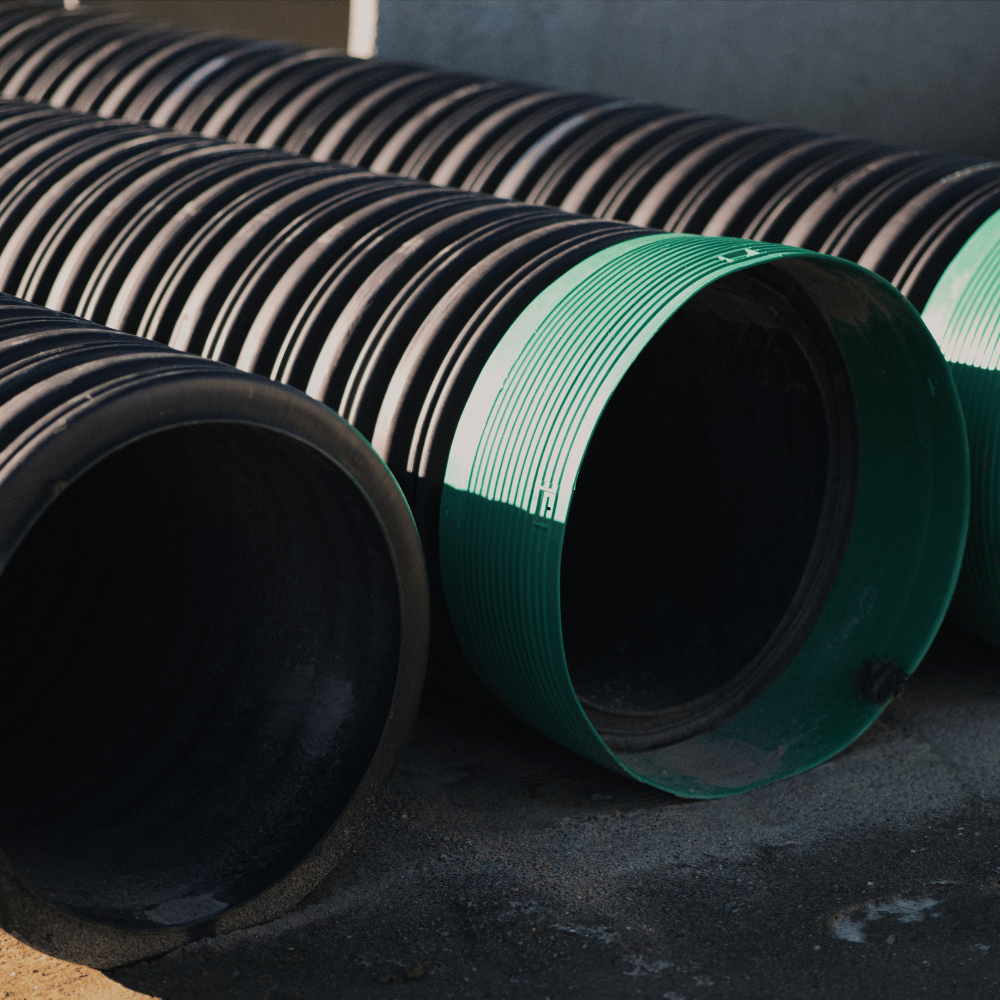
HDPE combines low weight, corrosion resistance and design flexibility to suit a range of stormwater network conditions.
From conventional networks to large-diameter systems, HDPE can meet different hydraulic, structural and installation requirements. As with any flexible pipe, its performance depends on the interaction between the pipe and the surrounding materials, including the bedding and compacted backfill.
Material selection must account for the network, site and installation conditions. In every case, performance also depends on structural design, bedding and backfill quality, compaction and proper joint installation.
Learn More
Soleno offers two complementary HDPE pipe systems for closed stormwater networks. Together, they serve conventional networks as well as large-diameter projects and custom configurations. Selection depends on the project as a whole, not on diameter alone.
A versatile solution for conventional stormwater networks
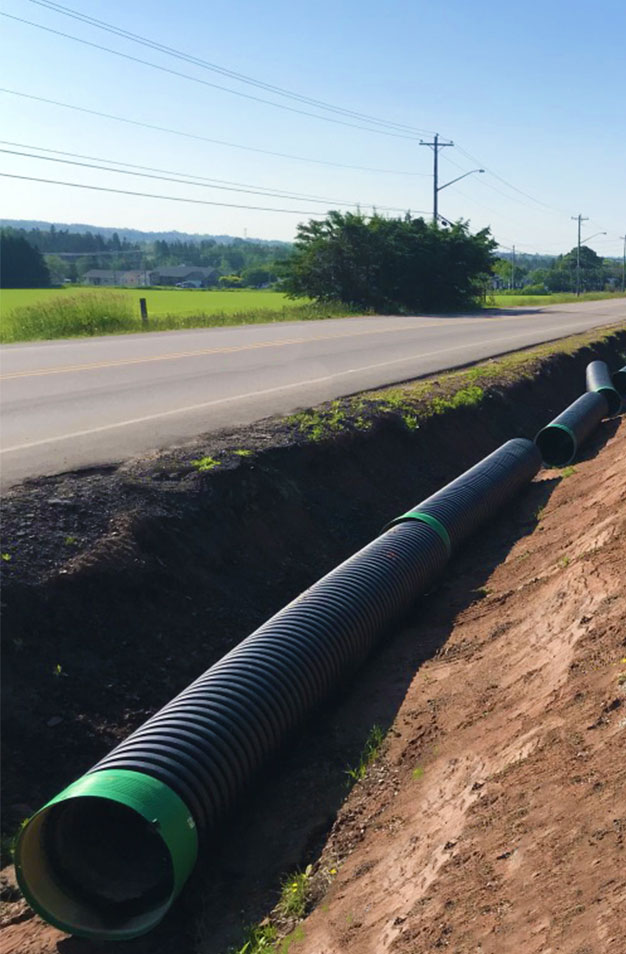
Solflo Max combines a smooth interior wall that promotes flow with a corrugated exterior wall that provides structural stiffness. Its non-perforated configuration is designed for gravity stormwater conveyance in roadway and underground infrastructure.
CHOOSE THIS SYSTEM WHEN
The project falls within the available diameter and stiffness ranges and requires a lightweight, versatile pipe for a conventional stormwater network, ditch piping, a branch connection or a network extension.
KEY CAPABILITIES
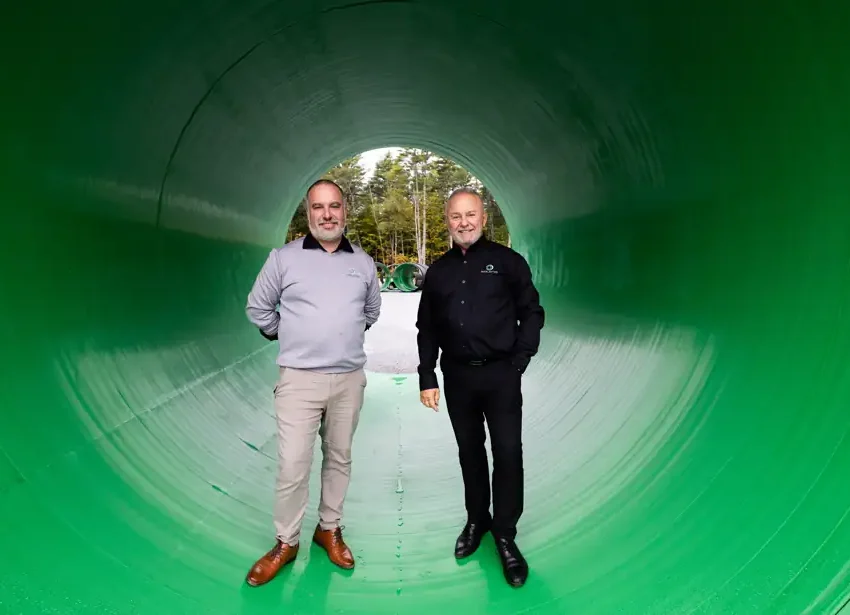
A custom configuration for high-capacity networks
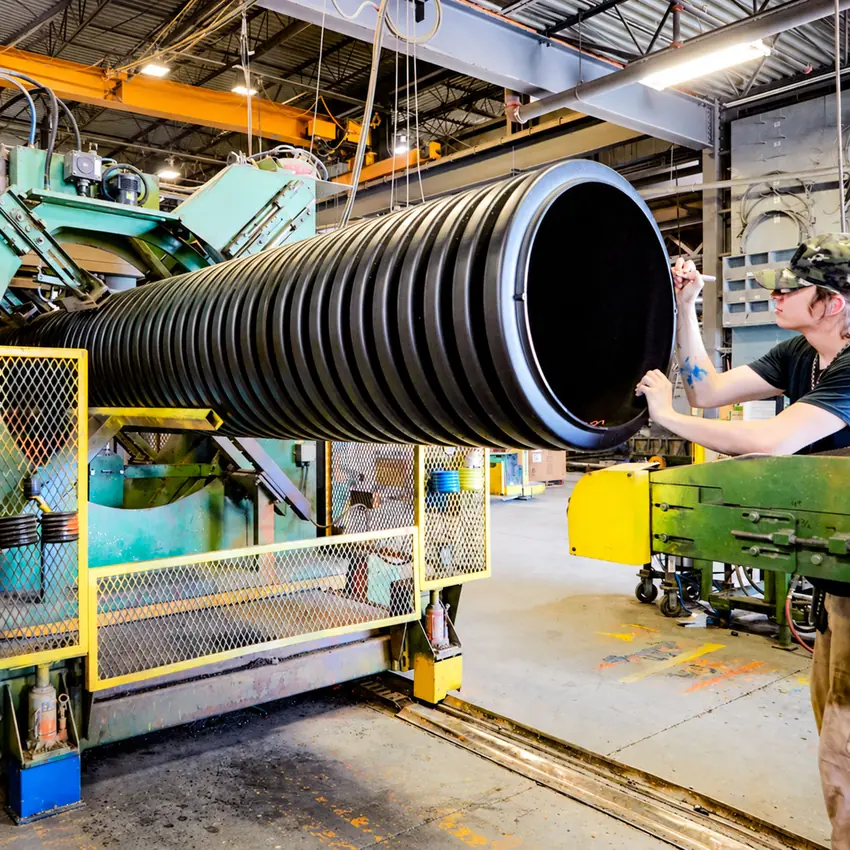
KUSTOMFLO is a profile-wall HDPE pipe manufactured to meet the project’s hydraulic, structural and installation requirements. Its structural profile can be tailored to conditions beyond the configurations available with a conventional pipe.
CHOOSE THIS SYSTEM WHEN
Diameter, loads, cover depth, soil conditions or connection requirements call for a custom structural configuration.
KEY CAPABILITIES
When diameter ranges overlap, diameter alone is not enough to identify the right system. Loads, cover depth, required joint performance, soil conditions and site constraints must also be compared.

The HDPE manhole with smooth exterior wall can be configured around pipe diameters, the number of connections, their angles and elevations, and installation conditions. Inlets, outlets, access openings and surface components can be integrated into a structure tailored to the project.
CHOOSE THIS STRUCTURE WHEN
The project requires a standalone access structure, multiple connections, custom geometry or a watertight configuration for a roadway or non-roadway installation.
KEY CAPABILITIES
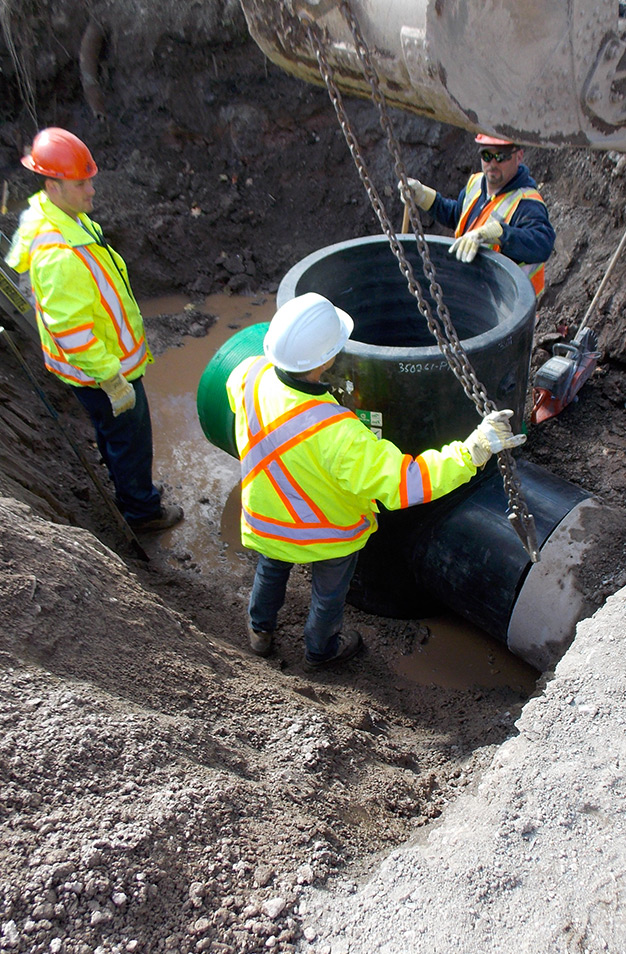
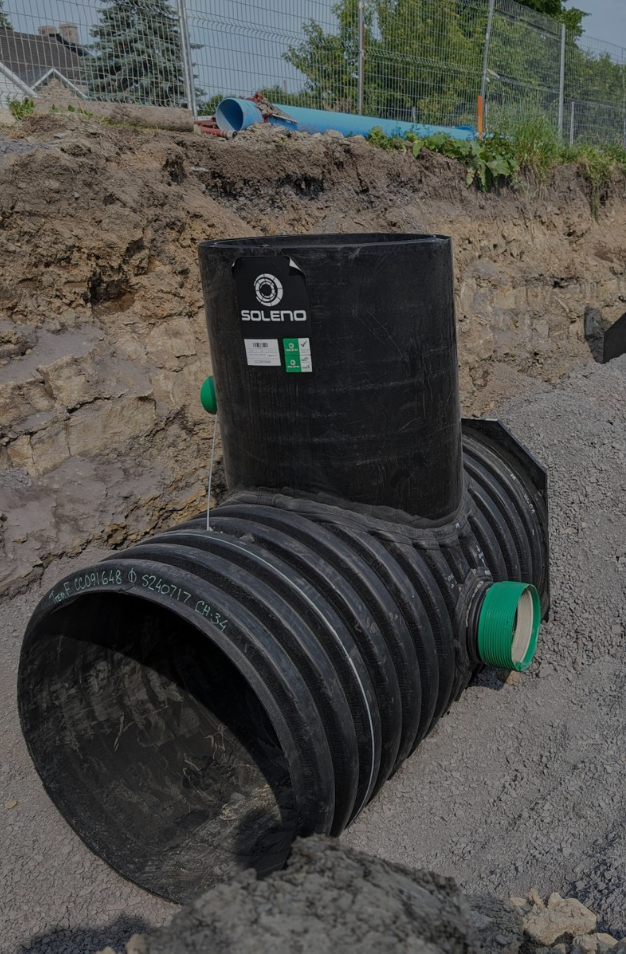
This chimney-type structure is factory-welded onto a Solflo Max or KUSTOMFLO pipe, elbow or tee. Its diameter can be smaller than the main pipe diameter, providing the required access without unnecessarily increasing the size of the entire structure.
CHOOSE THIS STRUCTURE WHEN
An access point must be integrated into a conventional or large-diameter network while limiting excavation, material requirements and on-site assembly.
KEY CAPABILITIES
Structures can be configured to suit network geometry, final grade, applicable loads and maintenance needs.
Available options include:
Surface components suited to roadway or non-roadway installations
Flow regulators can be integrated into catch basins, manholes or detention system outlets to limit discharge into the downstream network.
Regulator selection must account for the target flow rate, available hydraulic head, installation structure and maintenance needs.
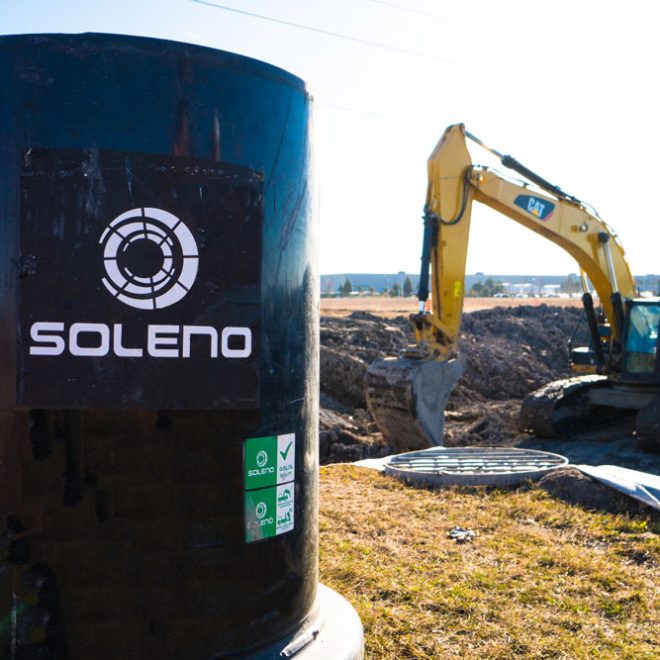
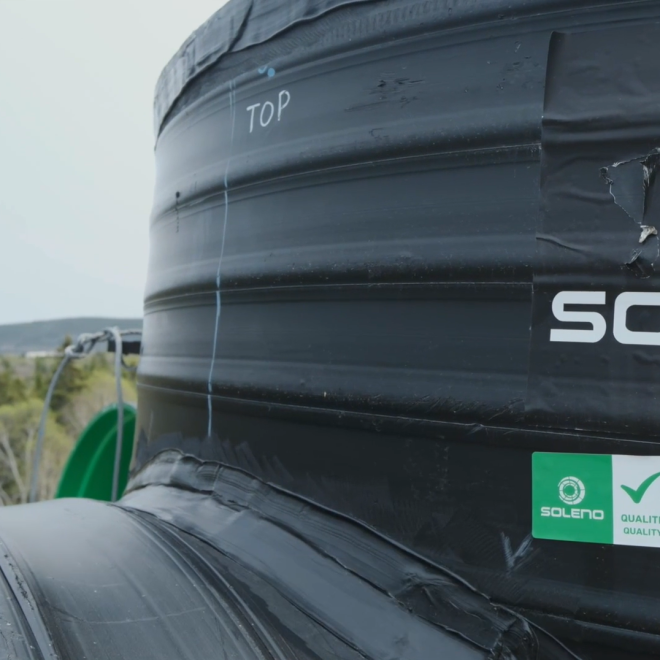
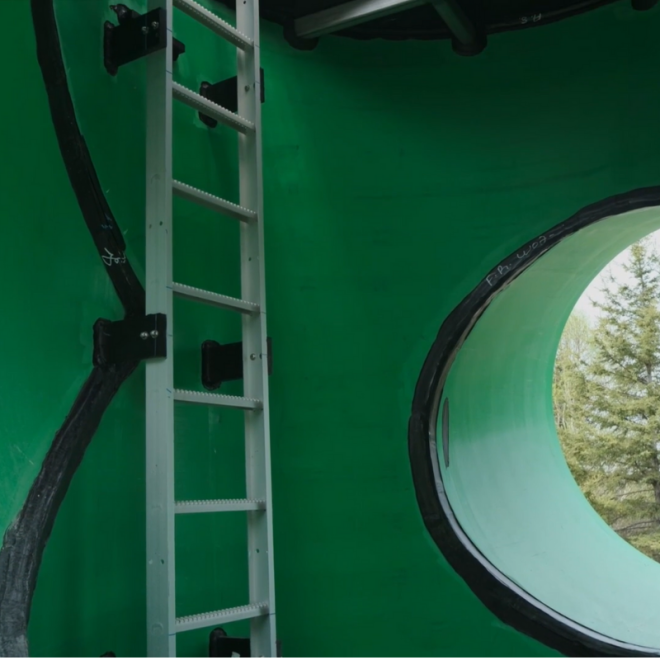
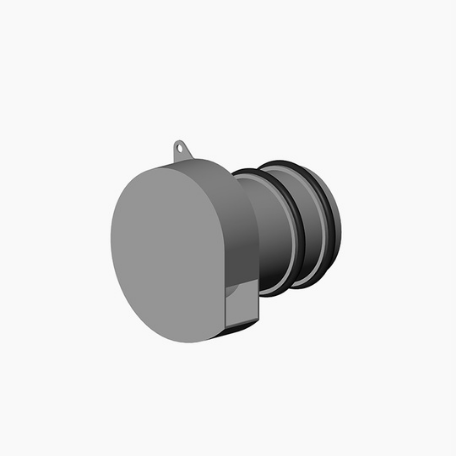
Soleno develops and integrates several technologies to meet networks assembly needs:
Adapters and transition fittings accommodate different configurations, including connections between an HDPE pipe and a concrete manhole or a component with a PVC-format connection.
Selection must account for the actual dimensions, profiles and pipe ends being joined. Compatibility and the required level of tightness must be verified for the complete assembly.
A new stormwater sewer network connects collection points to a treatment system, a basin, a storage facility, an existing network or an outlet. Its configuration must maintain the design hydraulic capacity along the entire flow path and provide access where needed.
KEY DESIGN CONSIDERATIONS
SYSTEM OPTIONS
Solflo Max for conventional networks or KUSTOMFLO for large-diameter systems and custom configurations, with the required access structures, connections and accessories.
Stormwater network rehabilitation may involve replacing deteriorated components, correcting leakage problems or increasing available capacity. The new configuration must integrate with existing infrastructure and reflect actual network conditions.
KEY DESIGN CONSIDERATIONS
SYSTEMS OPTIONS
Dual-wall or large-diameter pipes, custom access structures, adapters and transitions to connect new components to the existing network.
Ditch piping conveys water beneath a redeveloped surface while maintaining drainage in the area. A non-perforated pipe directs water to the outlet, while a perforated and filtered configuration may be considered when the project calls for controlled water exchange with surrounding soils.
KEY DESIGN CONSIDERATIONS
SYSTEM OPTIONS
Non-perforated or perforated and filtered Solflo Max, according to project objectives, with catch basins, fittings, geotextiles and installation accessories.
A branch connection or extension adds collection points, serves a new development or connects new infrastructure to an existing stormwater network. The connection must preserve hydraulic continuity without creating a restriction between components.
KEY DESIGN CONSIDERATIONS
SYSTEM OPTIONS
Solflo Max or KUSTOMFLO, depending on diameter and structural conditions, with tees, elbows, adapters, connections and access structures configured to suit the existing network.
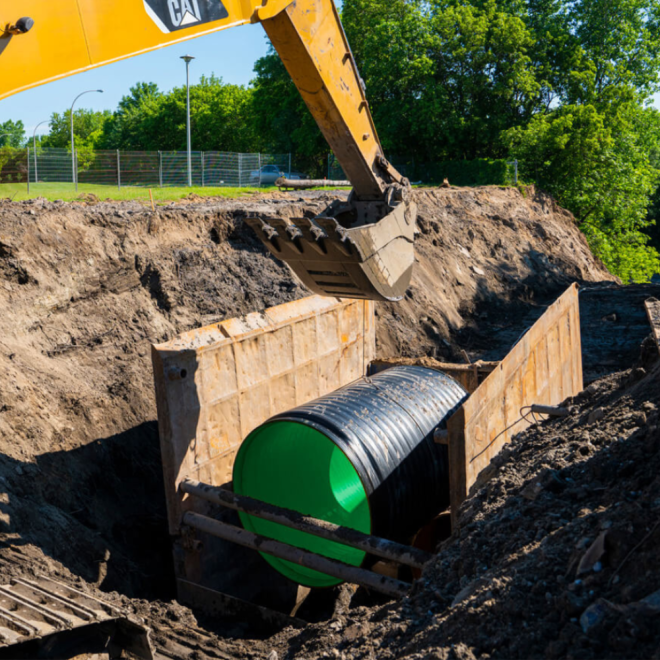
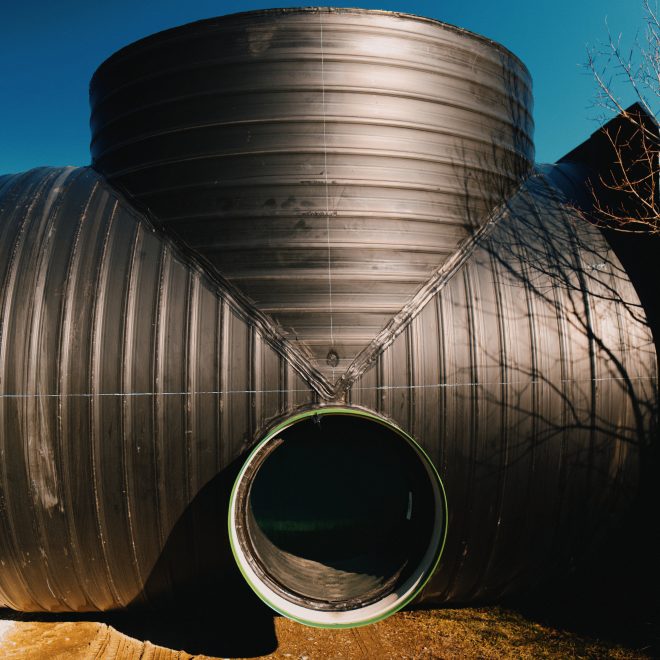
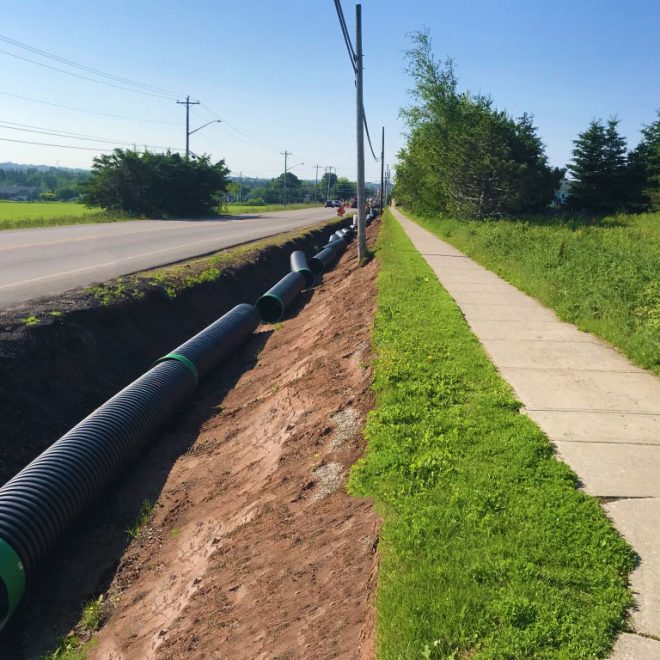

Every project has different hydraulic, structural and installation requirements. Our experts can help you compare pipe systems and configure components to suit site conditions.
A closed stormwater network combines pipes, fittings, manholes, catch basins and other structures to convey runoff primarily by gravity from collection points to a treatment system, a basin, a storage or infiltration facility, an existing network or an outlet.
A closed network is particularly useful when water must travel beneath a road or developed surface, surface space must be preserved or several collection points need to be connected. The choice between an open ditch and a piped system also depends on flow rates, terrain, maintenance, life-cycle costs and project requirements.
Hydraulic sizing considers the drainage area, design rainfall, expected flow, slope, internal roughness and inlet and outlet conditions. The hydraulic grade line and future development must also be considered. Structural configuration must then account for cover depth, loads and installation conditions. The final diameter must be determined for the project by a qualified professional.
Solflo Max is a dual-wall pipe suited to conventional networks, branch connections and ditch piping. KUSTOMFLO is a large-diameter profile-wall pipe system with stiffness and configuration tailored to project requirements. Where their ranges overlap, loads, cover depth, required joint performance and installation constraints help guide selection.
Non-perforated pipe is generally used to convey water through a closed network to a defined destination without promoting exchange with the surrounding soil. Perforated and filtered pipe may be used when controlled infiltration or exfiltration is a project objective. Selection depends on soils, groundwater conditions, water quality, regulatory requirements and the site’s infiltration capacity.
HDPE is lightweight, does not corrode and can be configured for different capacities, loads and installation conditions. Its flexibility and prefabrication options can also simplify integration into complex alignments. Performance still depends on appropriate structural design and proper bedding, backfill and compaction.
A watertight connection is designed to limit groundwater infiltration and exfiltration of conveyed water. A soil-tight connection primarily limits the entry of soil and sediment. The required level of tightness depends on soils, groundwater conditions, project requirements and the potential consequences of leakage.
Yes. Adapters, gaskets, couplers, fittings and custom structures allow transitions between different materials. The solution must be selected according to diameters, profiles, component condition and the required level of tightness.
Yes. Depending on the network’s condition and geometry, it may be possible to replace selected sections, integrate a pipe with greater capacity or use a configuration suited to a rehabilitation method. Available space, existing connections and continuity of service must be assessed before selecting an approach.
These structures connect pipes, accommodate certain changes in direction or elevation and provide access for inspection, cleaning and maintenance. Catch basins can also receive surface water, while some manholes or structures can incorporate a flow control device.
Geotextile may be required to separate materials, filter water, stabilize or reinforce soil, or control sediment during construction. Selection depends on the intended function, soils, loads and installation method. It does not replace proper bedding, backfill or compaction.
Access points should be planned around the network alignment, branch connections, changes in direction or elevation and anticipated maintenance activities. Inspection and cleaning frequency depends on sediment loads, site use, upstream components and network operating requirements.