STORMWATER PIPE DETENTION BASINS
OUR STORMWATER RETENTION & INFILTRATION SOLUTIONS
Robust, customizable underground detention systems engineered to meet the realities of modern infrastructure projects.

To learn more about the news, read the press release. Saint-Jean-sur-Richelieu, September 26th, […]
More news
Robust, customizable underground detention systems engineered to meet the realities of modern infrastructure projects.
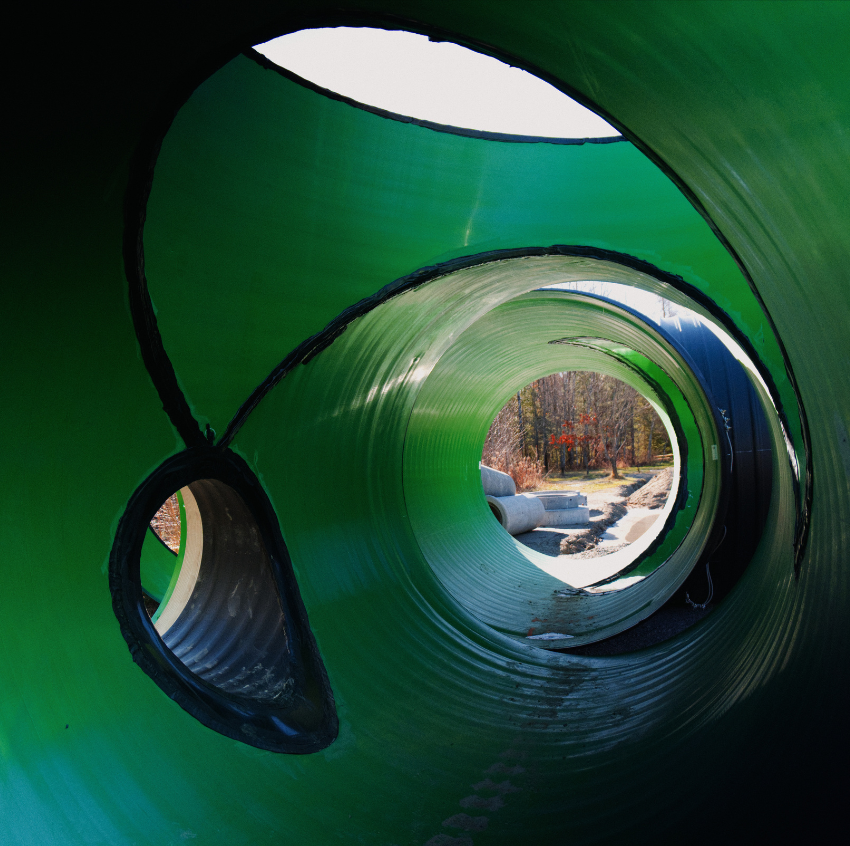
A custom design approach to avoid oversizing.
Pipe detention basins make it possible to create robust and fully configurable underground systems for stromwater management.
The pipe-based design allows for a customized approach adapted to the hydraulic, structural, and operational requirements of each project. The system is configured to meet the actual needs of the site and the design criteria, helping avoid oversizing that can lead to additional costs, excavation, and construction complexity.
Unlike more standardized approaches, pipe detention basins offer strong design flexibility while making it easier to integrate components such as:
A detention system configured to meet project requirements.
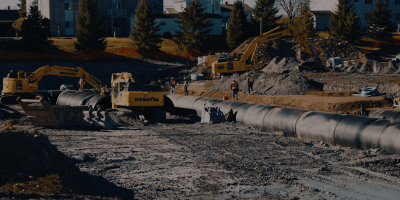
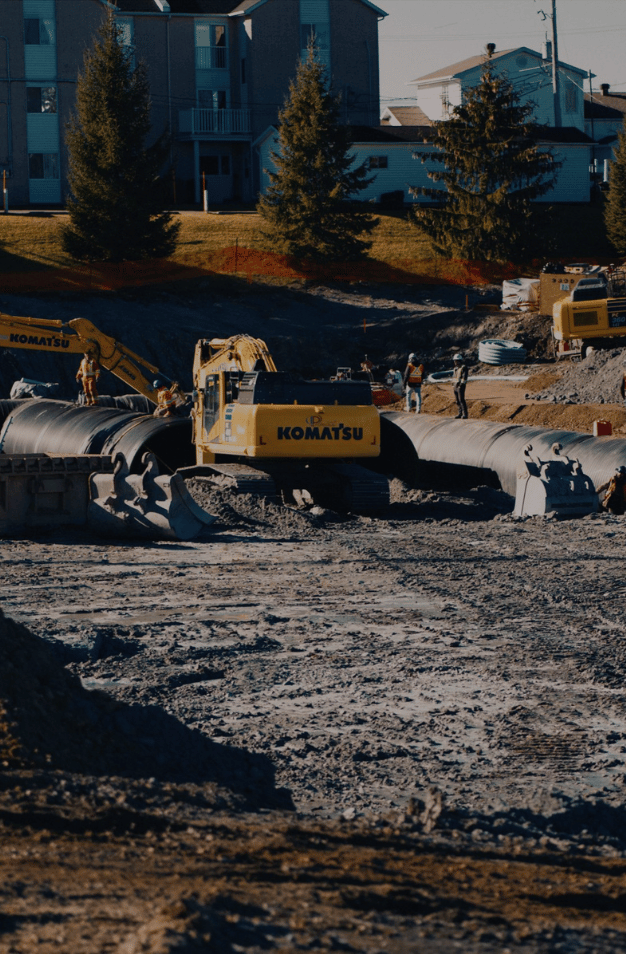
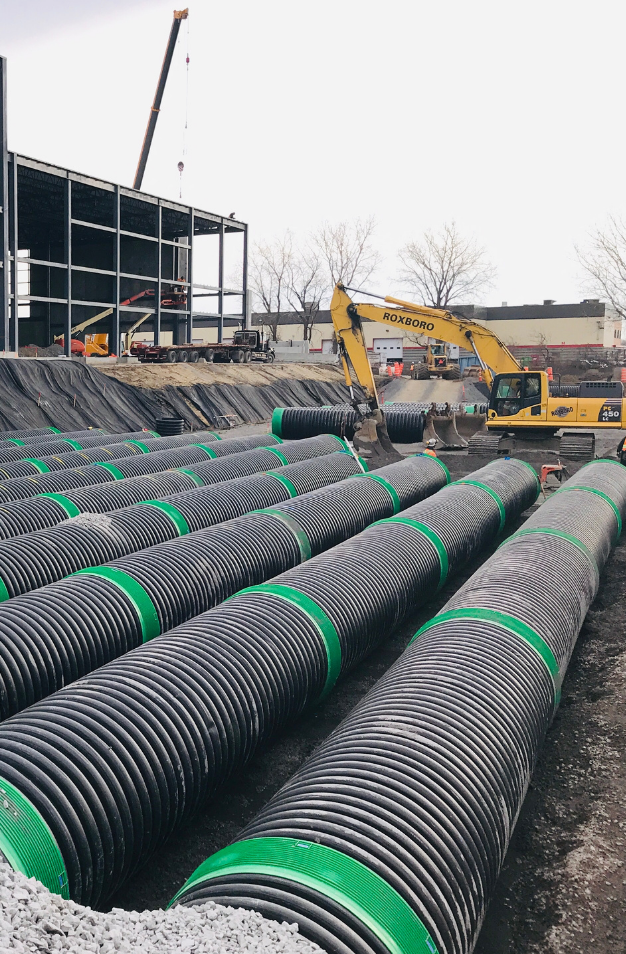
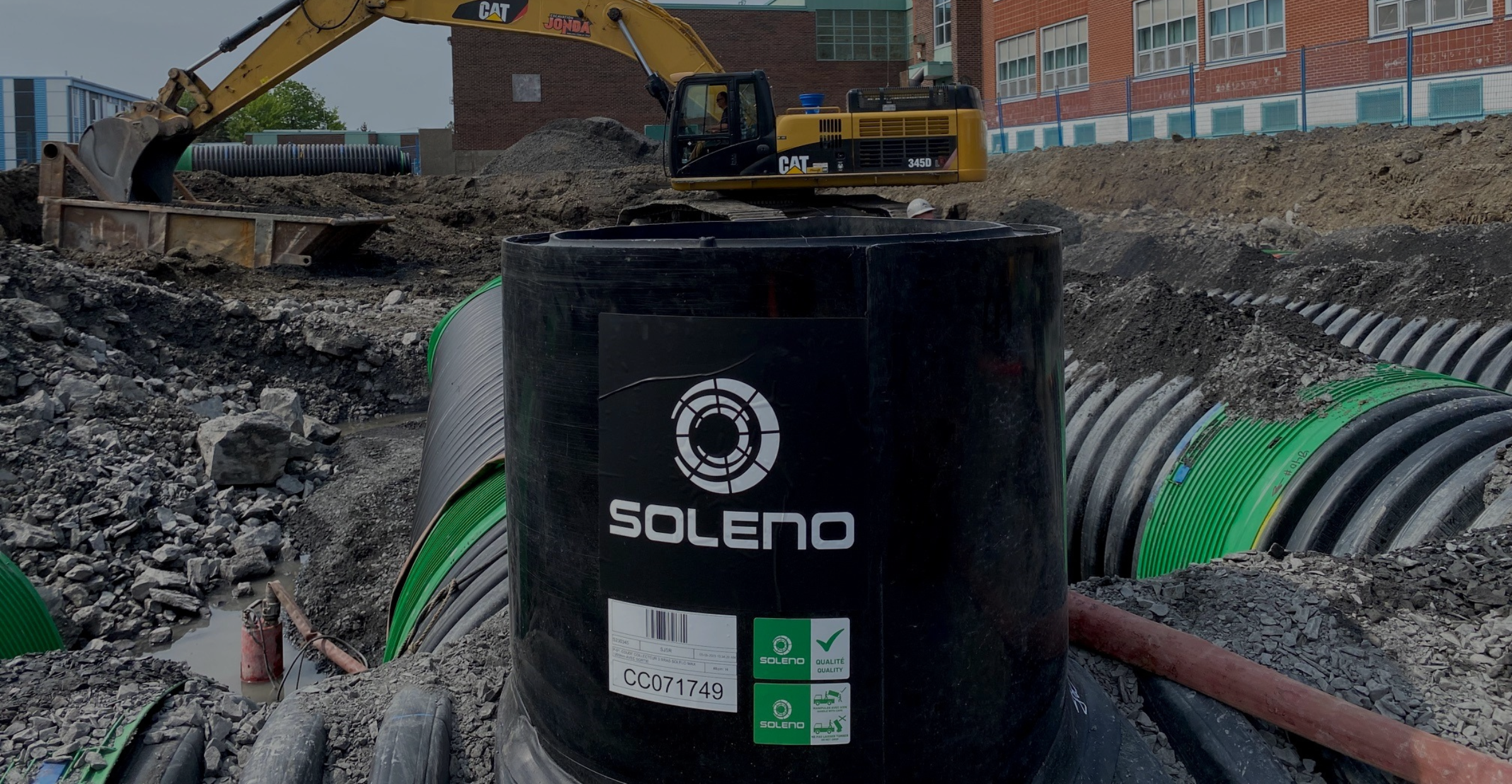
Pipe detention basins use large-diameter HDPE pipes to create temporary underground storage volume for stormwater.
During a rainfall event, stormwater is collected by the drainage networkd and directed toward the underground detention basin. The water is temporarrily stoed inside the pipes, then released in a controlled manner toward the storm sewer system or outlet, according to the permitted discharge rate.
Each system can be configured to optimize stormwater storage volume, hydraulic control, treatment, maintenance and inspection access, and connections to existing infrastructure.
Depending on the project requirements, different components can be integrated into the system. This flexibility makes it possible to design systems adapted to real site constraints while supporting durable and high-performance stormwater management.
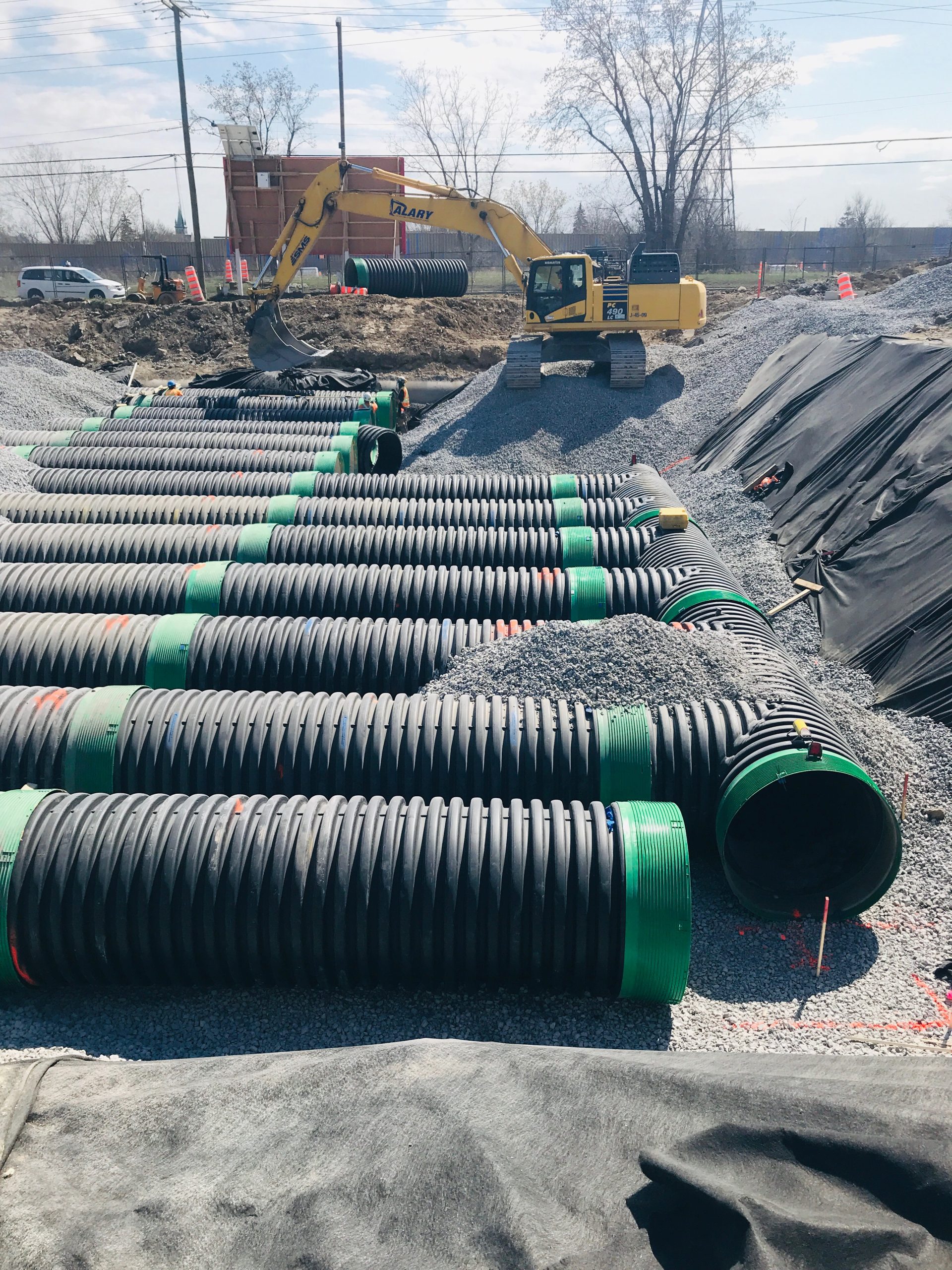
A flexible solution designed to maximize performance and durability.
Pipe detention basins make it possible to design robust and scalable underground systems capable of meeting the technical requirements of municipal, commercial, and industrial projects. Because they are highly flexible and custom-designed, they are also an excellent solution for existing infrastructure projects or the replacement of aging infrastructure.
This approach helps reduce the environmental footprint of stormwater infrastructure while supporting durable, high-performance long-term solutions.
Large-diameter pipes make it possible to create significant detention volumes while optimizing available underground space.
Each basin can be designed according to site constraints, project specifications, required volume, and existing infrastructure.
A custom design approach makes it possible to configure the system according to the actual needs of the project. This helps avoid unnecessary storage volume, additional excavation, higher transportation costs, and excessive handling. This optimization supports more efficient infrastructure that is better adapted to real jobsite constraints.
HDPE is recognized for its corrosion resistance, low abrasive curve, long service life, lightweight properties, and ability to incorporate recycled content in certain applications.
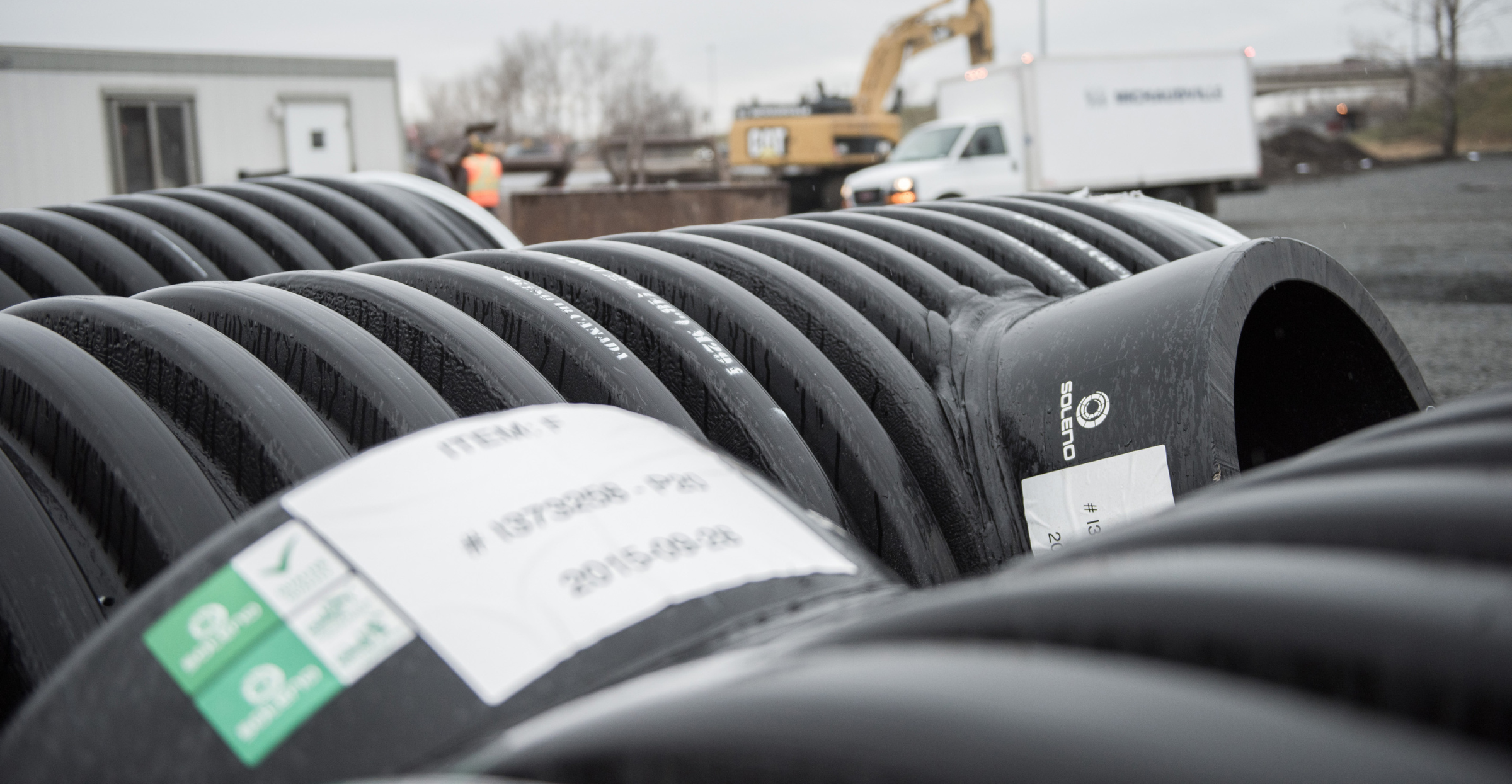
Two solutions adapted to design and jobsite realities.
A flexible solution for stormwater detention and infiltration.
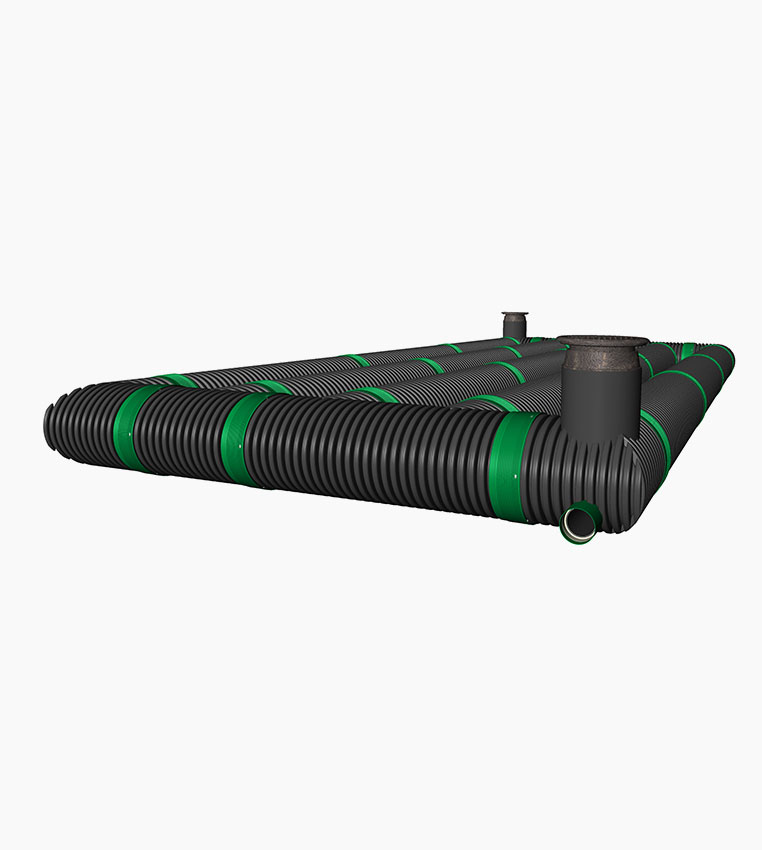
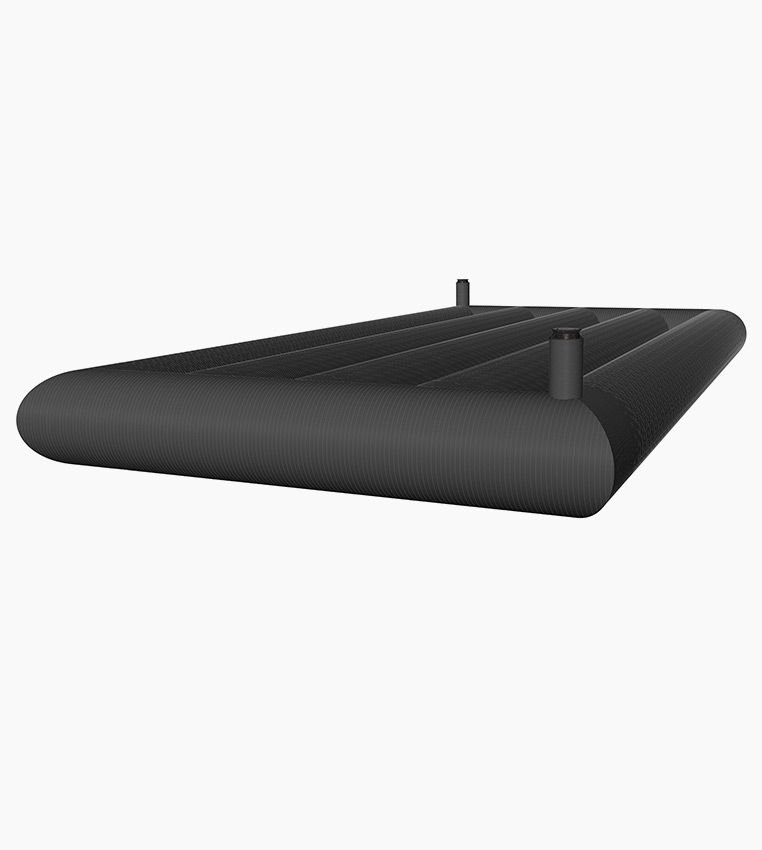
Thanks to their double-wall HDPE structure, Solflo Max pipes make it possible to create robust detention systems adapted to a wide range of municipal and ICI projects.
Solflo Max pipes can be configured as:
A custom solution for large-volume detention basins.
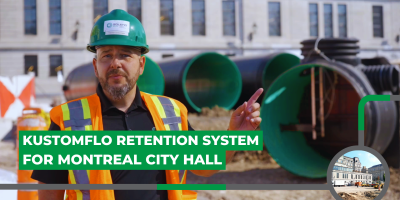
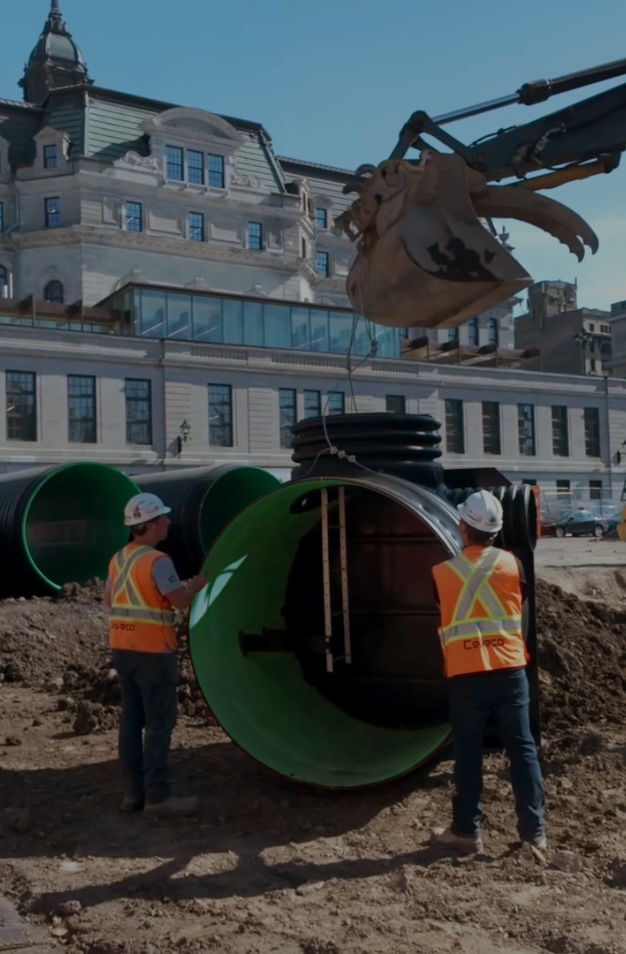
Detention basins using KUSTOMFLO pipes make it possible to design fully customized systems for projects requiring large storage volumes and complex configurations.
With more than 100 available profiles, diameters up to 3400 mm, and standard 6-metre lengths, KUSTOMFLO allows the system to be precisely adapted to the hydraulic and structural requirements of the project.
Combined with the different connection technologies available, KUSTOMFLO pipes provide a durable, high-performance solution that is lighter than traditional concrete approaches.
Discover KUSTOMFLO Detention Basins
Pretreatment: protect the basin and simplify maintenance.
Before entering the detention system, stormwater can carry sediment, suspended solids, debris, hydrocarbons, and various urban contaminants.
Pretreatment helps capture these pollutants upstream in order to reduce sediment accumulation inside the basin, maintain the hydraulic capacity of the system, simplify maintenance operations, improve the quality of discharged water, and ultimately extend the service life of the infrastructure.
Several pretreatment options are compatible with our pipe detention systems.
Transform an infiltration system into a watertight detention basin.
Depending on the project requirements, an underground system can be designed to:
The use of a geosynthetic liner makes it possible to wrap the system and prevent infiltration into the surrounding soil.
Our pipe detention systems can be designed for storage with or without groundwater recharge. This approach is particularly relevant when soils have low permeability, groundwater is present, regulations require watertight detention, discharge rates must be precisely controlled, or the site may be contaminated.
Choosing a detention system depends on several technical, hydraulic, and operational factors. Each technology offers specific advantages depending on the constraints of the project.
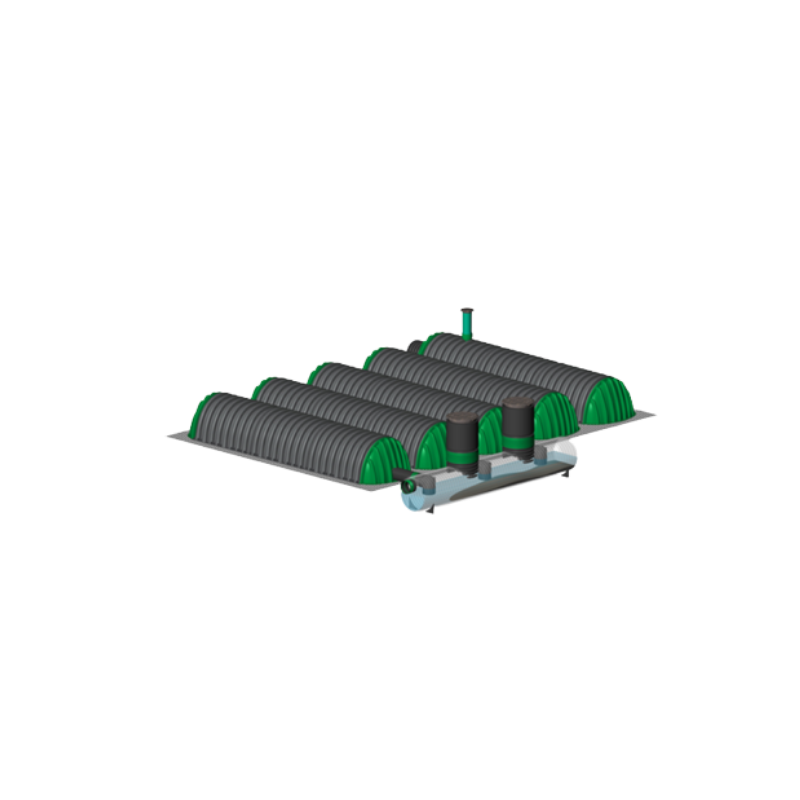
Chamber retention systems are ideal when fast installation and optimization of construction costs are priorities.
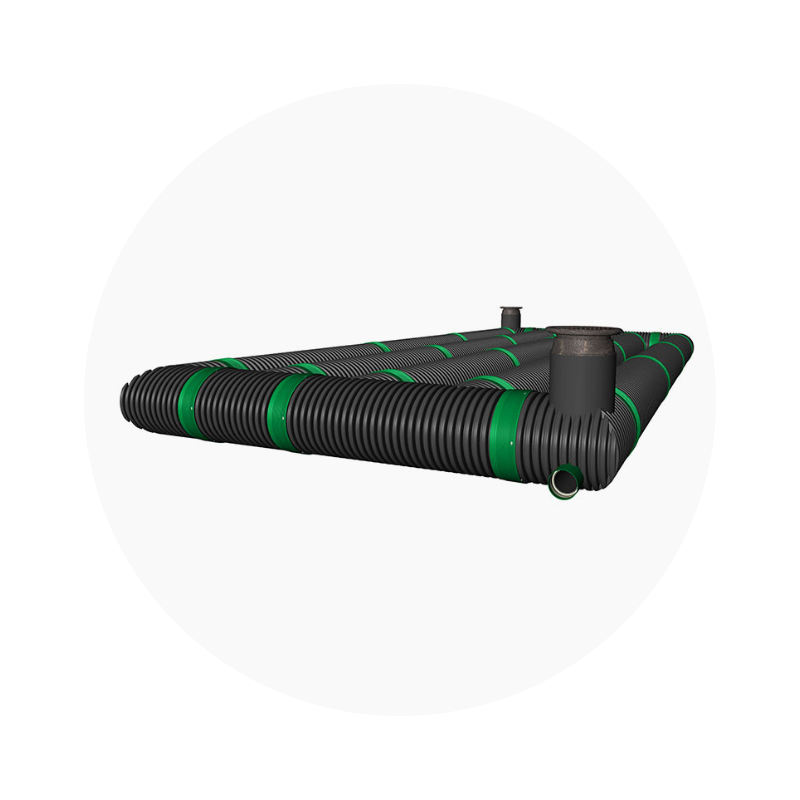
Pipe retention systems are particularly effective for projects requiring very large storage volumes or simplified access for inspection.
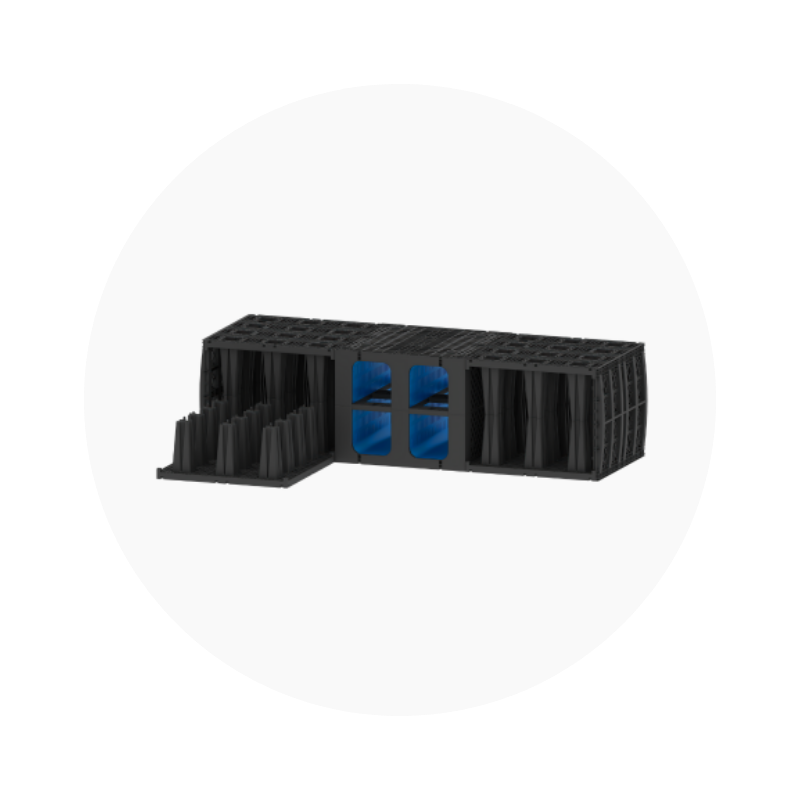
Geocellular basins are recommended in dense urban environments where every square meter must be optimized.
A Flexible, Custom Solution for Complex Stormwater Infrastructure
Discover real jobsite projects.

Our engineering and project teams support engineers, consultants, and contractors throughout every stage of the project to optimize hydraulic performance and constructability.
A pipe detention basin is an underground pipe system designed to temporarily store stormwater inside large-diameter pipes. The water is then released in a controlled manner toward the storm sewer system or outlet, according to the permitted discharge rate.
Pipe detention basins are particularly well suited for projects requiring large volumes, custom design, excellent watertightness, strong structural resistance, and effective integration with existing infrastructure.
A pipe detention basin uses large-diameter pipes to create the storage volume. A chamber detention basin uses modular chambers installed within a clean stone envelope. Pipe systems are often preferred for large volumes, custom projects, and watertight detention requirements.
Geocellular systems are very compact and well suited to highly constrained sites. Pipe detention basins are generally preferred when the project requires large volumes, custom design, high structural robustness, or increased hydraulic integrity.
A detention basin temporarily stores water before releasing it in a controlled manner. An infiltration basin allows water to infiltrate directly into the soil.
Some systems can combine both functions depending on soil conditions and project objectives.
Yes. Pipe detention basins can be designed to provide excellent watertightness, particularly with non-perforated pipes, adapted joints, and connection technologies designed to limit infiltration and exfiltration.
Soleno offers several connection technologies.
Watertightness helps maintain the hydraulic performance of the system, control stored volumes, limit water losses, and reduce the risk of infiltration or exfiltration into the surrounding soils.
Yes. This is one of the main advantages of this approach. The basin can be configured according to the required volume, site constraints, available depths, applied loads, connections, and maintenance needs.
A custom design makes it possible to adapt the system to the actual needs of the project. This helps avoid unnecessary volume, additional excavation, higher transportation costs, and excessive handling.
Detention basins can be designed with HDPE pipes such as Solflo Max or KUSTOMFLO, depending on the required diameter, storage volume, installation depth, and level of customization needed.
Solflo Max double-wall pipe is adapted to conventional pipe detention basins, with perforated or non-perforated options. KUSTOMFLO is designed for custom projects requiring very large diameters, large volumes, or specific structural requirements. More than 100 profiles are available to customize the pipe according to the specific needs of the project.
Yes. Perforated pipes can be used when the project also aims to support controlled stormwater infiltration into the soil, depending on geotechnical conditions and regulatory requirements.
Non-perforated pipe is used when the goal is to store water in a watertight system before releasing it in a controlled manner toward the storm sewer system or outlet.
Available diameters vary depending on the product line used. For large-volume projects, KUSTOMFLO® allows diameters up to 3400 mm, or 136 inches.
Yes. Pipe detention basins can integrate manholes, access risers, ladders, control structures, and specialized connections to facilitate access, inspection, and maintenance.
Yes. Pipe detention basins are often installed under parking lots or developed surfaces to preserve the use of surface space.
In many applications, HDPE pipes can represent a highly advantageous alternative thanks to their lightweight properties, corrosion resistance, durability, watertightness, and ease of handling.
Service life depends on project conditions, design, installation, and maintenance. HDPE systems are recognized for their durability and corrosion resistance.
Sizing depends on several factors, including the drained surface area, rainfall intensities, permitted discharge rate, required storage volume, site constraints, and municipal requirements.
Yes. Soleno can support design teams in selecting the right solution, optimizing storage volume, configuring the system, and integrating the components required for the project.
 Hydrostor_HS31_System_with_Pretreatment_Unit.PDF Hydrostor_HS31_System_with_Settling_Row.PDF Hydrostor_HS75_System_with_Pretreatment_Unit.PDF Hydrostor_HS75_System_with_Settling_Row.PDF Hydrostor_HS180_System_With_Pretreatment_Unit.PDF Hydrostor_HS180_System_with_Settling_Row.PDF Hydrostor_HS290_System_with_Pretreatment_Unit.PDF Hydrostor_HS290_System_with_Settling_Row.PDF
 Hydrostor_HS31_System_With_Pretreatment_Unit.DWG Hydrostor_HS31_System_with_Settling_Row.DWG Hydrostor_HS75_System_with_Pretreatment_Unit.DWG Hydrostor_HS75_System_with_Settling_Row.DWG Hydrostor_HS180_System_With_Pretreatment_Unit.DWG Hydrostor_HS180_System_with_Settling_Row.DWG Hydrostor_HS290_System_with_Pretreatment_Unit.DWG Hydrostor_HS290_System_with_Settling_Row.DWG